
Understanding Layers in Photography: How Proximity Affects Your Images
Quick Answer
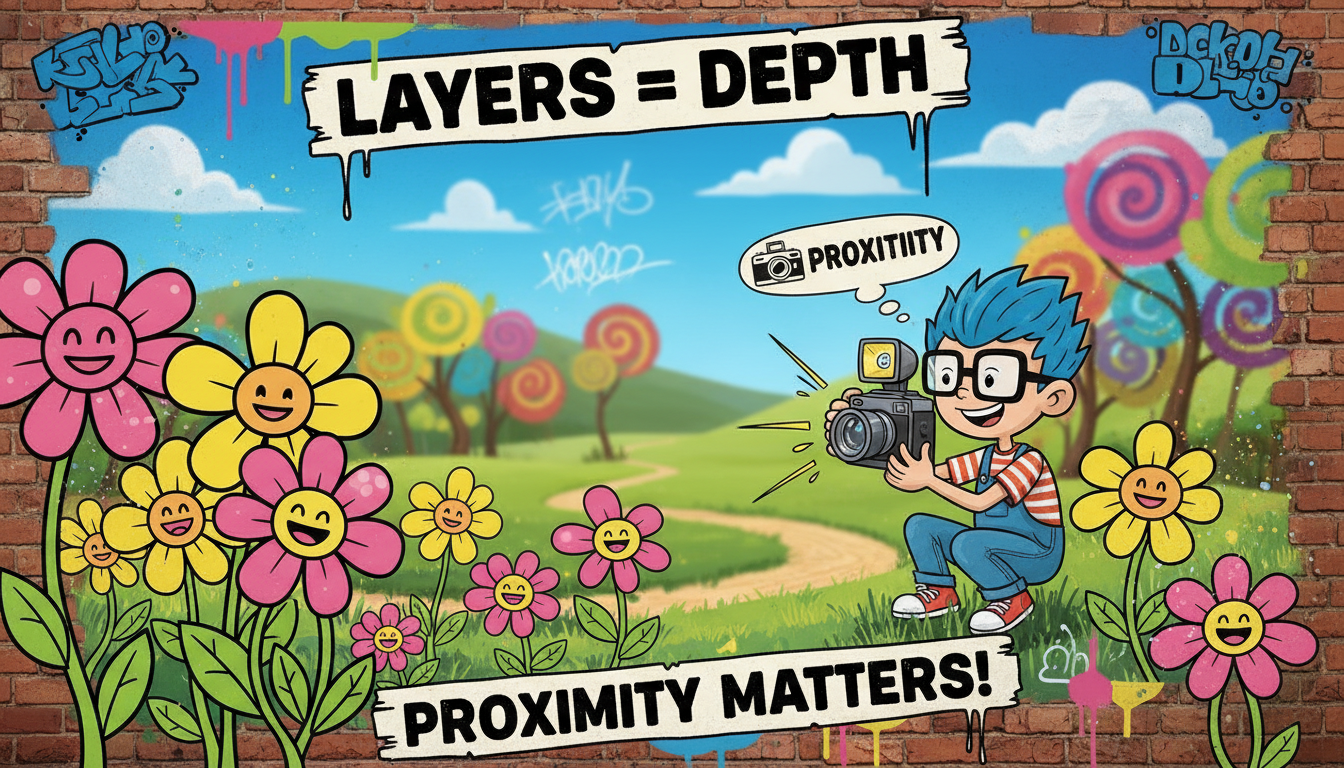
Adjusting your proximity to a subject in photography primarily impacts the layers visible in your image. Moving closer can simplify the background and highlight your subject, while moving farther away can include more layers, creating depth and context.
In photography, one of the key aspects you can manipulate is your proximity to the subject. This means how close or far you are from what you are photographing, and it plays a vital role in how your images turn out. When you adjust your distance, you can significantly change the composition and storytelling in your photographs.
So, what exactly changes when you move closer or farther from your subject?
1. **Layers in Your Image**:
When you photograph a scene, your position determines how many layers are visible. Layers refer to the different elements that can be arranged in the foreground, middle ground, and background of your shot. For instance, if you are photographing a flower in a garden, getting closer might remove distracting background elements, allowing the flower to stand out. On the flip side, taking a step back can include other flowers, leaves, or even a distant mountain, adding depth and context to your image.
2. **Background Influence**:
Your proximity also affects how much background is included in your shot. When you are close, the background can become blurred (a technique known as shallow depth of field), drawing more focus on your subject. This is particularly useful in portrait photography, where you want the subject to be the main focus. Conversely, when you pull back, you can reveal more of the surroundings, which can tell a more complete story about the environment.
3. **Framing the Subject**:
Adjusting your distance allows you to frame your subject differently. The way you frame your subject can change the viewer's perception. For example, a close-up of a person can convey intimacy, while a wider shot can provide a sense of space or context. By understanding how proximity affects framing, you can make more intentional choices in your photography.
4. **The Rule of Thirds**:
While adjusting proximity is significant, it’s also crucial to understand other compositional rules, such as the rule of thirds. This rule involves placing your subject along imaginary lines that split the image into thirds, creating a more balanced and visually appealing photo. However, this rule is independent of how close or far you are from your subject; you can apply it regardless of your proximity.
In conclusion, understanding how to adjust your proximity to your subject is essential for any photographer. It dramatically impacts the layers, background, and overall composition of your images. By experimenting with distances, you can enhance your photographic skills and create more engaging and dynamic visuals. So, next time you pick up your camera, think about how close you are to your subject and how that choice will affect your photograph. Happy shooting!
Was this answer helpful?