
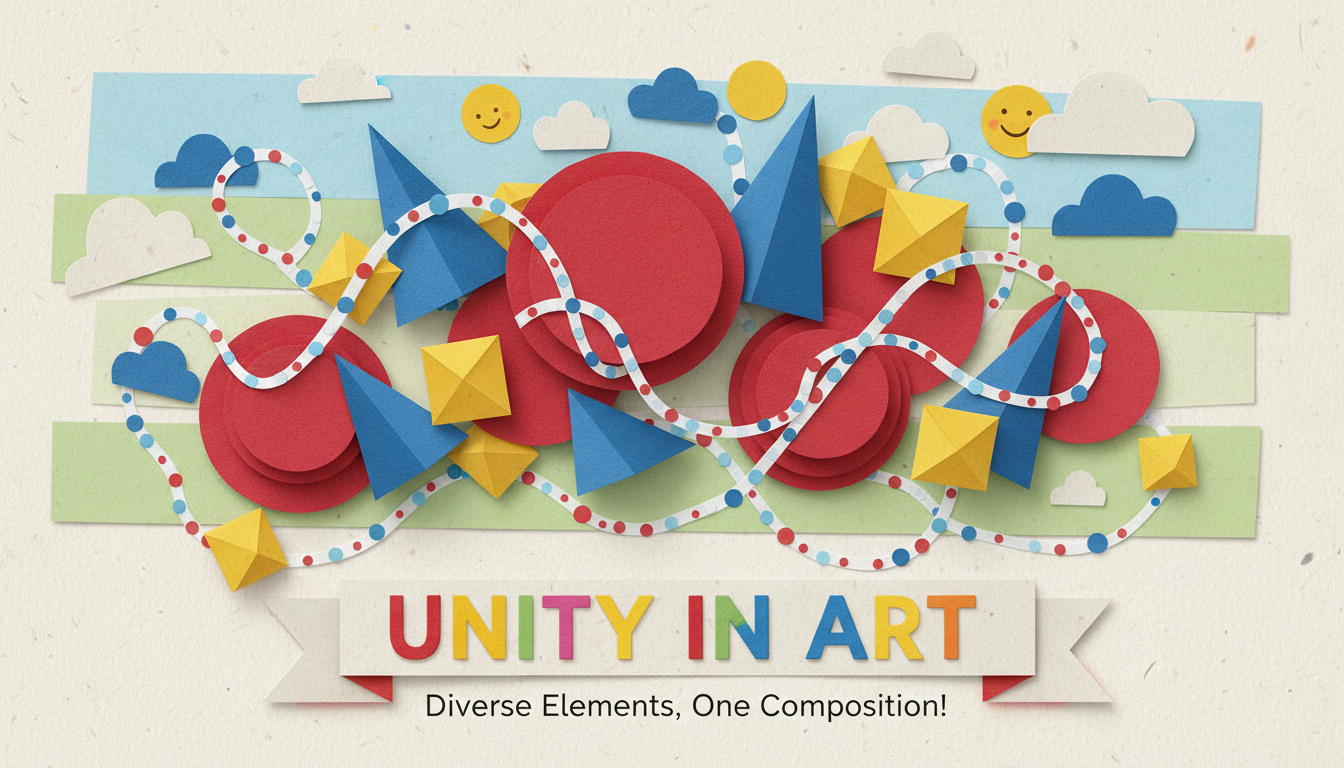
What Are Unity Principles in Art: Key Concepts Explained
Quick Answer
Unity principles in art help us organize and group visual elements, enhancing their relationship and coherence. Key concepts include proximity, unified direction, and Gestalt Theory, while 'value' is not a unity principle.
Unity principles are fundamental concepts in art and design that guide how we visually organize and group elements. They play a crucial role in creating a cohesive and harmonious composition that communicates effectively to the viewer. Here, we will explore the essential unity principles and clarify common misconceptions surrounding them.
1. **Understanding Unity Principles**: Unity in art refers to the sense of harmony and cohesiveness in a composition. It allows viewers to perceive separate elements as part of a whole, enhancing the overall visual experience. Key unity principles include:
- **Proximity**: This principle states that elements that are close together are perceived as belonging to the same group. For example, in a graphic design layout, text and images placed near each other will be seen as related.
- **Unified Direction**: This principle involves aligning elements in a similar orientation, which can guide the viewer’s eye through the artwork. For instance, arrows or lines that point in the same direction can create a sense of movement and connection among different parts of the design.
- **Gestalt Theory**: This psychological theory explains how humans naturally organize visual information into groups. It emphasizes how we perceive patterns and structures, allowing us to see a complete image rather than fragmented parts.
2. **Common Misconceptions**: A common question arises about whether certain terms are part of the unity principles. For example, **value** (the lightness or darkness of a color) is a fundamental element of art but not considered a unity principle. While value can contribute to the overall unity of a piece, it does not define how elements are grouped or perceived in relation to one another.
3. **Applications of Unity Principles**: Understanding and applying unity principles can enhance various forms of art. Artists and designers use these concepts in:
- **Graphic Design**: Creating logos and advertisements that effectively communicate messages through harmonious arrangements.
- **Web Design**: Ensuring that web pages are visually appealing and easy to navigate by grouping related elements together.
- **Interior Design**: Arranging furniture and decor in a way that creates a cohesive look and feel in a space.
4. **Real-World Importance**: Mastering unity principles not only improves artistic skills but also develops critical thinking and problem-solving abilities. By learning how to analyze and construct visual relationships, students can enhance their creativity and adaptability in various fields, from art and design to marketing and beyond.
In conclusion, unity principles are essential for creating effective and engaging compositions across different artistic mediums. Understanding these principles helps artists and designers communicate their ideas more clearly and powerfully, making their work resonate with audiences.
Was this answer helpful?