
How Does International Trade Affect Production Possibilities Frontier?
Quick Answer
International trade enables countries to consume beyond their production possibilities frontier (PPF). For instance, when Japan trades milk for eggs, it can achieve a consumption level that exceeds its initial production capacity.
The Production Possibilities Frontier (PPF) is a crucial concept in economics that illustrates the maximum output combinations of two goods that an economy can produce with its available resources. For Japan, the PPF indicates that it can produce either 80 bottles of milk or 50 cartons of eggs, showcasing the trade-offs involved in resource allocation. When Japan chooses to produce at point A, making 60 bottles of milk and 12 cartons of eggs, it is operating within its PPF, but this does not reflect its full potential.
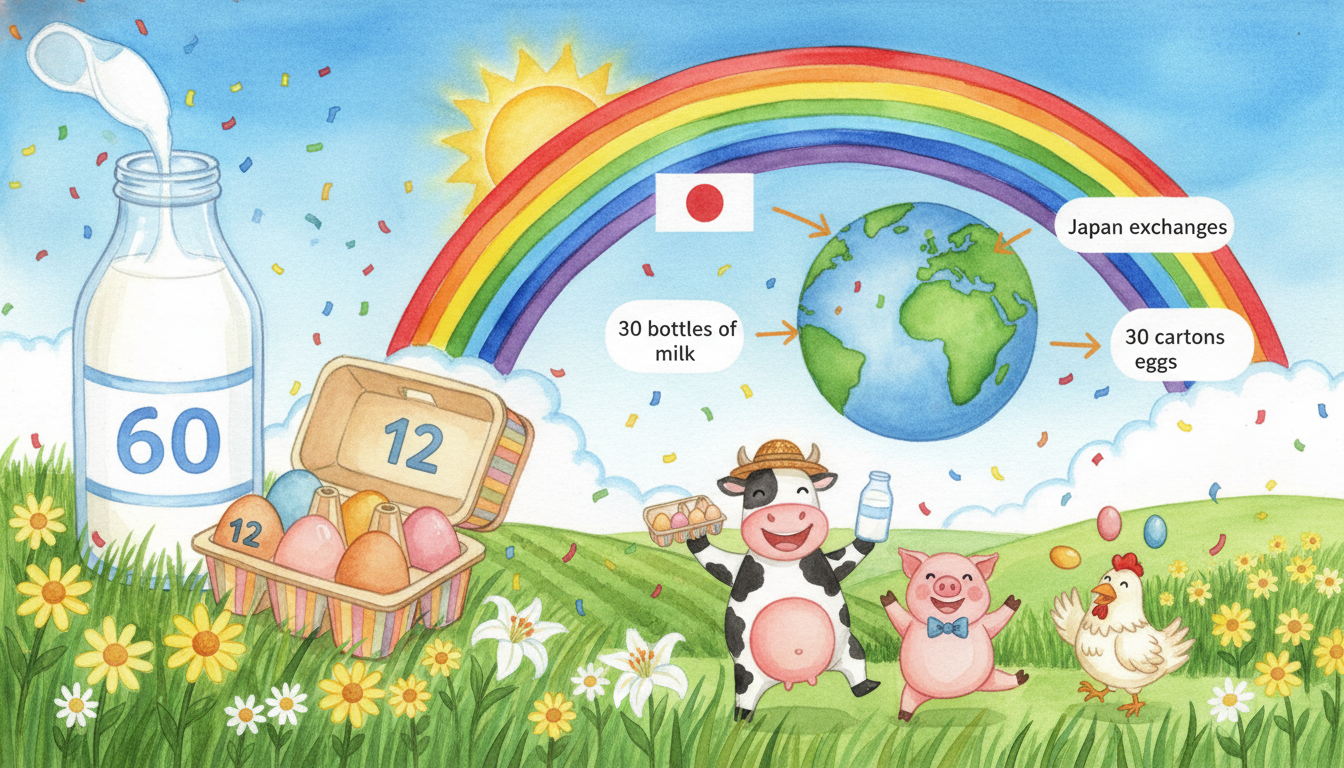
Now, let’s explore the impact of international trade on this scenario. Japan decides to engage in trade, exchanging 30 bottles of milk for 30 cartons of eggs with another country. Before the trade, Japan's production capabilities were limited to the PPF, but through trade, it can expand its consumption possibilities.
After trading, Japan's new quantities will be calculated as follows:
1. Japan has 60 bottles of milk, and it gives away 30, leaving it with 30 bottles of milk.
2. Japan originally produced 12 cartons of eggs but receives an additional 30 cartons from the trade, resulting in a total of 42 cartons of eggs.
This outcome demonstrates a fundamental principle of economics: through specialization and trade, countries can consume beyond their individual production capabilities. In this case, Japan can now enjoy 30 bottles of milk and 42 cartons of eggs, a combination that exceeds its original production capacity according to its PPF. This phenomenon illustrates the benefits of comparative advantage, where countries focus on producing goods they can make efficiently and trade for others, optimizing resource use globally.
Real-world applications of this concept are abundant. For instance, countries often trade agricultural products for manufactured goods, allowing each to benefit from the strengths of others. As globalization continues to shape economies, understanding the implications of international trade on production and consumption becomes increasingly vital. By engaging in trade, nations can improve their overall welfare, accessing a diverse range of goods and services that would otherwise be unattainable.
In summary, trade allows countries like Japan to consume at levels beyond their initial production capabilities, facilitating a more efficient allocation of resources and enhancing economic well-being.
Was this answer helpful?