
What Are Common Everyday Phrases in English and German?
Quick Answer
Everyday phrases are commonly used expressions like 'How are you?' in English and 'Wie geht's?' in German. Learning these phrases helps in daily conversations and builds language skills.
Everyday phrases are integral to daily communication, enabling us to express basic sentiments and engage in simple conversations. In English, phrases such as 'How are you?', 'Thank you', and 'Good morning' are commonly used. These expressions are essential for greeting others and showing appreciation, making them foundational in language learning.
In the context of learning a new language, understanding everyday phrases can be incredibly beneficial. For instance, in German, common phrases include 'Guten Morgen' for 'Good morning' and 'Wie geht's?' which translates to 'How are you?'. Knowing these phrases not only helps in starting conversations but also builds confidence in using the language.
Let’s break down a couple of examples further. The phrase 'How are you?' is often used as a polite inquiry about someone's well-being. In German, 'Wie geht's?' serves the same purpose. Here’s a fun fact: 'Wie' means 'how', and 'geht's' is a contraction of 'geht es', which derives from the verb 'gehen', meaning 'to go'. Thus, when you ask 'Wie geht's?', you are essentially asking, 'How is it going?'
Another common phrase is 'Thank you'. In German, this is 'Danke'. Using this phrase is essential in showing gratitude and politeness in any language. You might say 'Danke schön' to express a more heartfelt 'thank you'. Understanding and using these phrases can greatly enhance your interaction with native speakers and deepen your cultural understanding.
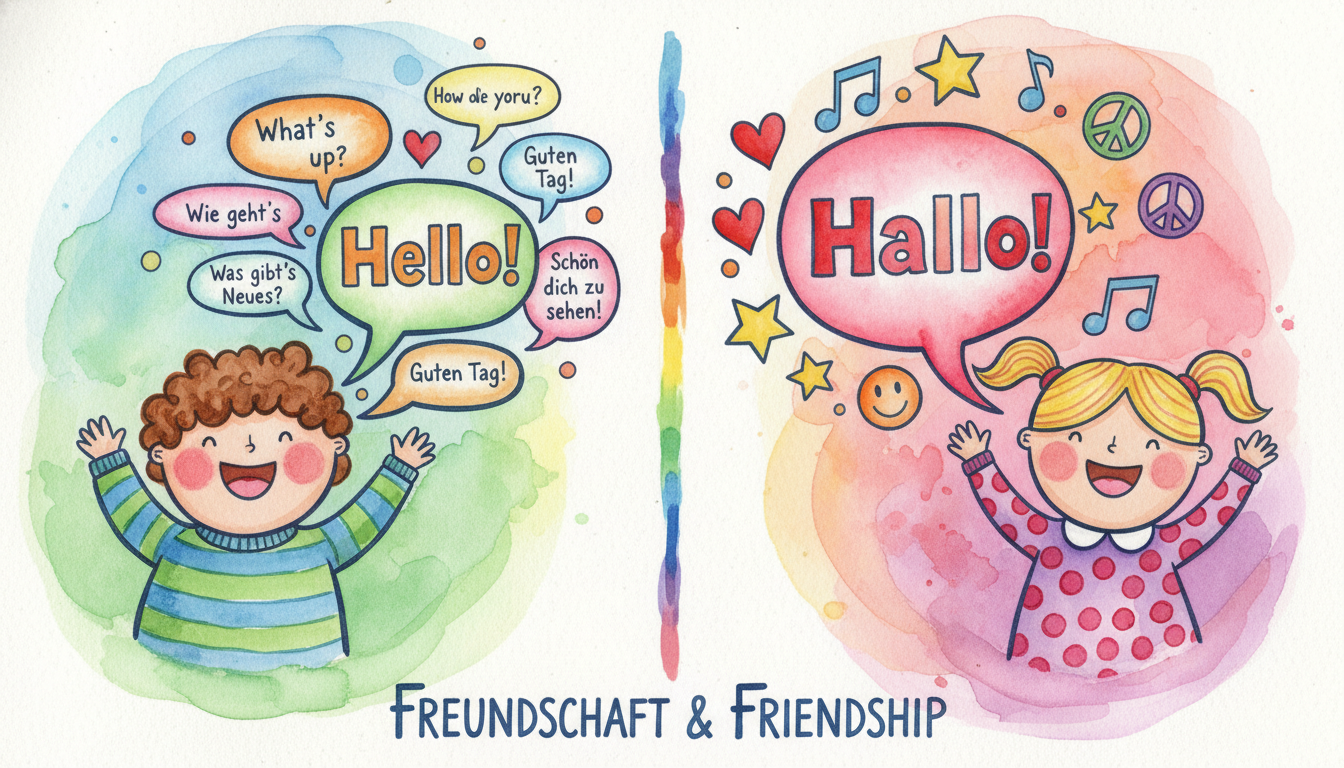
Everyday phrases can vary not only between languages but also within different contexts of communication. For example, in both English and German, there are informal and formal ways to greet someone. In English, 'Hi!' is a casual greeting, while 'Hello, how do you do?' is more formal. In German, 'Hallo!' is informal, and 'Guten Tag!' can be used in formal settings.
Additionally, incorporating these phrases into your daily routine can improve your language skills. Try using them in your conversations or while practicing speaking with friends. The more you use these phrases, the more natural they will become to you.
In summary, mastering common everyday phrases in any language is crucial for effective communication. Not only do they help in making connections with others, but they also serve as building blocks for learning more complex aspects of the language. So, whether you’re planning to travel, engage with friends, or simply broaden your language skills, start with these everyday phrases as your foundation.
Was this answer helpful?