
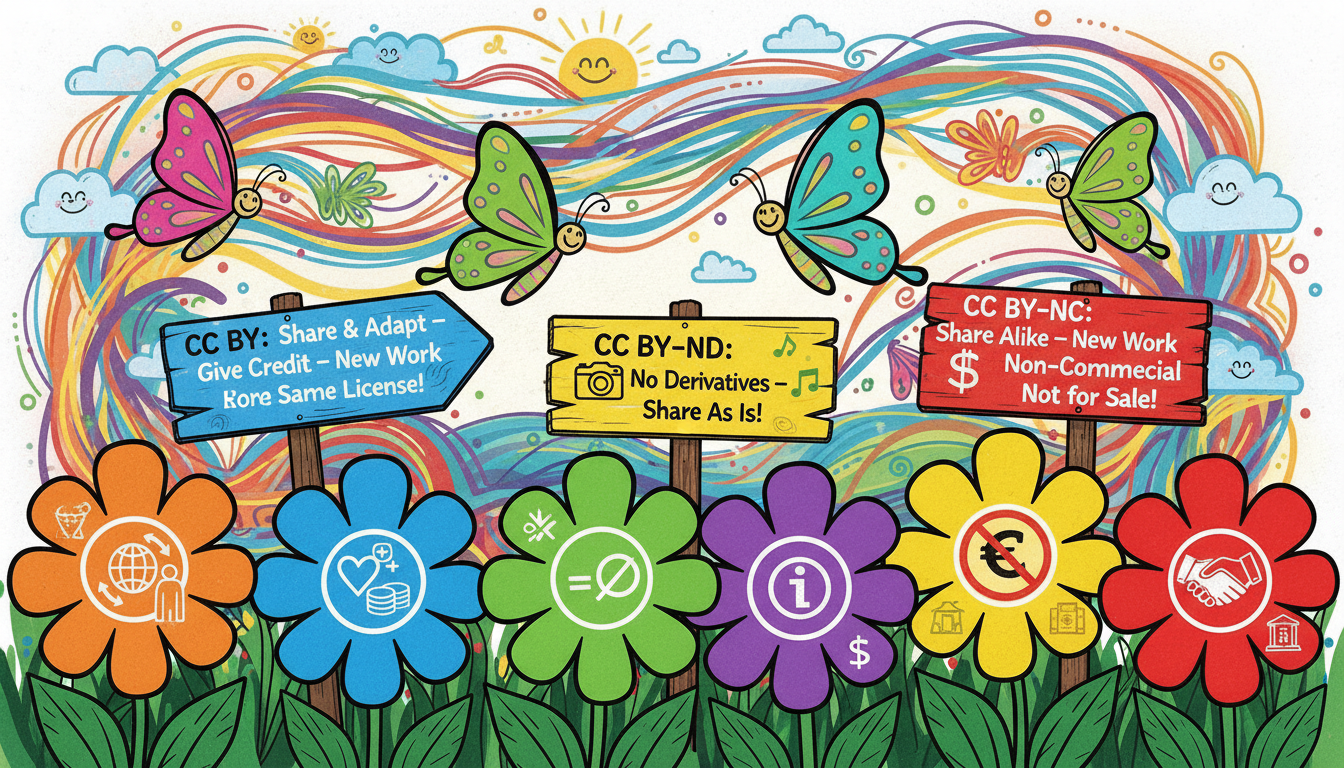
How to Match Creative Commons Licenses with Their Descriptions
Quick Answer
Matching Creative Commons licenses with their descriptions helps you understand how to use creative works legally. Each license has specific rules, such as requiring attribution or prohibiting commercial use.
Creative Commons licenses are vital tools for sharing and using creative works legally. Understanding how to match these licenses with their respective descriptions can empower creators and users alike. Each license carries unique rights and restrictions, which can greatly impact how a piece of work is used. Let’s break down the various licenses and see how they align with their descriptions.
### Understanding Creative Commons Licenses
Creative Commons provides several types of licenses designed to give creators flexible options for sharing their work. Here’s a brief overview of the most common licenses:
1. **CC BY (Attribution)**: This license allows others to distribute, remix, adapt, and build upon your work, even commercially, as long as they credit you for the original creation. This is the most flexible CC license in terms of what others can do with your works.
**Example**: A photographer can share their images under CC BY, allowing bloggers to use the images in their posts as long as the photographer is credited.
2. **CC BY-ND (Attribution-NoDerivatives)**: This license allows others to use the work for any purpose, including commercially, but it cannot be shared with adaptations. Users can only share verbatim copies of your work, and they must give credit to you.
**Example**: A writer publishes an article under CC BY-ND, meaning others can share the article but cannot modify it or create derivative works.
3. **CC BY-NC (Attribution-NonCommercial)**: This license lets others remix, tweak, and build upon your work non-commercially. Although their new works must also acknowledge you and be non-commercial, they don’t have to license their derivative works on the same terms.
**Example**: A musician allows their songs to be used under CC BY-NC, so they can be shared and remixed as long as no one profits from the new creations.
4. **CC BY-SA (Attribution-ShareAlike)**: This license lets others remix, tweak, and build upon your work even for commercial purposes, as long as they credit you and license their new creations under the identical terms.
**Example**: A software developer releases their code under CC BY-SA, allowing others to modify and distribute their software as long as they also share their modifications under the same license.
### Practical Applications
Knowing how to match these licenses with their descriptions is essential for both creators and users. As a creator, selecting the appropriate license allows you to control how your work is used while still enabling others to benefit from it. As a user, understanding these licenses helps you respect the rights of creators and use their works responsibly.
### Conclusion
By familiarizing yourself with the different Creative Commons licenses and their descriptions, you can navigate the world of shared creative works with confidence. This knowledge not only helps you in your academic pursuits but also prepares you for real-world applications in creative industries. If you’re ever unsure, always refer back to license descriptions to ensure you’re using works legally and ethically.
Was this answer helpful?