
What is Decoding and How Does it Work in Information Processing?
Quick Answer
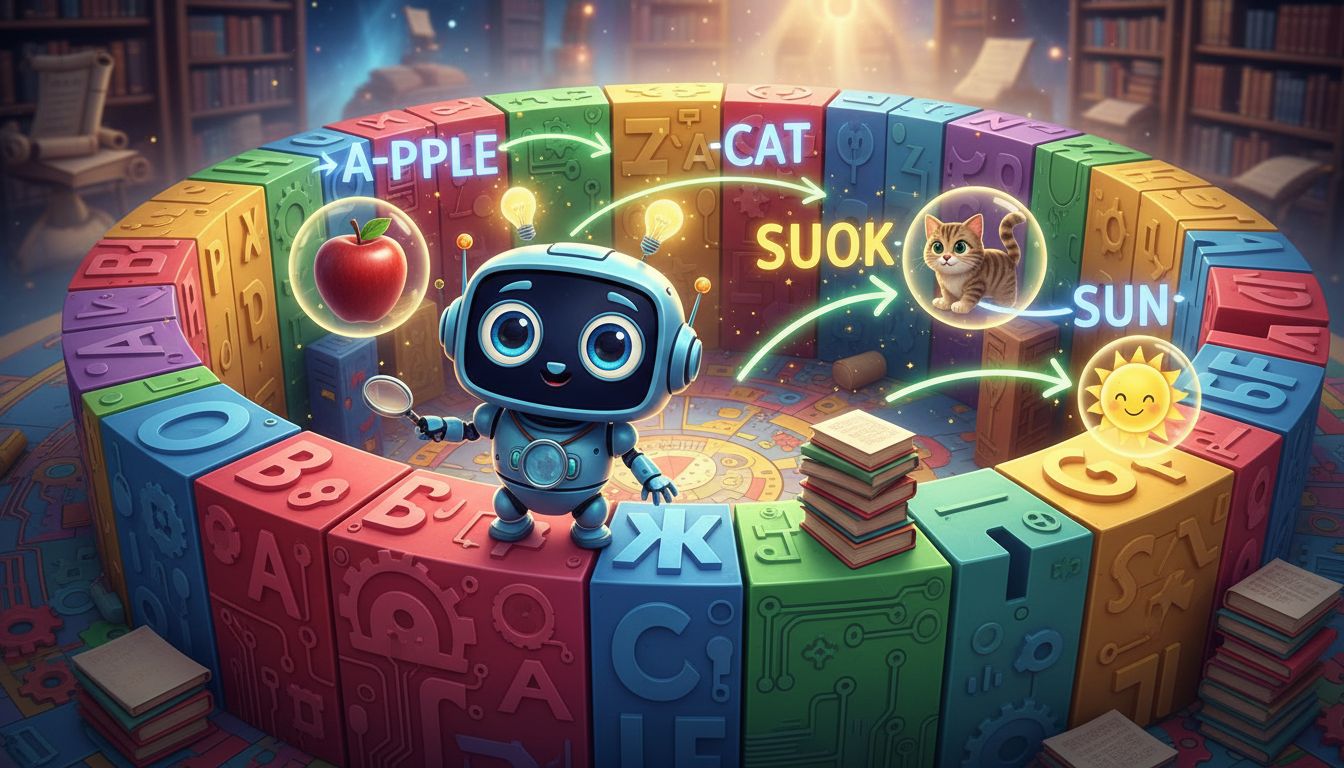
Decoding is the process of converting coded symbols back into understandable information. It contrasts with encoding, where information is transformed into symbols for easier transmission or storage.
Decoding is a fundamental skill in information processing, relating to how we understand and interpret coded messages. Simply put, decoding involves taking symbols—like letters, numbers, or other markers—and translating them back into a form that we can comprehend, such as words or phrases.
For example, consider a secret message that has been encoded. When someone reads that message and figures out what it means, they are decoding it. This process is crucial in various fields, from language translation to computer science.
To illustrate, let’s say you receive a coded message: "Uifsf jt b tfdsfu dpef." When decoded, this message reads: "There is a secret code." Here, each letter has been shifted by one position in the alphabet, a simple encoding technique known as the Caesar cipher. By decoding it, you retrieve the original meaning of the message.
Decoding is often confused with encoding, which is the opposite process. Encoding takes information and transforms it into a coded format. For instance, when you type a message on your phone, it is encoded into electronic signals that can be transmitted over networks. The receiving device then decodes these signals back into readable text.
In addition to encoding and decoding, there’s another term you may encounter: translating. Translating usually refers to converting text from one language to another. While decoding may involve language, it is primarily focused on returning coded symbols to their original meaning rather than switching between languages.
Decoding is not just limited to secret messages. It plays a significant role in various aspects of our daily lives. For instance, when you read a book or an article, your brain decodes the letters and symbols on the page to understand the content. In computer science, decoding is vital for reading data sent over the internet. Whether it involves decoding binary code into human-readable text or interpreting signals from a sensor, the process is pivotal in technology today.
Understanding decoding can enhance your comprehension skills, whether you are studying languages, computer science, or even music, where notes and symbols represent sounds. By mastering decoding, you empower yourself to navigate through different forms of information effectively, making it a valuable skill in both academic and real-world contexts.
Was this answer helpful?