
How Many Outcomes Are Possible in a Trivia Team Selection?
Quick Answer
To find the number of possible outcomes when selecting team members for trivia questions, multiply the number of choices for the first question by the remaining choices for the second question. For a team of two girls and one boy, there are 6 possible outcomes.
Understanding how to calculate possible outcomes in team selections can be both fun and educational! Let's break down the scenario step by step to clarify how we arrive at the total number of outcomes when selecting members of a trivia team.
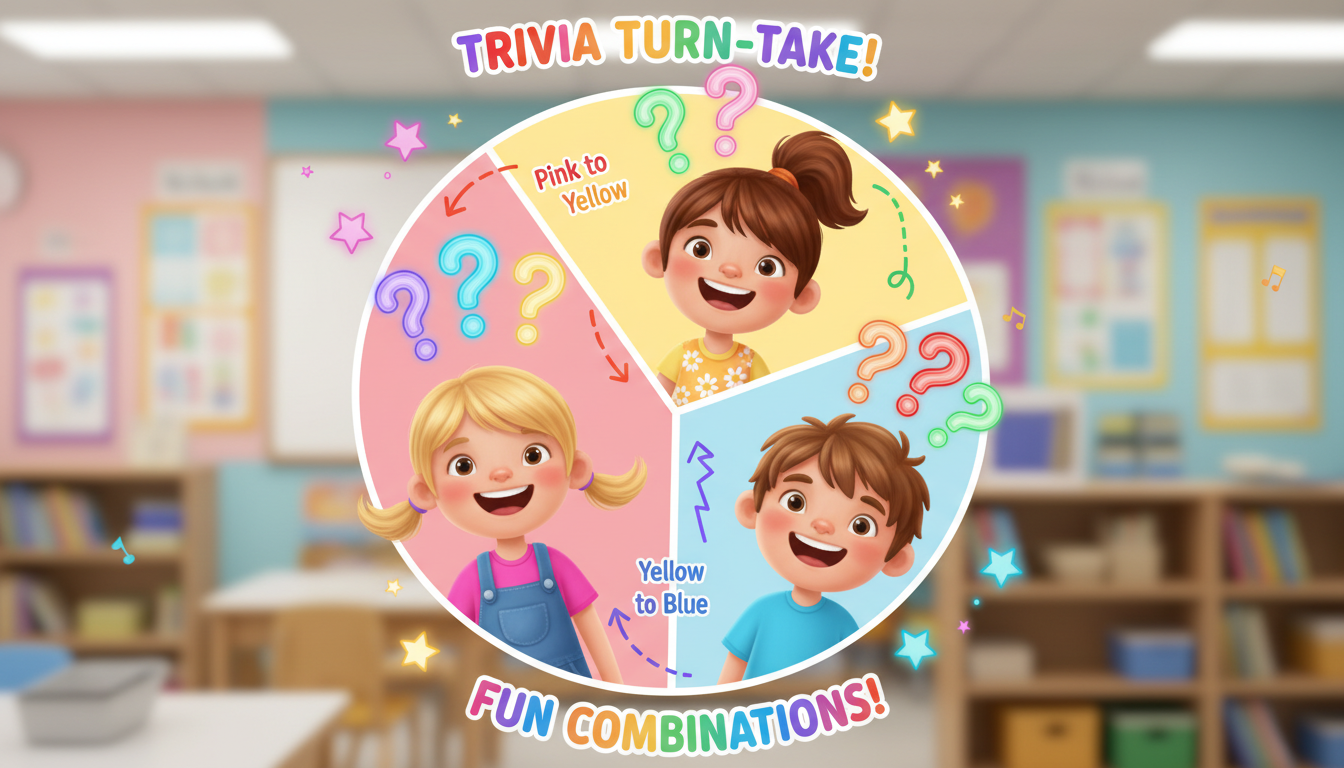
In this example, we have a trivia team consisting of two girls and one boy, making a total of three team members. When it comes to answering questions, the process involves selecting one team member to answer the first question and a different member to answer the second question.
**Step 1: Choosing the First Member**
For the first question, any of the three team members can be chosen. This gives us **3 options**: Girl 1, Girl 2, or Boy.
**Step 2: Choosing the Second Member**
Once the first question has been answered, we need to select a different member for the second question. Since the same person cannot answer both questions, we are left with only **2 remaining options**. For example, if Girl 1 answered the first question, then either Girl 2 or Boy can answer the second question.
**Step 3: Calculating Total Outcomes**
To find the total number of possible outcomes, we multiply the number of choices for the first question by the number of choices for the second question. This can be expressed mathematically as:
3 choices for the first question × 2 choices for the second question = **6 possible outcomes**.
**Example of Outcomes**
Here are the possible combinations of team members answering the questions:
1. Girl 1 answers the first question, Girl 2 answers the second.
2. Girl 1 answers the first question, Boy answers the second.
3. Girl 2 answers the first question, Girl 1 answers the second.
4. Girl 2 answers the first question, Boy answers the second.
5. Boy answers the first question, Girl 1 answers the second.
6. Boy answers the first question, Girl 2 answers the second.
These combinations illustrate all the different ways team members can be selected to answer the two trivia questions. This method of counting outcomes is not only applicable to trivia teams but can also be used in various real-world scenarios, such as organizing groups for projects, selecting players for teams, or even arranging participants for competitions.
By practicing this method of counting, students can enhance their problem-solving skills and gain a deeper understanding of combinatorics, a fundamental concept in mathematics that deals with counting, arrangement, and combination of objects. This knowledge can be beneficial beyond the classroom in everyday decision-making and planning activities.
Was this answer helpful?