
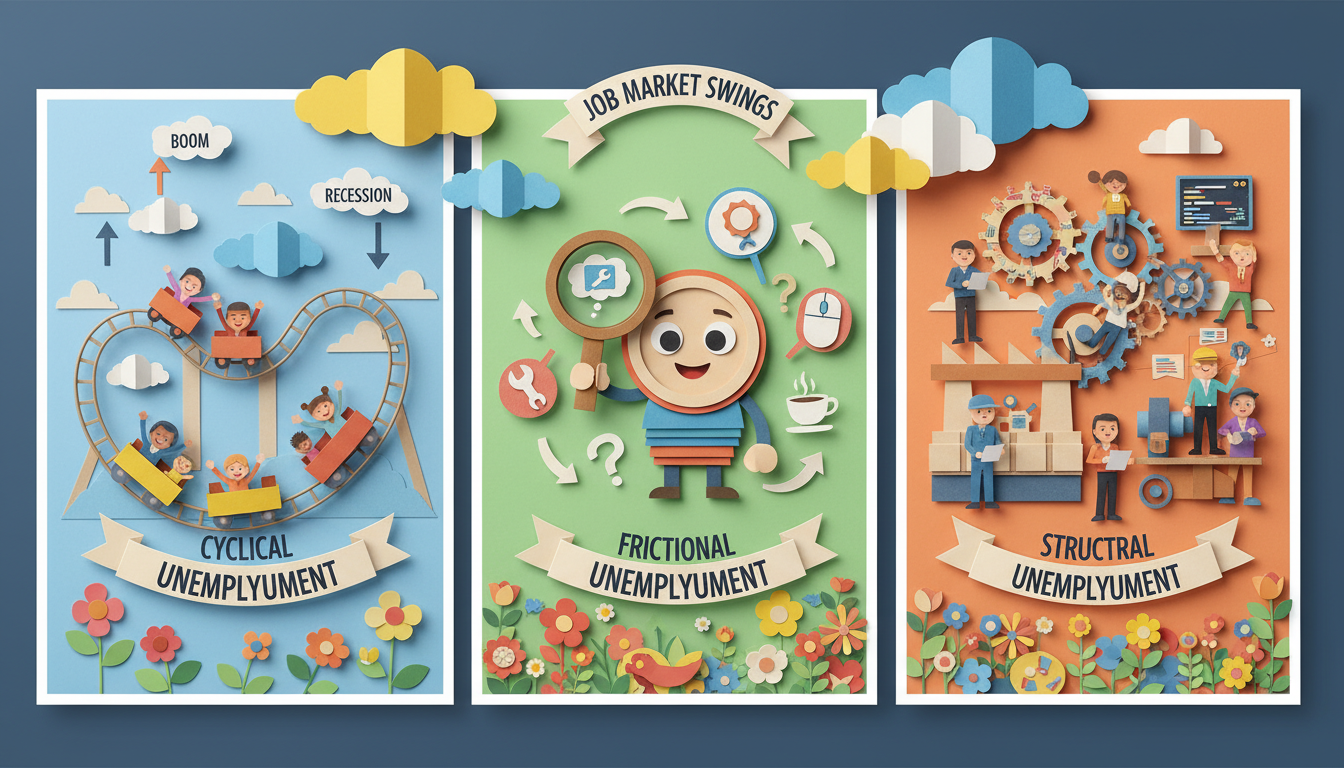
What are the Differences Between Cyclical, Frictional, and Structural Unemployment?
Quick Answer
Cyclical, frictional, and structural unemployment are three distinct types of unemployment. Cyclical and frictional unemployment are generally short-term, while structural unemployment often indicates longer-term economic issues.
Understanding the different types of unemployment is essential for grasping economic dynamics. Let's delve deeper into cyclical, frictional, and structural unemployment, examining their causes, characteristics, and implications for both short-term and long-term employment situations.
### Cyclical Unemployment
Cyclical unemployment is closely tied to the economic cycle. During periods of economic downturn, such as recessions, businesses often face decreased consumer demand. As a result, companies may reduce their workforce, leading to higher unemployment rates. This type of unemployment typically rises during economic slumps and falls as the economy improves. For example, during the 2008 financial crisis, many industries experienced significant layoffs, resulting in a spike in cyclical unemployment.
This type of unemployment is generally temporary; as the economy recovers, businesses begin hiring again, and those who lost their jobs can often find employment relatively quickly.
### Frictional Unemployment
Frictional unemployment occurs when individuals are in between jobs or are entering the job market for the first time. This type of unemployment is a natural part of a healthy economy, as it reflects the time people take to find jobs that match their skills and preferences. For instance, a recent college graduate searching for their first position or someone relocating to a new city may experience frictional unemployment.
While frictional unemployment might seem concerning, it is usually short-term and indicates that workers are actively seeking better opportunities. The job market can support this type of unemployment, as it reflects movement and dynamism among the workforce.
### Structural Unemployment
Structural unemployment is a more complex issue, often resulting from fundamental shifts in the economy. This type of unemployment occurs when there is a mismatch between the skills of the workforce and the needs of employers. For instance, technological advancements can render certain jobs obsolete, leading to structural unemployment. An example can be seen in the manufacturing sector, where automation has reduced the need for human labor in some roles, leaving workers without the necessary skills for available positions.
Unlike cyclical and frictional unemployment, structural unemployment tends to be longer-term. Workers affected by structural unemployment may need to acquire new skills or education to re-enter the job market effectively. This can be a significant challenge and often requires retraining programs or educational initiatives to help them transition into new roles.
### Conclusion
In summary, cyclical and frictional unemployment are primarily associated with short-run patterns in the labor market, driven by economic fluctuations or job transitions. In contrast, structural unemployment presents more profound, long-term issues linked to economic changes and workforce skill mismatches. Understanding these distinctions can help students and job seekers navigate the complexities of the job market and prepare for their future careers.
Was this answer helpful?