
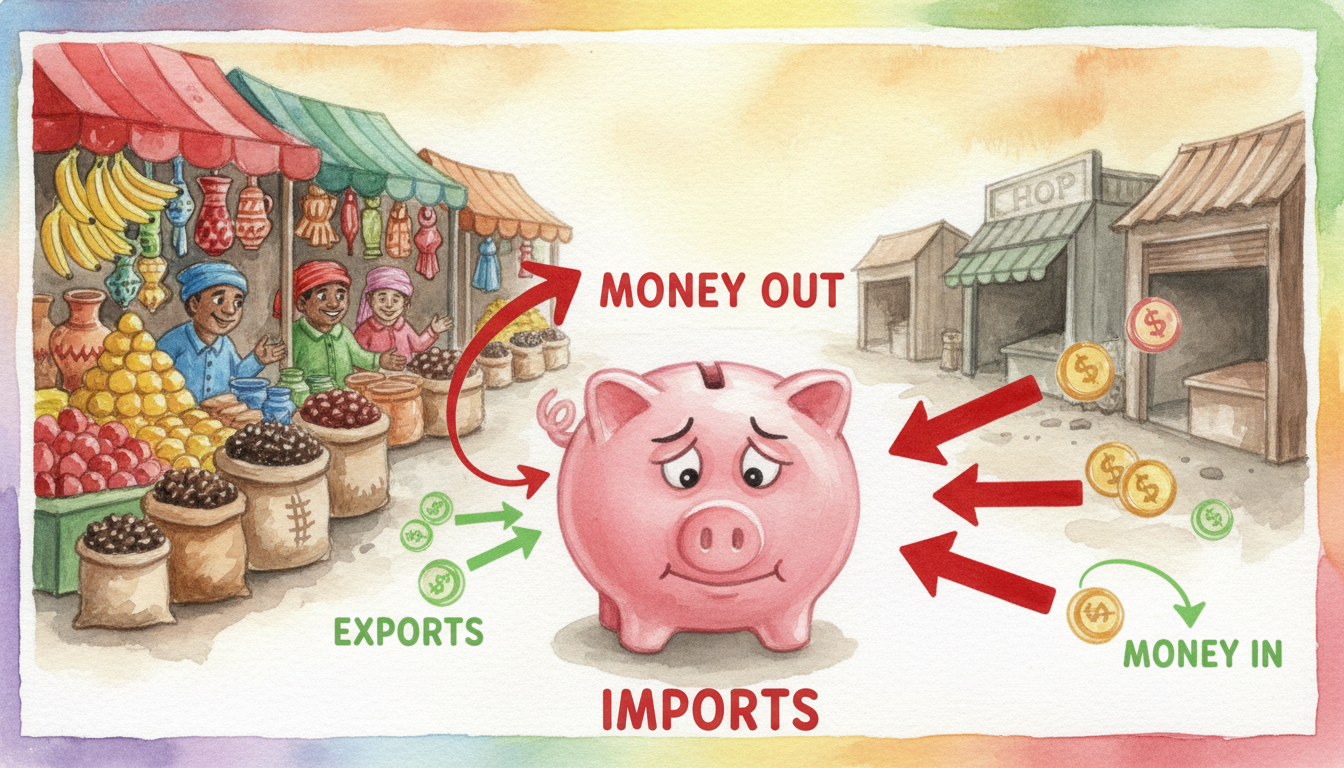
What are the Disadvantages of a Trade Deficit in an Economy?
Quick Answer
A trade deficit can lead to an economy becoming an importer of capital, as it borrows money to pay for excess imports. This can create vulnerabilities and affect the country's financial stability.
A trade deficit occurs when a country imports more goods and services than it exports. While some may view this as a reflection of economic strength and consumer demand, it can also pose several disadvantages to the economy. One of the primary drawbacks is that a trade deficit typically indicates that the economy is borrowing capital from other countries to finance its imports.
When a nation buys more from abroad than it sells, it often needs to fund this excess through loans or investments from foreign entities, which classifies it as an importer of capital. For instance, if a country imports a significant amount of consumer electronics but exports only a small amount of agricultural products, it may need to attract foreign investment or loans to support this imbalance.
This reliance on foreign capital can lead to several challenges. First, if the economy becomes too dependent on borrowing, it may face increased vulnerability during economic downturns. For example, a sudden decrease in foreign investment can create a liquidity crisis, making it difficult for businesses to operate. Additionally, large trade deficits can result in a weaker currency over time, as the country may need to devalue its currency to make its exports more competitive, leading to inflation and reduced purchasing power for consumers.
Another disadvantage is that prolonged trade deficits can harm domestic industries. With a steady influx of cheaper imports, local manufacturers may struggle to compete, potentially leading to job losses and factory closures. This can create a cycle of economic decline, where the country becomes increasingly reliant on foreign goods while its own production capabilities diminish.
In contrast, countries with trade surpluses typically have more financial stability, as they export more than they import and often act as net lenders to the global economy. In these scenarios, countries benefit from the capital inflow and can invest in their industries and infrastructure without relying on external borrowing.
Understanding the implications of trade deficits is crucial for policymakers and consumers alike. While a trade deficit might potentially allow for greater access to foreign goods and services, it is essential to monitor the economic indicators carefully and ensure that borrowing does not lead to a precarious financial situation. In conclusion, while trade deficits can provide short-term benefits through consumer access to diverse products, the long-term disadvantages can include dependency on foreign capital, increased vulnerability, and negative impacts on local industries.
Was this answer helpful?