
What is Equilibrium in the Foreign Exchange Market?
Quick Answer
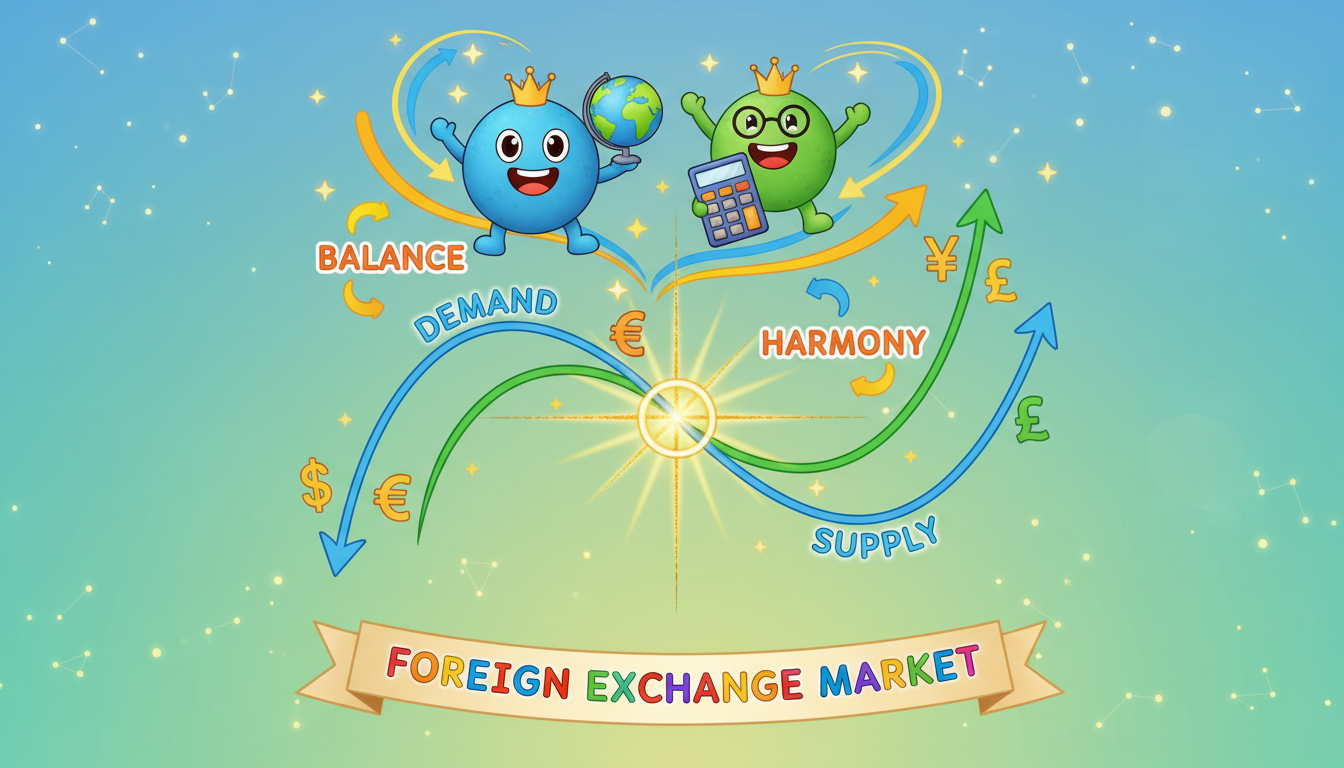
Equilibrium in the foreign exchange market occurs when the demand for a currency matches its supply. This balance happens at the intersection of the demand curve and the supply curve for that currency.
In the foreign exchange (forex) market, equilibrium is a crucial concept that defines the point where the quantity of currency demanded equals the quantity of currency supplied. To visualize this, think of the forex market as a bustling marketplace where buyers and sellers come together to trade currencies. The demand for a currency represents the desire of buyers to purchase that currency at various price levels, while the supply reflects how much of that currency sellers are willing to offer at those same price levels.
The equilibrium point is reached when the demand curve for a currency intersects with its supply curve. At this specific point, the price of the currency stabilizes because the quantity demanded by buyers perfectly matches the quantity supplied by sellers. In other words, there are no excess buyers or sellers at this price, leading to a stable exchange rate.
For example, imagine the euro being traded against the US dollar. If at a certain exchange rate, European businesses are looking to buy $100 million worth of dollars to import goods from the U.S., and at the same time, American exporters are willing to sell exactly $100 million worth of dollars at that rate, the market is in equilibrium. If the exchange rate changes, either buyers or sellers may adjust their quantities, creating a new equilibrium.
This concept is essential not only in economics but also in understanding global trade. When the forex market is in equilibrium, it indicates a balanced economic relationship between countries. Factors such as interest rates, economic data, and geopolitical events can shift either the demand or supply curve, leading to changes in the equilibrium exchange rate.
Understanding equilibrium can also help individuals and businesses in making informed decisions about currency exchange, whether for travel, investment, or trade. For instance, if you're planning to travel abroad, knowing when the market is in equilibrium might help you get the best exchange rate.
In summary, the equilibrium in the foreign exchange market is achieved when the demand curve for a currency intersects with its supply curve. This balance ensures that there is no excess supply or demand, leading to a stable price for the currency. Keeping an eye on these dynamics can help you navigate the complexities of the forex market more effectively.
Was this answer helpful?