
What Are the Four Main Parts of a Current Account Balance?
Quick Answer
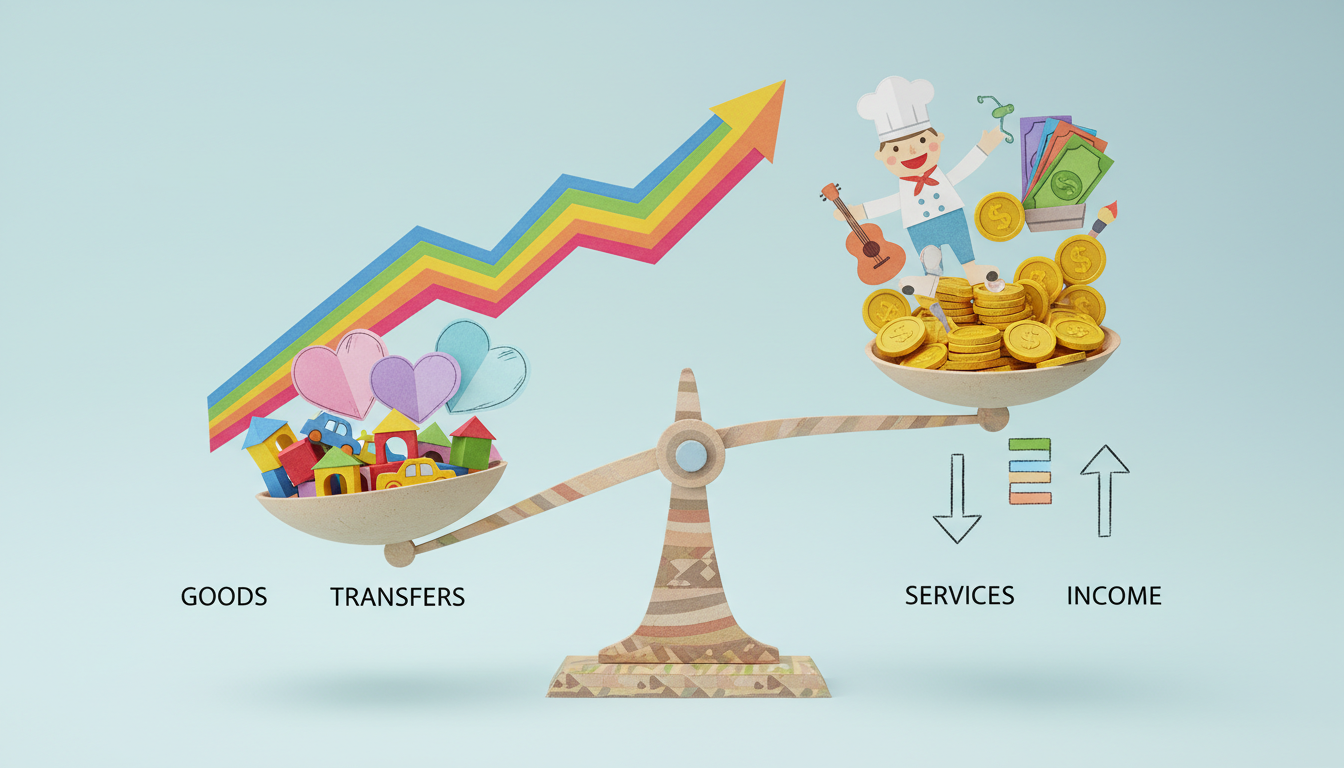
The four main parts of a current account balance are goods, services, income payments, and unilateral transfers. Generally, the US has a negative balance in goods, a positive balance in services and income payments, and a negative balance in unilateral transfers, resulting in an overall negative current account balance.
Understanding the current account balance is crucial for grasping how a country's economy interacts with the rest of the world. The current account is a major component of a nation's balance of payments, reflecting transactions related to trade, services, and income. Let's dive deeper into its four main parts:
1. **Goods:** This category covers tangible products traded between countries. When we say a country has a negative balance in goods, it means it imports more than it exports. For instance, the United States imports a vast array of goods, from electronics to clothing, which often leads to a significant trade deficit in this segment. Over recent years, the US has consistently shown a negative balance in goods due to high levels of imports compared to its exports.
2. **Services:** Unlike goods, services involve intangible products such as travel, insurance, and financial services. The US has a strong service sector and exports a considerable amount of services, especially in areas like technology and finance. Therefore, this part typically shows a positive balance, indicating that the US earns more from its service exports than it spends on imports.
3. **Income Payments:** This component includes earnings from investments abroad, such as dividends and interest. For example, if a US company owns a subsidiary in another country and receives profits from it, this income is counted here. The US tends to have a positive balance in income payments, reflecting the strength of its investments in foreign markets.
4. **Unilateral Transfers:** These are one-way transactions that do not involve a quid pro quo, such as remittances sent by individuals working abroad to their families back home. The US generally shows a negative balance in unilateral transfers, as it sends more money overseas than it receives.
When we combine these four components, the overall current account balance for the US is typically negative. This situation indicates that the country is spending more on foreign goods, services, and transfers than it earns from its exports and investments abroad. Understanding these dynamics helps in analyzing the economic health and international standing of a country. In conclusion, while the US maintains a robust position in services and income payments, its reliance on imports keeps its current account balance in the negative territory, showcasing the complexities of global trade and finance.
Was this answer helpful?