
Understanding Unity Principles in Art: Nature and Flowers Theme
Quick Answer
This series on nature and flowers explores various unity principles in art. Each thumbnail demonstrates a different principle, such as proximity and unified direction, to create cohesive and engaging compositions.
In art, the principle of unity is essential for creating cohesive and visually appealing compositions. In this series centered around the theme of nature and flowers, various unity principles are employed to enhance the overall aesthetic and message of each piece. Understanding these principles can significantly improve your artistic skills and creativity.
The first thumbnail features clustered flowers, which exemplifies the proximity principle. By grouping the flowers closely together, the viewer’s eye is naturally drawn to the cluster, creating a sense of connection among the flowers. The artist has utilized a technique where the details of the flowers in the foreground are more pronounced, while those in the background are shaded dimmer. This not only creates a sense of depth but also emphasizes the importance of the foreground elements. Additionally, the choice of a plain green background serves to balance the composition, allowing the vibrant colors of the flowers to stand out.
In the second thumbnail, focused on sunflowers, the principle of unified direction is illustrated. Here, all the sunflowers face the same way, creating a sense of harmony and movement within the artwork. The artist plans to incorporate similar colors and textures across the sunflowers, further enhancing the visual connection among them. This approach not only draws the viewer’s attention but also evokes a feeling of unity and purpose in the composition.
The closure thumbnail featuring a lady uses the principle of closure, which encourages viewers to fill in the gaps with their imagination. By leaving blank space, the artist allows for a more engaging interaction with the audience, prompting them to consider the narrative beyond what is explicitly shown.
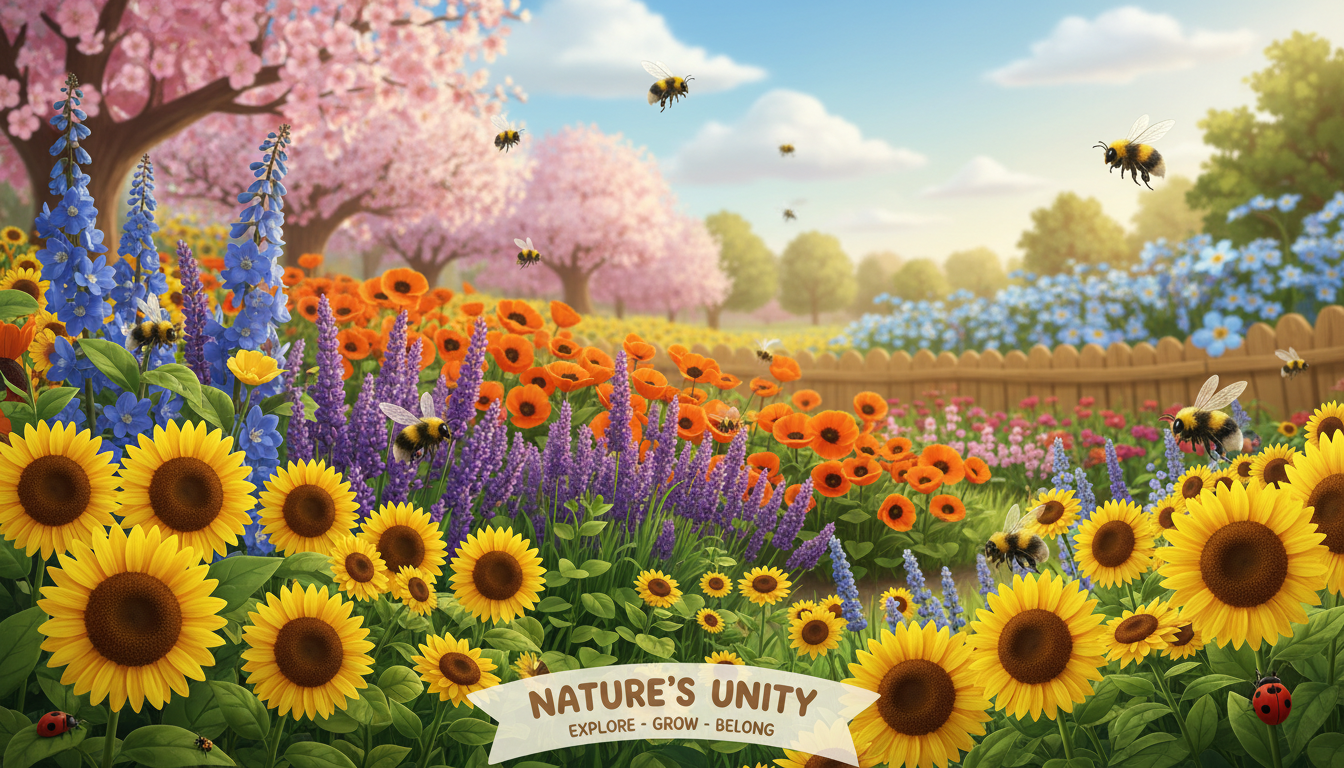
Another thumbnail that showcases the continuation principle is the flowers-with-bees illustration. In this piece, the artist repeats the same type of flower and depicts a bee in various stages of flight. This repetition creates a visual rhythm and implies a pattern, guiding the viewer’s eye through the composition. Even without actual lines connecting the bees to the flowers, the viewer can intuitively understand the relationship between the two.
These examples of unity principles not only highlight the importance of composition in art but also demonstrate how artists can effectively communicate themes such as nature and flowers. Understanding and applying these principles can enhance both artistic expression and appreciation, making your artwork more impactful and resonant with viewers. Whether you are a student, a budding artist, or someone simply interested in art, recognizing these principles can deepen your understanding and enjoyment of visual art forms.
Was this answer helpful?