
How Does Increasing Minimum Paid Vacation Days Affect Demand Curve?
Quick Answer
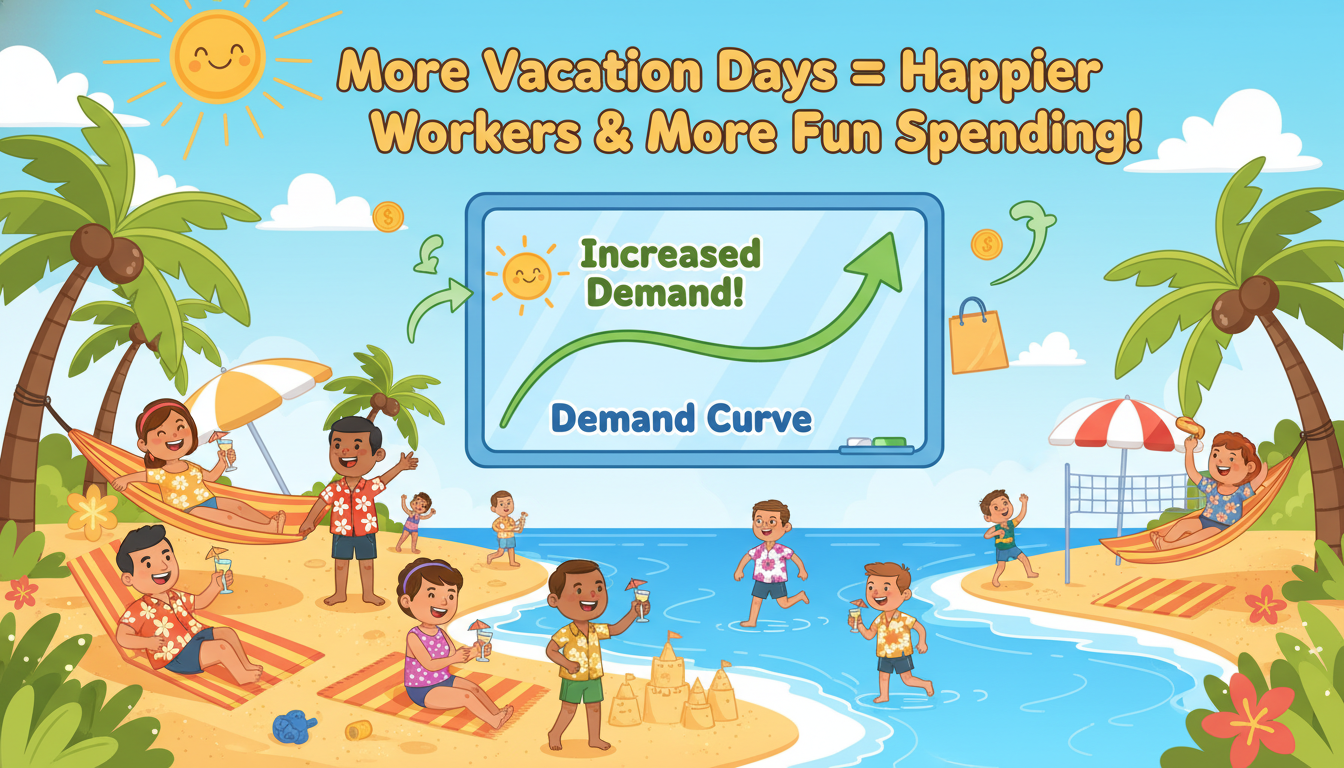
Increasing minimum paid vacation days can shift the demand curve to the right. More paid time off typically leads to increased consumer spending on travel and leisure activities, resulting in higher demand for related goods and services.
When minimum paid vacation days are increased, it can have a significant impact on consumer behavior and overall economic activity. This phenomenon can be understood through the lens of the demand curve in economics, which represents how much of a good or service consumers are willing to purchase at various price levels.
First, let's consider the basics: when individuals receive more paid vacation days, they often have additional time to engage in leisure activities. This includes traveling, dining out, shopping, and participating in various recreational activities. As a result, people are likely to feel more inclined to spend money, which can lead to an increase in the demand for goods and services related to these activities.
A rightward shift in the demand curve means that, at the same price point, more consumers are willing to purchase goods or services than before. For instance, if more people are taking vacations because they have additional paid time off, businesses in the travel and hospitality sectors, such as airlines, hotels, and tour companies, may experience a surge in demand. This increase can lead to higher sales and revenue for these businesses.
To illustrate this further, consider a scenario where a country increases the minimum paid vacation days from 10 days to 15 days. With this change, employees may feel more motivated to plan vacations since they now have more time to enjoy leisure activities without the stress of work. Consequently, companies like airlines might see an uptick in ticket purchases, while hotels may experience higher booking rates. This increased demand could prompt these businesses to raise prices, reflecting the heightened interest and willingness to pay among consumers.
Additionally, the positive economic implications extend beyond just the travel industry. Increased paid vacation days can lead to a boost in local economies. For example, consumers might spend more at restaurants, local attractions, and retail stores during their time off. This ripple effect can stimulate job creation and further economic growth in various sectors.
In summary, raising minimum paid vacation days can significantly influence the demand curve by increasing consumer spending. A rightward shift in the demand curve indicates that more goods and services are sought after at the same price, demonstrating the interconnectedness of labor policies and economic dynamics. Understanding these relationships is crucial for grasping basic economic principles and their real-world applications.
Was this answer helpful?