
Which Countries in Africa Speak Swahili? Learn More Here!
Quick Answer
Swahili is primarily spoken in East Africa, with countries like Kenya, Tanzania, Uganda, and the Democratic Republic of the Congo having significant Swahili-speaking populations. It serves as an official language in several of these nations.
Swahili, also known as Kiswahili, is one of the most widely spoken languages in Africa, particularly in the eastern region of the continent. It serves as a bridge language among diverse ethnic groups and is recognized for its rich cultural heritage. Understanding which countries speak Swahili can provide insight into the linguistic landscape of East Africa.
The primary countries where Swahili is an official language include:
1. **Tanzania** - Swahili is the national language of Tanzania and is spoken by the majority of the population. It is used in government, education, and media, making it an integral part of daily life.
2. **Kenya** - In Kenya, Swahili is one of the two official languages alongside English. It is spoken widely in urban areas and is a compulsory subject in schools, emphasizing its importance in Kenyan society.
3. **Uganda** - While English is the official language, Swahili is recognized as a national language and is increasingly used in government and public discourse. It is taught in schools and understood by many Ugandans.
4. **Democratic Republic of the Congo (DRC)** - In the DRC, Swahili is one of the four national languages and is spoken predominantly in the eastern part of the country. It plays a vital role in communication across various ethnic groups.
5. **Rwanda and Burundi** - Although not official languages, Swahili is widely understood and spoken in both Rwanda and Burundi, especially in urban areas and among those engaged in trade.
In addition to these countries, Swahili is spoken as a second language by millions across the region, including in nations like Mozambique, Somalia, and northern Zambia. The language has also made its way into pop culture and media, contributing to its growth and popularity.
Swahili's significance extends beyond mere communication; it is a unifying factor in a region characterized by linguistic diversity. It facilitates trade, tourism, and cultural exchange among East African nations. Thus, learning Swahili can be incredibly beneficial, especially for those looking to engage with the vibrant cultures of East Africa.
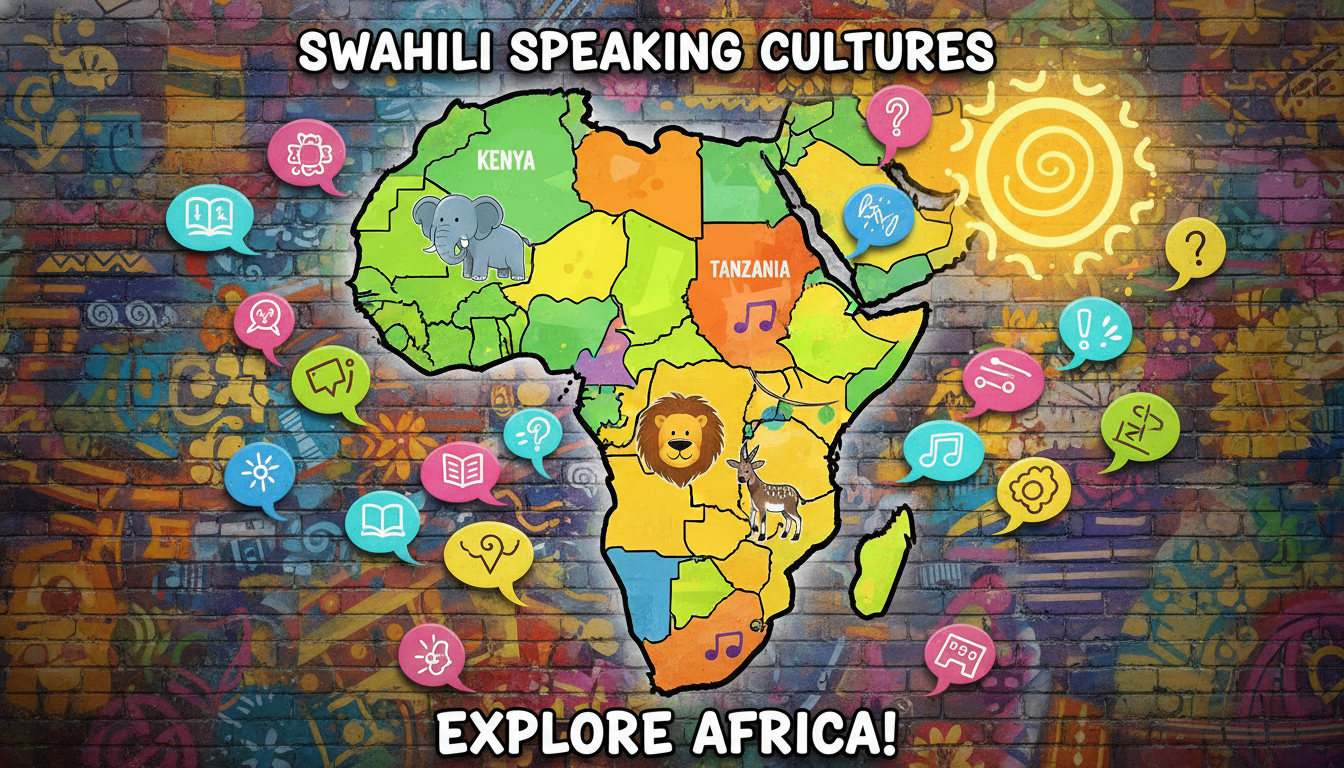
To visualize the spread of Swahili, consider looking at a map of Africa highlighting these countries. This can help you understand the geographical reach of the language and its importance in fostering connections among different communities.
In conclusion, Swahili is not just a language; it is a symbol of unity and cultural identity in East Africa. Whether you're interested in travel, trade, or cultural studies, understanding Swahili can open up many opportunities for interaction and learning.
Was this answer helpful?