
What Has Shaped the Human Geography of Australia & Oceania?
Quick Answer
The human geography of Australia and Oceania has been shaped by indigenous cultures, migration patterns, and environmental factors. Aboriginal Australians and Pacific Islanders have significantly influenced the region's cultural identity.
The human geography of Australia and Oceania is a rich tapestry woven from the threads of history, culture, and environment. Understanding what has shaped this region requires examining the diverse influences of indigenous peoples, migration patterns, and the unique landscapes that define Australia and the surrounding Pacific Islands.
**Indigenous Peoples**
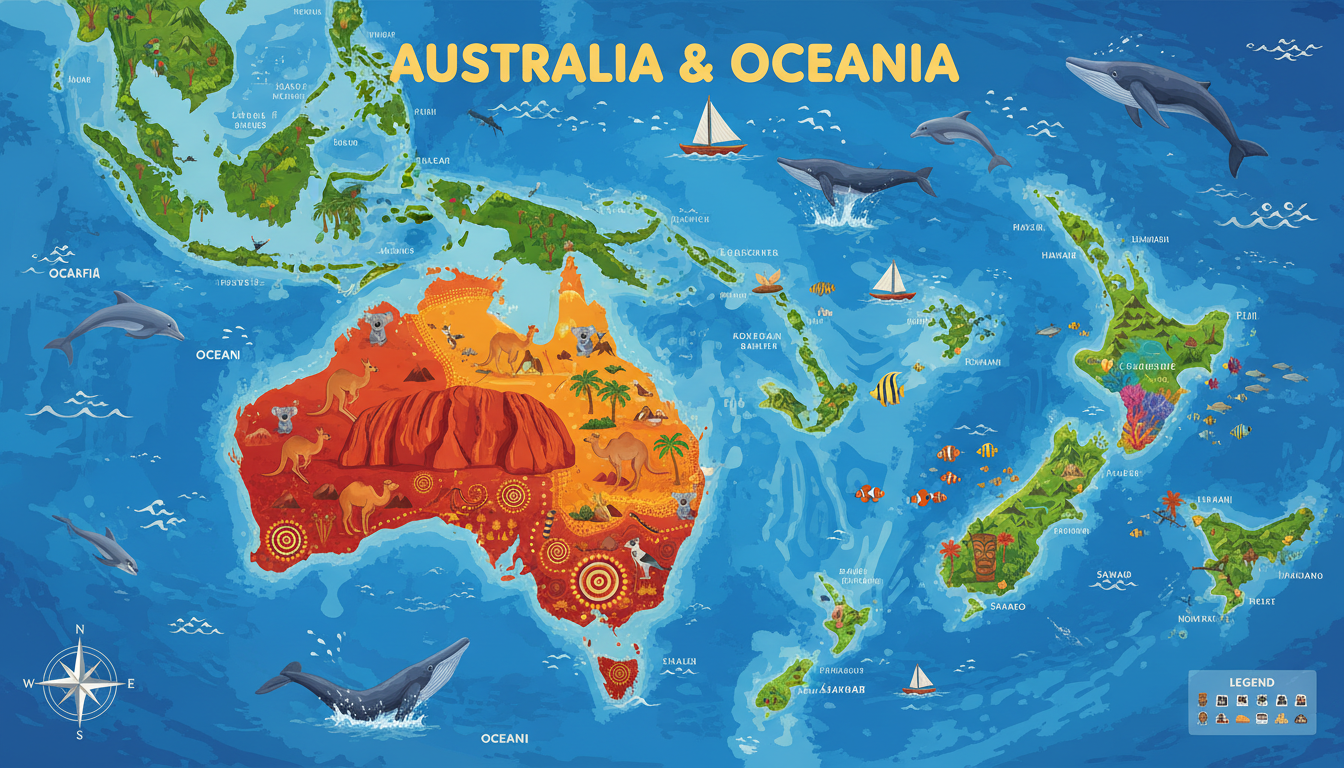
Aboriginal Australians are among the oldest continuous cultures in the world, having inhabited Australia for over 50,000 years. This long history has led to the development of numerous languages and distinct nations, each deeply connected to specific territories known as 'Country.' The stories, art, and Dreamtime beliefs of Aboriginal peoples are intricately tied to the natural features of the land, such as deserts, rivers, and sacred sites. For example, the Uluru rock formation holds immense spiritual significance for the Anangu people, showcasing how geography and culture are interlinked.
**Pacific Island Migration**
The region's geography has also been shaped by the migration of various groups across the Pacific. Polynesian culture, for instance, emerged from the seafaring traditions of Southeast Asian sailors who navigated the South Pacific using stars, winds, and ocean currents. As these sailors settled on islands like Hawaii, New Zealand, and Easter Island, they brought their customs, agricultural practices, and social structures. The rich cultural diversity found in Oceania today is a direct result of these migration patterns and the blending of different cultures.
**Environmental Factors**
Australia's varied landscapes, from arid deserts to tropical rainforests, have also influenced human geography. The availability of resources such as water, fertile land, and minerals has shaped settlement patterns and economic activities. Coastal regions, for instance, have attracted populations due to fishing and trade opportunities, while the interior desert areas remain sparsely populated. Understanding these environmental influences is crucial for appreciating the complexities of human geography in the region.
In conclusion, the human geography of Australia and Oceania is shaped by a combination of indigenous heritage, migration influences, and environmental factors. By studying these elements, we gain a deeper appreciation for the cultural richness and diversity present in this unique part of the world.
Was this answer helpful?