
What is the Supreme Court's Role in Interpreting the Constitution?
Quick Answer
The Supreme Court's most significant power is interpreting the Constitution, allowing it to overturn unconstitutional laws. It also resolves disputes between states, providing an unbiased solution that helps maintain order and uphold the rule of law.
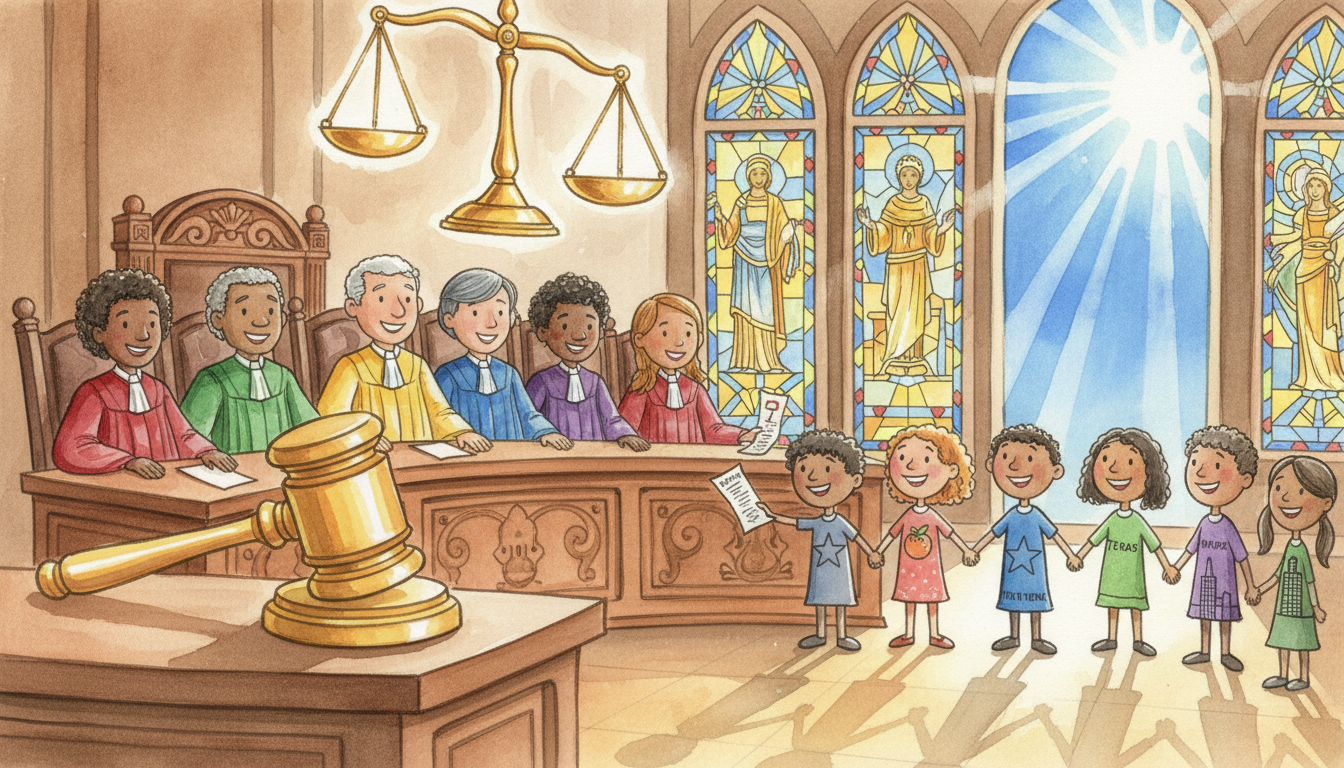
The Supreme Court of the United States holds a crucial role in interpreting the Constitution, which is the foundational legal document of the country. This power, known as judicial review, allows the Court to evaluate the constitutionality of laws and actions taken by the legislative and executive branches of government. When the Court finds a law or action unconstitutional, it has the authority to overturn it, thereby ensuring that the principles of the Constitution are upheld.
One fascinating aspect of the Supreme Court's role is its function in resolving disputes between states. When states have disagreements—whether they are about boundaries, resources, or other legal matters—they can bring their cases before the Supreme Court. This ability to adjudicate state conflicts is significant because it helps prevent potential disputes from escalating into larger conflicts that could disrupt governance and social order.
By providing an impartial and unbiased forum for these disputes, the Supreme Court serves as a stabilizing force in the federal system. For instance, if two states disagree over water rights from a shared river, the Supreme Court can step in to resolve the issue based on constitutional principles and federal law, ensuring a fair outcome for both parties.
Additionally, the Supreme Court's decisions set important precedents that guide future cases. For example, landmark cases such as Marbury v. Madison established the principle of judicial review itself, while Brown v. Board of Education addressed state laws on racial segregation. These rulings not only resolve the specific cases at hand but also shape the legal landscape for generations to come.
Moreover, the Supreme Court's role in interpreting the Constitution is vital in a democratic society. It acts as a check on the powers of the other branches of government, ensuring that lawmakers and the executive branch do not overstep their bounds. This system of checks and balances is fundamental to maintaining the rule of law and protecting individual rights.
In conclusion, the Supreme Court's power to interpret the Constitution and resolve disputes between states underscores its importance in the American legal system. By functioning as an unbiased arbiter of conflicts and ensuring that laws adhere to constitutional principles, the Supreme Court plays a pivotal role in maintaining order and justice across the nation.
Was this answer helpful?