
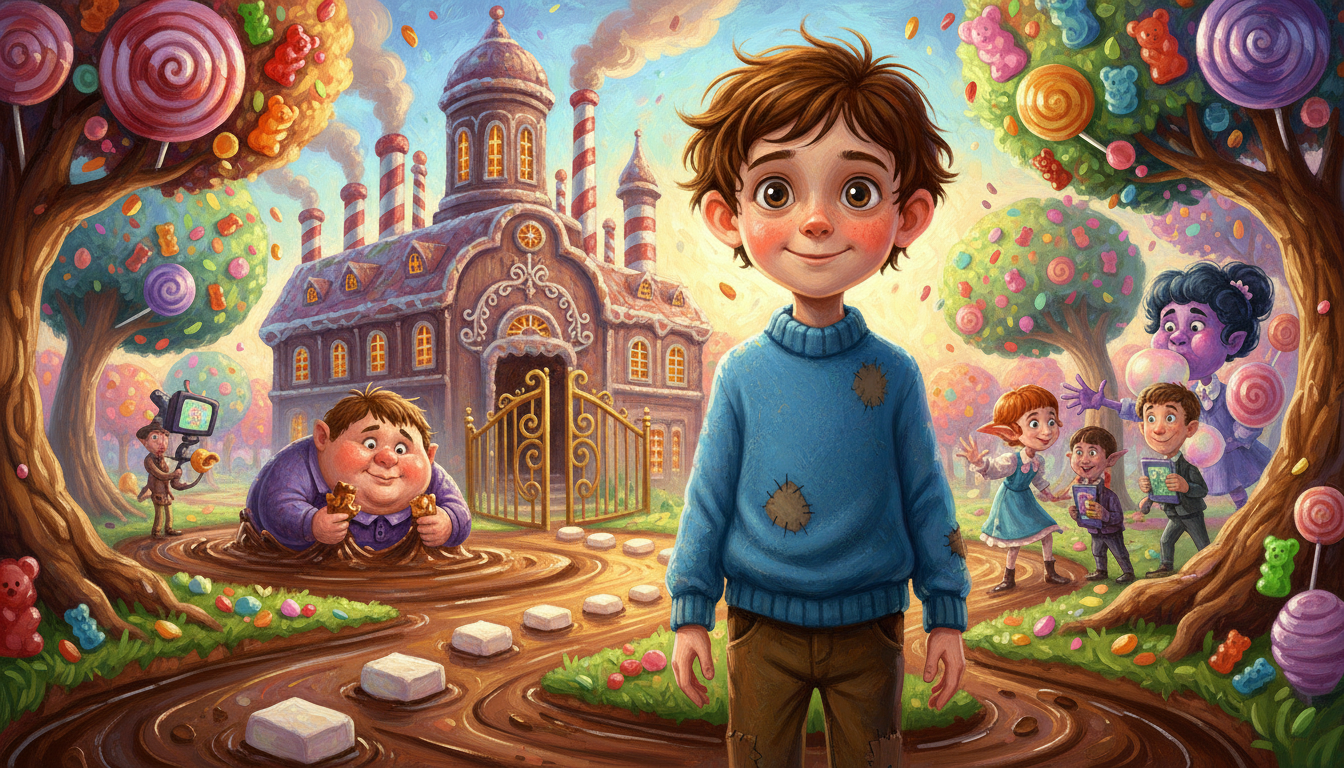
What is the Main Conflict in 'Charlie and the Chocolate Factory'?
Quick Answer
The main conflict in 'Charlie and the Chocolate Factory' revolves around Charlie Bucket's struggle with poverty and the contrasting behaviors of the children who visit Willy Wonka's factory. It highlights themes of good versus bad behavior.
In Roald Dahl's beloved novel, *Charlie and the Chocolate Factory*, the main conflict centers on the life of Charlie Bucket, a young boy who lives in poverty with his family. This story unfolds as Charlie wins a golden ticket to visit Willy Wonka's mysterious chocolate factory, a once-in-a-lifetime opportunity that could change his life forever.
At its core, the conflict can be understood through two key themes: Charlie's struggle against his impoverished circumstances and the moral lessons presented through the behaviors of the other children who accompany him on the factory tour.
Charlie represents the virtue of kindness, humility, and good behavior, which starkly contrasts with the other children—Augustus Gloop, Veruca Salt, Violet Beauregarde, and Mike Teavee—who each embody various forms of greed, selfishness, and mischief. These characters serve as cautionary tales, demonstrating the consequences of poor behavior. For instance, Augustus's gluttony leads him to fall into the chocolate river, while Veruca's entitlement results in her being deemed a 'bad nut' by the squirrels.
Charlie's journey through the factory becomes a vivid illustration of how his good nature ultimately rewards him. Unlike the other children, who face dire consequences for their actions, Charlie's respectful behavior earns him Willy Wonka's admiration. By the end of the story, Charlie's perseverance and moral integrity lead him to inherit the factory, showcasing that good behavior can lead to positive outcomes, even in the face of adversity.
This conflict not only drives the narrative but also imparts essential life lessons about the importance of character and the impact of one's actions. Readers are encouraged to reflect on the value of kindness and the potential life-changing opportunities that come from being a good person. Ultimately, *Charlie and the Chocolate Factory* serves as a reminder that while external circumstances can be challenging, one's choices and behavior can pave the way for a better future.
In conclusion, the main conflict in *Charlie and the Chocolate Factory* is a rich exploration of poverty, morality, and the dichotomy between good and bad behavior, making it a timeless tale that resonates with readers of all ages.
Was this answer helpful?