
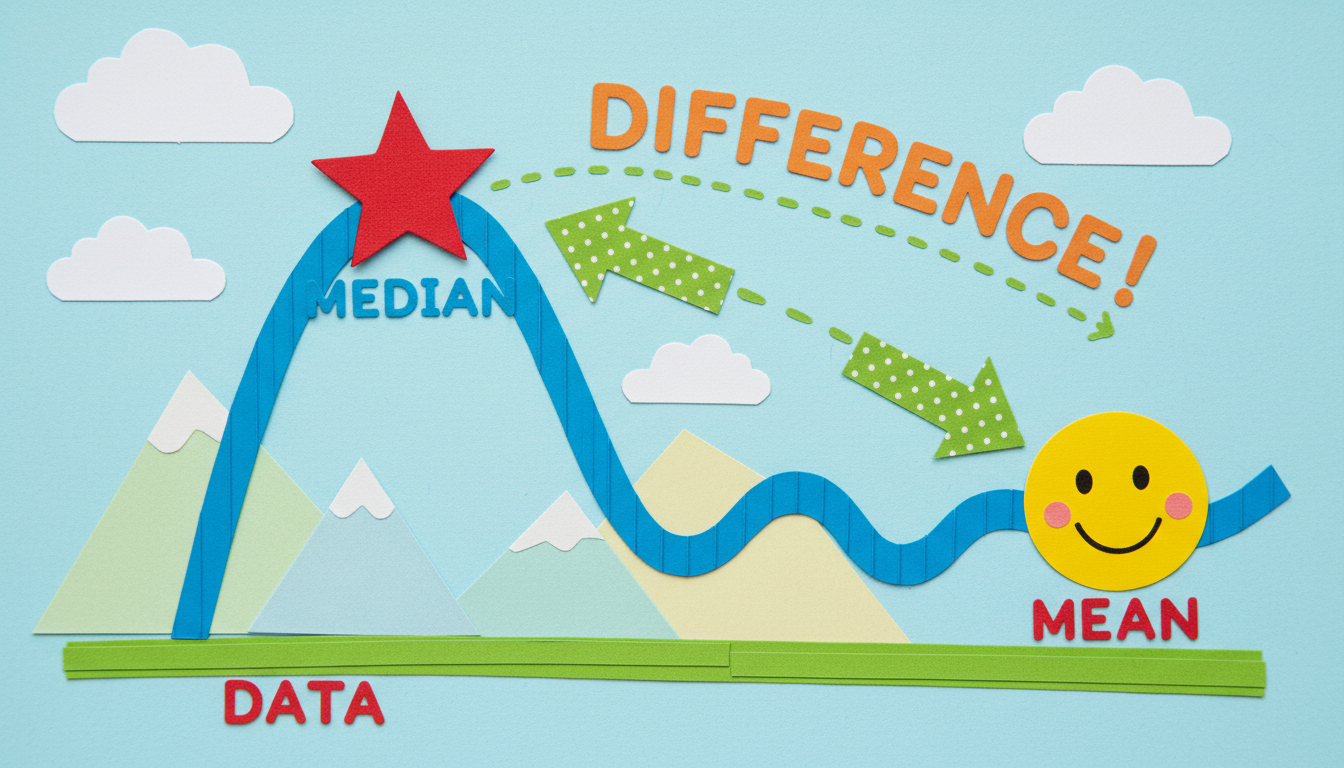
Understanding Skewed Distributions: Mean vs. Median
Quick Answer
When dealing with skewed distributions, use the median for the center and IQR for spread. A left-skewed distribution means most data points are on the right, with the tail on the left.
In statistics, understanding the shape of data distributions is crucial for accurate analysis. One common shape you might encounter is a left-skewed distribution, also known as negatively skewed. This occurs when the bulk of the data points are concentrated on the right side of the distribution, while the left side has a long tail. This tail indicates that there are some lower values that pull the mean down, which is essential to recognize when calculating statistical measures.
When a distribution is skewed, it's important to select the right measures of central tendency and spread. Typically, for symmetric distributions, the mean is used for the center and standard deviation for spread. However, for skewed distributions, these measures can be misleading. Instead, statisticians recommend using the median as the measure of center and the interquartile range (IQR) for spread.
### Why Use Median and IQR?
The median is the middle value of a dataset, which makes it less sensitive to extreme values (outliers). For example, consider the ages of a group of people: if most are between 20 and 30 but one is 90, the mean age would be significantly higher than most of the group, while the median would still reflect the central tendency of the majority.
The IQR measures the range of the middle 50% of the data, providing a clearer picture of variability without being affected by outliers. For instance, if you have test scores that include several very low scores alongside high scores, the IQR will give you a better sense of how students are performing in the middle of the distribution compared to the standard deviation, which might be inflated by those low scores.
### Real-World Applications
Understanding skewed distributions is essential in various fields. In economics, for instance, income distribution often shows skewness, where a small number of individuals earn significantly more than the majority. Using the median income gives a more accurate representation of the economic condition of a population than the mean income, which can be skewed by high earners.
In healthcare, analyzing patient wait times might reveal a skewed distribution, where most patients are seen quickly, but a few cases take much longer. Here, the median wait time would provide a better understanding of the typical experience for patients than the mean.
In conclusion, recognizing the skewness in data distributions and knowing which statistics to use is key to accurate analysis. For left-skewed distributions, remember to use the median for center and IQR for spread to ensure your interpretations are reflective of the actual data.
By mastering these concepts, you will improve your statistical analysis skills and enhance your ability to interpret data accurately. Always consider the shape of your data when choosing your statistical tools!
Was this answer helpful?