
What Causes Antibiotic Resistance in Bacteria?
Quick Answer
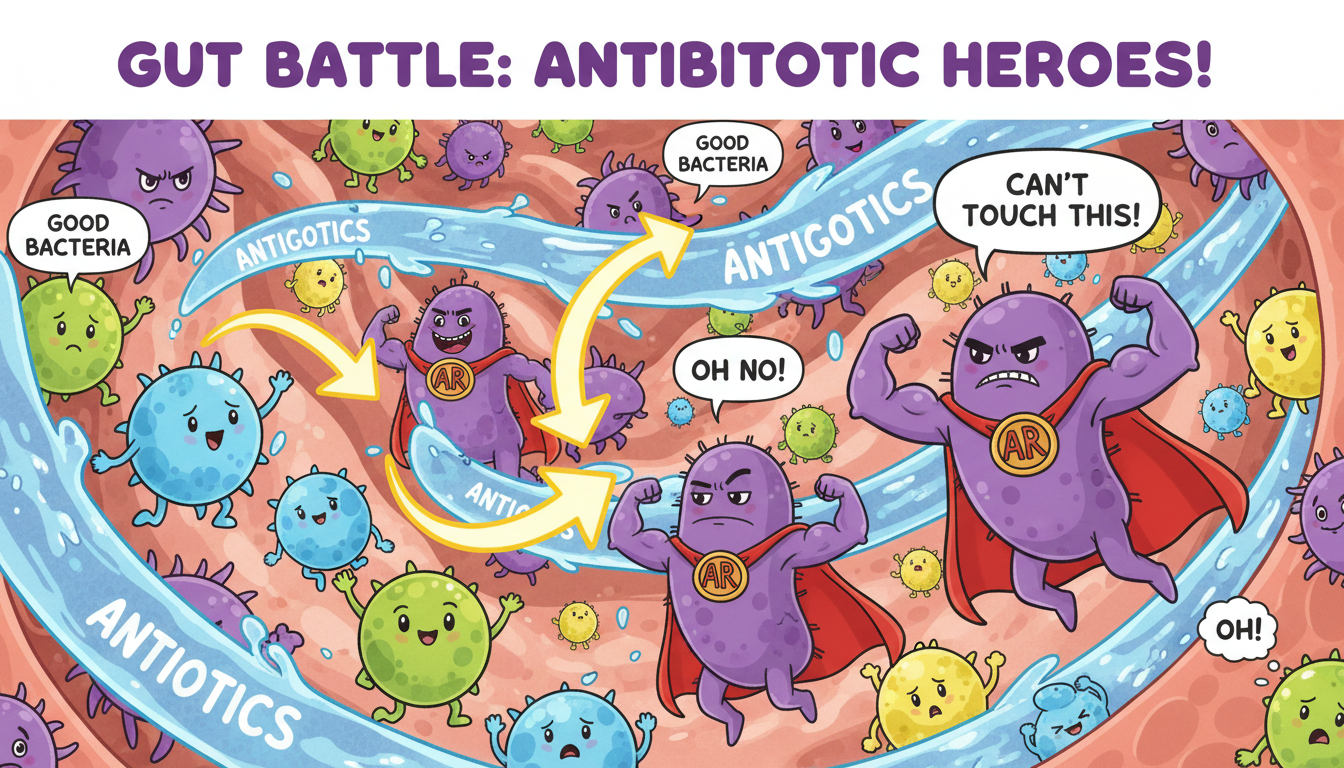
Antibiotic resistance occurs when bacteria evolve to survive antibiotic treatment. This process begins when some bacteria in the gut are resistant and survive the antibiotic, leading to increased growth of those resistant strains.
Antibiotic resistance is a pressing public health issue that occurs when bacteria and fungi develop the ability to resist the effects of medications designed to kill them. This process typically follows a pattern that can be understood in a few steps.
1. **Initial Conditions**: Many bacteria naturally reside in the human gut, and among them, a small number may already possess genes that confer resistance to certain antibiotics. These resistant strains are often harmless or even beneficial to the body.
2. **Triggering Antibiotic Use**: When a person, such as S.A. in our example, takes antibiotics for an illness like food poisoning, the treatment aims to eliminate harmful bacteria causing the infection. However, antibiotics do not distinguish between good and bad bacteria.
3. **Impact of Antibiotic Treatment**: The antibiotic treatment successfully kills a significant portion of the harmful bacteria, but it also inadvertently kills many of the beneficial gut bacteria. This can lead to an imbalance in the gut microbiome, where the remaining bacteria may include those resistant to the antibiotic.
4. **Survival of the Fittest**: The strains of bacteria that survive antibiotic treatment are often the ones that have resistance genes. With the competition from non-resistant bacteria reduced, these resistant bacteria can flourish and multiply.
5. **Consequences**: Over time, the increased presence of antibiotic-resistant bacteria can lead to infections that are more difficult to treat. This resistance can spread to other bacteria, compounding the problem and making infections harder to manage.
Understanding antibiotic resistance is crucial not only for healthcare providers but also for the general public. It highlights the importance of using antibiotics responsibly and only when necessary, to help prevent the development of resistance. Encouraging practices such as completing prescribed antibiotic courses and avoiding unnecessary antibiotic use can contribute to controlling this growing issue.
In conclusion, antibiotic resistance is a complex but important process that underscores the need for education and awareness regarding antibiotic use. By understanding how resistance develops, we can take proactive steps to combat this serious health threat.
Was this answer helpful?