
How Do Elk and Bison Populations Affect Cottonwood Growth?
Quick Answer
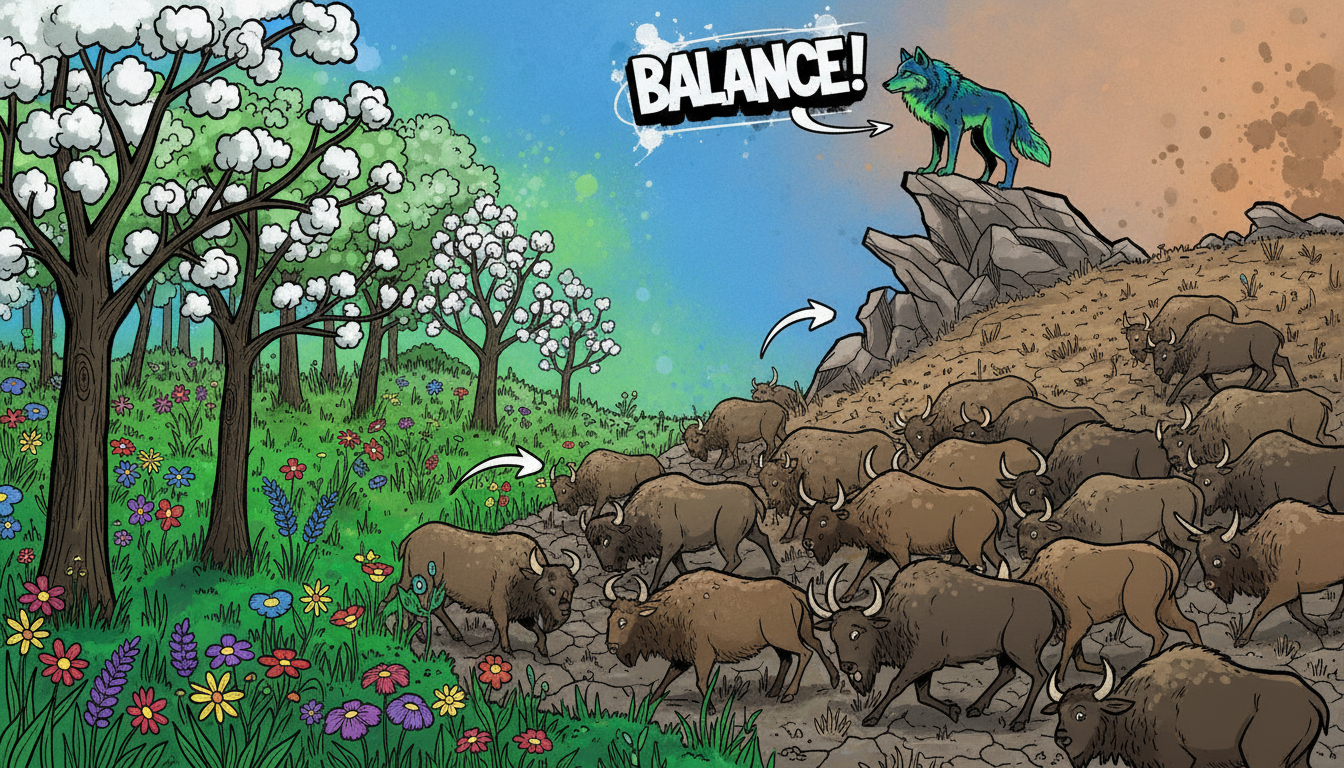
Without intervention from the Park Service and the presence of wolves, elk and bison populations more than doubled, impacting cottonwood growth negatively. This illustrates the role of apex predators in maintaining ecosystem balance.
The relationship between elk, bison populations, and cottonwood growth is an intriguing example of ecosystem dynamics. When apex predators like wolves are removed from an environment, it can trigger significant changes in the populations of large herbivores, such as elk and bison. For instance, data shows that without any intervention from the Park Service and in the absence of wolves, the populations of elk and bison increased dramatically, more than doubling in size.
This increase in herbivore populations has a direct impact on the vegetation in their habitat, particularly cottonwood trees. Historical records indicate that wolf eradication began in the late 1800s, around 1880 to 1899. During this period, observations noted a decline in cottonwood growth. The elimination of wolves removed a key predator that kept herbivore populations in check, leading to overgrazing.
Overgrazing occurs when herbivores consume vegetation faster than it can regenerate. This can cause stress on plant populations, reducing their ability to thrive. With elk and bison numbers surging, the cottonwood trees faced increased competition for resources, contributing to their decline. This scenario is not just limited to cottonwoods; similar patterns have been observed with willow shrubs. After wolves were exterminated in Yellowstone in 1926, for example, willow populations sharply declined, rendering vast areas of the landscape barren.
These phenomena support the Green World hypothesis, which posits that top predators play a crucial role in ecosystems by regulating herbivore populations. This top-down effect ensures that plant life can flourish, contributing to overall biodiversity. The absence of wolves allows herbivores to overexploit vegetation, which can lead to significant ecological consequences, such as reduced tree growth and altered habitats. Indeed, the data highlights the importance of preserving apex predators to maintain the balance of ecosystems and promote healthy plant growth. Understanding these dynamics is vital for conservation efforts and ecosystem management, as it emphasizes the interconnectedness of species within their habitats.
Was this answer helpful?