
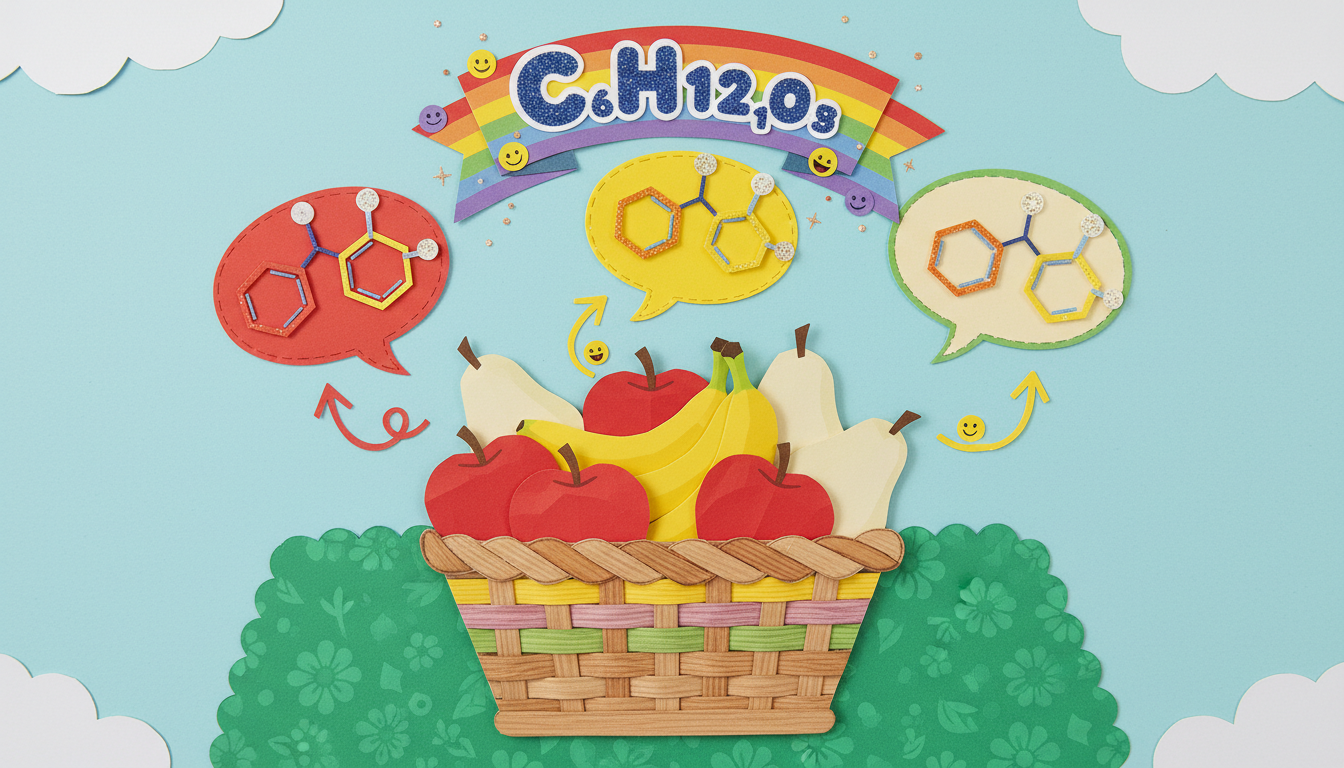
Why Do Glucose, Fructose, and Galactose Share the Same Formula?
Quick Answer
Glucose, fructose, and galactose have the same chemical formula, C6H12O6, because they are monosaccharides. In contrast, disaccharides like sucrose and lactose have different formulas due to the loss of water during their formation.
Understanding why glucose, fructose, and galactose share the same chemical formula while other sugars do not can be quite illuminating. All three of these sugars are classified as monosaccharides, which are the simplest form of carbohydrates. They each contain six carbon atoms, twelve hydrogen atoms, and six oxygen atoms, giving them the same molecular formula of C6H12O6. However, what distinguishes them from one another is their structural arrangement—this means that while they share a formula, they are different in shape and properties. These variations are known as isomers, which are molecules that have the same molecular formula but differ in the arrangement of atoms.
In contrast, other sugars like sucrose, maltose, lactose, and lactulose are classified as disaccharides. Disaccharides are formed when two monosaccharide molecules bond together through a process called dehydration synthesis or condensation reaction. During this process, a molecule of water (H2O) is removed as the two monosaccharides link. For example, sucrose is formed from glucose and fructose, while lactose comes from glucose and galactose.
To illustrate, let’s consider the formation of sucrose in more detail. When glucose (C6H12O6) and fructose (C6H12O6) combine, you might expect the total number of atoms to simply double, resulting in C12H24O12. However, since one water molecule is lost during the reaction, the actual formula for sucrose becomes C12H22O11. This subtraction of water is crucial in understanding how disaccharides are formed from monosaccharides and why they have different chemical formulas.
The distinction between monosaccharides and disaccharides is significant not only in chemistry but also in biology. These carbohydrates play essential roles in energy metabolism. For instance, glucose is a primary source of energy for our cells, while disaccharides like sucrose are often found in foods we consume, like table sugar and milk products. Understanding these differences helps highlight the complexity of carbohydrates in our diets and their physiological importance.
In summary, while glucose, fructose, and galactose share the same chemical formula as monosaccharides, the formation of disaccharides involves the loss of water and results in different formulas. This knowledge is foundational in both chemistry and biology, providing insights into how our bodies utilize these vital nutrients.
Was this answer helpful?