
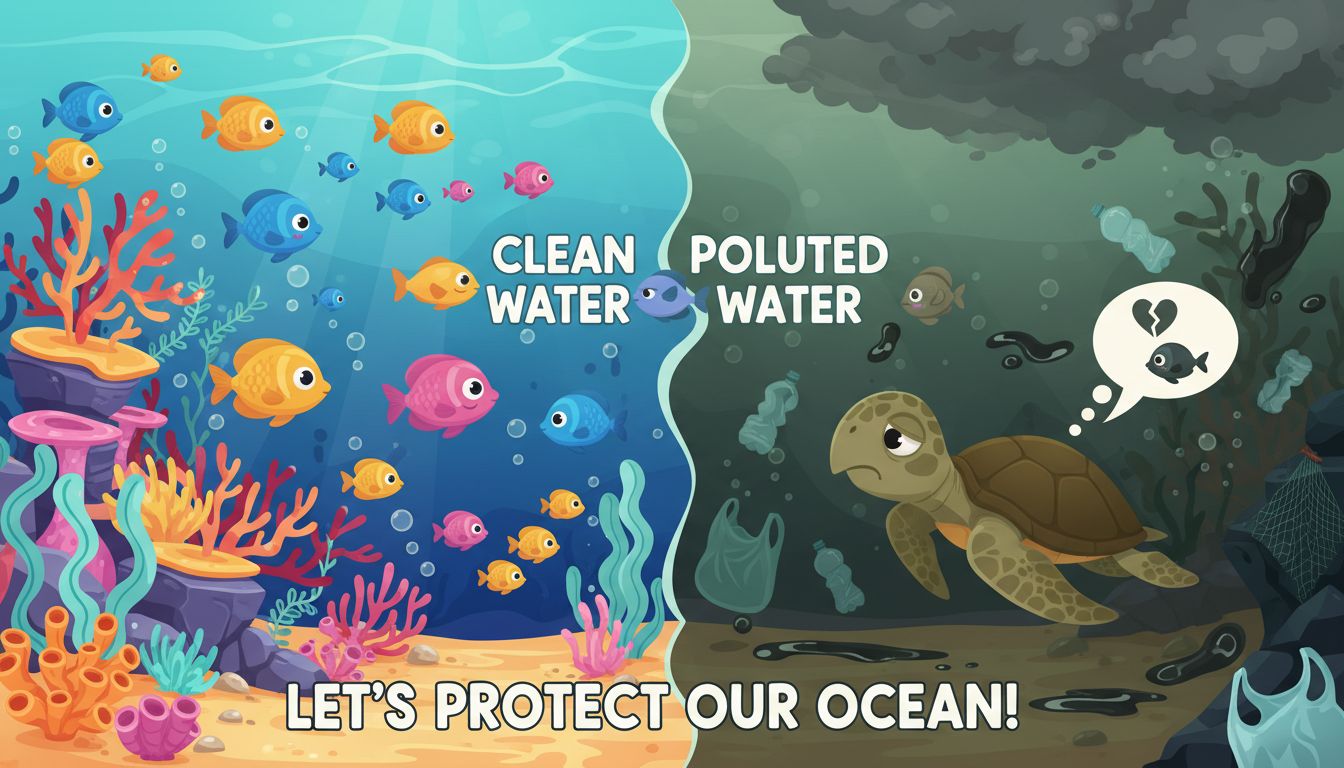
How Does Water Pollution Affect Animals? A Student's Guide
Quick Answer
Water pollution occurs when harmful substances contaminate water bodies, affecting wildlife. Humans contribute by dumping waste and chemicals into rivers and lakes.
Water pollution is a significant environmental issue that affects ecosystems and wildlife. In the scenario presented, where dirty water is flowing from a pipe into a river or lake, it is crucial to understand the causes and consequences of this pollution on animals, especially birds like ducks and geese that inhabit these waters.
**Types of Water Pollution**: The primary type of pollution illustrated in the worksheet is water pollution. This occurs when harmful substances such as chemicals, waste, and debris enter water bodies, making the water unsafe for aquatic life. In this case, the dark, dirty water coming from the pipe indicates contamination that can lead to severe ecological consequences.
**Human Contributions to Water Pollution**: Humans play a significant role in causing water pollution. For instance, factories often discharge untreated waste into rivers, while individuals may irresponsibly throw trash and chemicals into water bodies. It’s important to note that pollution can stem from various sources, including:
- **Industrial Waste**: Factories can release harmful chemicals that enter waterways through pipes.
- **Agricultural Runoff**: Fertilizers and pesticides used in farming can wash into rivers and lakes when it rains, contributing to pollution.
- **Littering**: When people discard trash near water sources, it can end up polluting these areas, harming wildlife.
**Effects on Wildlife**: The pollution depicted in the worksheet has dire effects on the animals living in the water. For example:
- **Health Issues**: Water contaminated with chemicals can lead to health problems for birds and other wildlife, including diseases, reproductive issues, and death.
- **Habitat Destruction**: Polluted water can destroy habitats, making it difficult for animals to find food and shelter.
- **Food Chain Impact**: When fish and other aquatic organisms ingest pollutants, these harmful substances can accumulate up the food chain, affecting larger predators, including birds.
**Real-World Applications**: Understanding the impact of water pollution is crucial for developing solutions. Communities can take action by:
- **Implementing Better Waste Management**: Proper disposal and treatment of industrial waste can reduce the amount of pollution entering water bodies.
- **Promoting Clean-Up Initiatives**: Organizing events to clean up local rivers and lakes helps remove trash and prevent future pollution.
- **Educating Others**: Spreading awareness about the effects of pollution encourages responsible behavior and environmental stewardship.
By recognizing the causes and effects of water pollution, we can work towards protecting our natural resources and the animals that depend on them. This knowledge not only helps students understand environmental science but also empowers them to be proactive in making positive changes for our planet.
Was this answer helpful?