
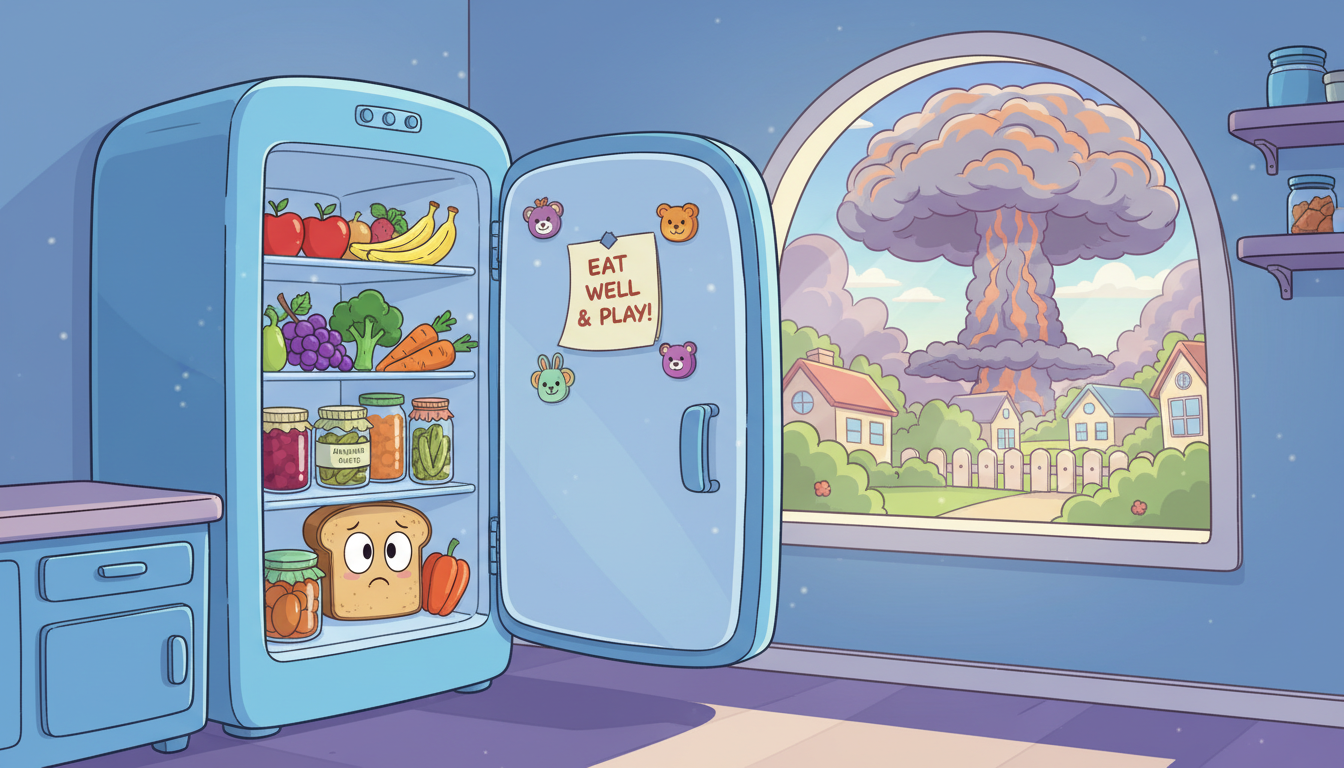
Is Hiding in a Fridge Safe During a Nuclear Blast?
Quick Answer
No, hiding in a fridge during a nuclear blast is not safe. A typical fridge cannot protect against the intense heat, shockwave, or radiation from a nuclear explosion.
The idea of jumping into a fridge to survive a nuclear blast has been popularized by movies, particularly 'Indiana Jones and the Kingdom of the Crystal Skull.' However, this notion is far from practical or safe in real life. Understanding the science behind nuclear explosions reveals why seeking refuge in a kitchen appliance is not a viable survival strategy.
When a nuclear bomb detonates, it releases an immense amount of energy in the form of a fireball. This fireball can reach temperatures of thousands of degrees Fahrenheit, instantly incinerating anything in its vicinity. A standard refrigerator is not designed to withstand such extreme heat and would likely melt or catch fire, offering no protection to someone inside.
Additionally, the explosion generates a powerful shockwave that travels faster than the speed of sound. This shockwave exerts incredible force, which would likely crush a fridge and anyone inside it. Instead of providing a shield, the fridge could become a dangerous projectile, causing serious injury or death.
Moreover, after the initial blast, the danger does not end. A nuclear explosion also releases lethal radiation that can have devastating effects on human health. The materials commonly used in fridges, even those from earlier decades that might have lead linings, are not sufficient to block radiation. Radiation can penetrate many materials, and a fridge offers no substantial protection.
In light of these facts, the best course of action in the event of a nuclear explosion involves seeking shelter in a more robust structure, ideally one made of dense materials like concrete or brick. It’s essential to get as far away as possible from the blast site and find an underground location if available. If you cannot evacuate, staying indoors, sealing windows and doors, and listening to emergency broadcasts can significantly improve your chances of survival.
Preparing for emergencies, including nuclear threats, is crucial. Familiarizing yourself with emergency protocols and understanding how to find protective shelter can save lives. While the concept of jumping into a fridge may seem exciting in a fictional context, it's important to base survival strategies on scientific facts and evidence rather than Hollywood dramatizations. In real-life scenarios, knowledge and preparation are your best defenses against unforeseen disasters.
Was this answer helpful?