
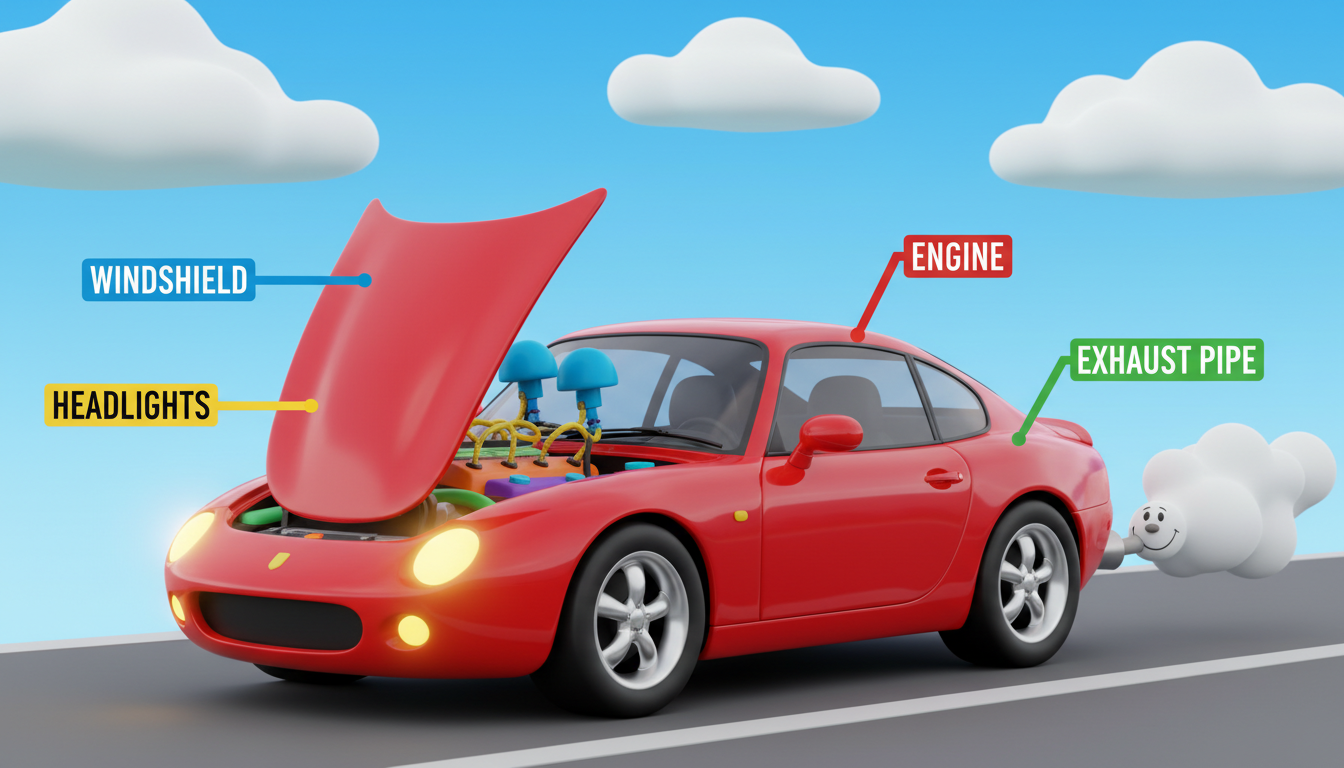
What Are the Main Parts of a Car? A Student's Guide
Quick Answer
A car consists of several key parts, including the engine, transmission, brakes, and wheels, all working together to ensure safe and efficient driving. Understanding these components helps in learning how cars function.
A car is a complex machine made up of various components that work in harmony to provide transportation. Understanding the main parts of a car can be both interesting and beneficial, especially if you're curious about how vehicles operate. Here’s a closer look at the vital parts of a car and their functions:
1. **Engine**: Often referred to as the heart of the car, the engine is where fuel is converted into mechanical energy. It works by igniting a mixture of fuel and air, causing explosions that push pistons and ultimately move the vehicle.
2. **Transmission**: This component is crucial for controlling the car's speed. Think of it like the gears on a bicycle; as you shift gears, the transmission adjusts the engine's power to the wheels. This allows the car to accelerate or decelerate smoothly.
3. **Wheels and Tires**: These parts are essential for movement. Tires provide traction on the road, allowing the car to grip and steer effectively. The wheels are the circular metal parts that hold the tires and rotate when the car is in motion.
4. **Brakes**: Brakes are vital for safety, allowing the driver to slow down or stop the vehicle when needed. When the brake pedal is pressed, hydraulic fluid moves through the brake lines, applying pressure to brake pads that clamp down on the rotors, thereby slowing the wheels.
5. **Steering Wheel**: This is the driver's main control for directing the car. By turning the steering wheel, you can change the vehicle's direction. The steering system connects the wheel to the front wheels, making it easier to navigate turns.
6. **Battery**: The battery is like the car’s power bank, storing electrical energy to start the engine and power accessories like lights, radios, and wipers. A good battery is essential for the car to function properly.
7. **Exhaust System**: This system is responsible for expelling gases produced during combustion away from the engine. It not only reduces harmful emissions but also helps to minimize noise from the engine.
8. **Seats and Seatbelts**: While seats provide comfort, seatbelts are critical for safety. They secure passengers in their seats, helping to prevent injury in the event of a collision.
9. **Windshield and Windows**: These components protect passengers from the elements while allowing visibility. They are designed to withstand various weather conditions and enhance the overall driving experience.
10. **Headlights and Taillights**: These lights are essential for safe driving at night and in poor weather. Headlights illuminate the road ahead, while taillights signal to other drivers when you are stopping or turning.
In summary, each part of a car plays a unique role in ensuring that it functions correctly and safely. Whether you're interested in cars for personal knowledge or considering a career in automotive technology, understanding these components is a great foundation. As you explore further, you’ll discover even more intricate systems like the suspension, fuel system, and advanced technology in newer models that enhance performance and safety.
Was this answer helpful?