
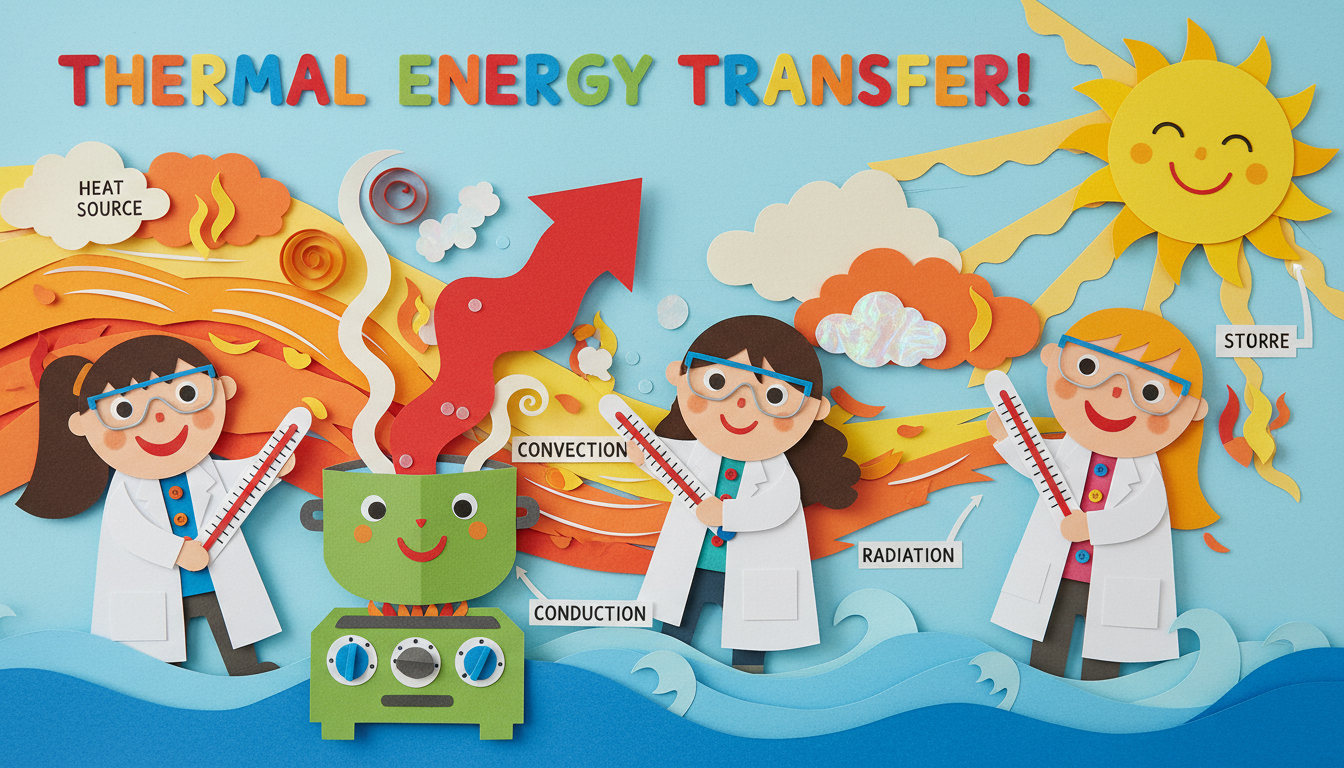
How to Measure Thermal Energy Transfer: A Student's Guide
Quick Answer
To measure the transfer of thermal energy, a thermometer is the most useful device. It allows you to track temperature changes in objects involved in thermal energy transfer.
When it comes to measuring the transfer of thermal energy, understanding the right tools is crucial. In a typical scenario, you may encounter a question like: "In order to measure the transfer of thermal energy from one temperature body to another, what device would be most useful?" The options usually include a mass balance, thermometer, measuring tape, and meter stick. Let's break down these tools to see why a thermometer is the best choice.
1. **Understanding the Tools**:
- **Mass Balance**: This tool measures the mass of an object, which is important for understanding the amount of matter present but does not help in measuring temperature.
- **Measuring Tape / Meter Stick**: Both of these tools are used for measuring lengths or distances. They can tell you how long or wide an object is, but they don't provide any information about temperature or thermal energy.
- **Thermometer**: This is the key tool for measuring temperature. It detects changes in thermal energy by measuring the temperature of objects. When thermal energy is transferred from a hotter object to a cooler one, the temperatures of both objects will change.
2. **How Thermometers Work**:
A thermometer functions by using materials that expand or contract with temperature changes. As you measure the initial temperature of two objects (say, a hot metal and cold water), you can observe how their temperatures change when they interact. For instance, placing hot metal in cold water will cause the metal to cool down while the water heats up. By measuring the initial and final temperatures, you can calculate the change in temperature, which indicates how much thermal energy was transferred.
3. **Real-World Applications**:
Understanding thermal energy transfer is essential in many fields, from engineering to environmental science. For example, engineers may use thermometers to ensure that materials are heated or cooled to the right temperatures during manufacturing processes. In cooking, chefs rely on thermometers to ensure that foods are cooked to safe temperatures, preventing foodborne illnesses.
4. **Conclusion**:
In summary, when asked about measuring thermal energy transfer, remember that a thermometer is the most suitable device among the options. It provides essential information about temperature changes, allowing you to track how thermal energy moves between objects. This understanding is not only fundamental in science but also applicable in everyday situations and various professional fields.
By knowing how to use a thermometer effectively, you can gain deeper insights into the principles of thermal energy and its practical implications in the world around you.
Was this answer helpful?