
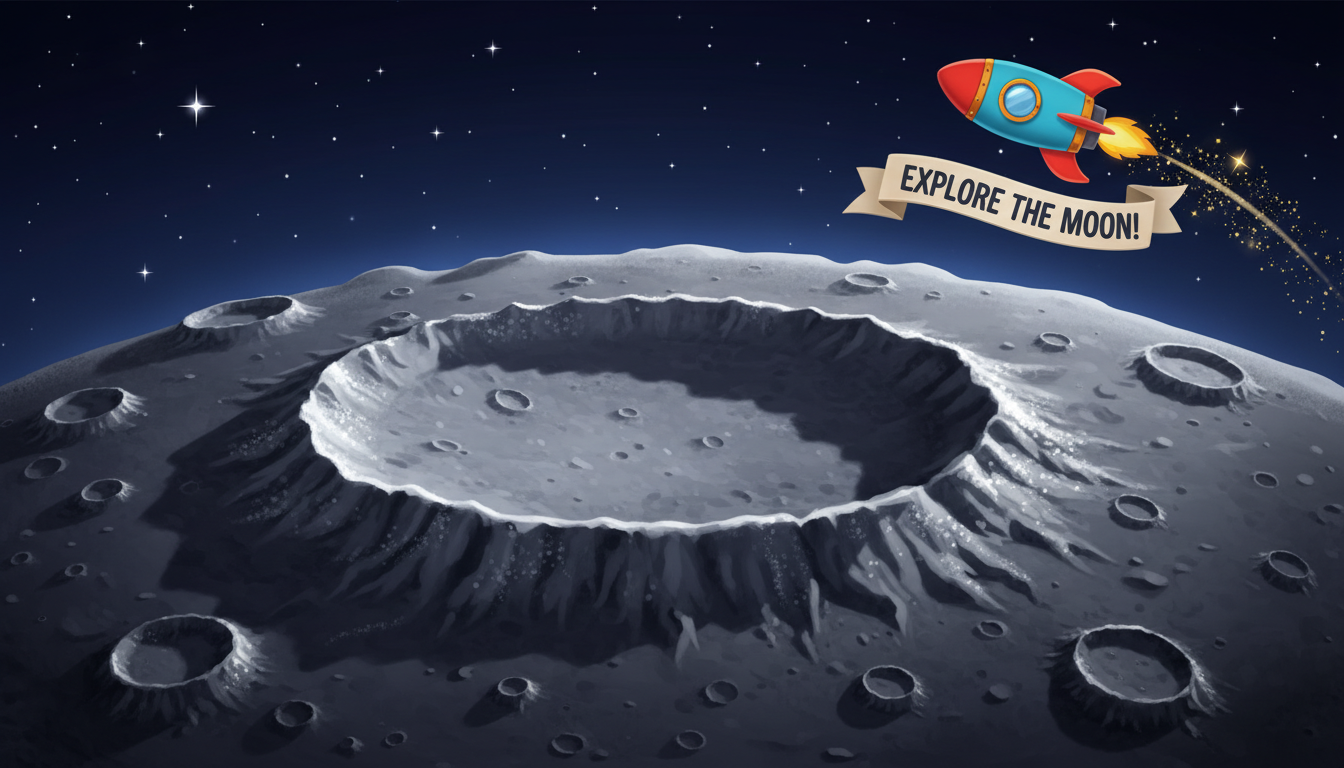
What Are the Names of Famous Moon Craters?
Quick Answer
The Moon features thousands of craters, each named after notable scientists or explorers. Some of the most recognized craters include Copernicus, Tycho, and Clavius, each formed by meteorite impacts over millions of years.
The Moon is a fascinating celestial body that captivates both amateur and professional astronomers. It is covered with thousands of craters, which are formed primarily by the impact of meteoroids. Each crater has its own unique name, often commemorating notable scientists, astronomers, or explorers who have contributed to our understanding of the universe.
Some of the most famous lunar craters include:
1. **Tycho Crater**: Located on the southern hemisphere of the Moon, Tycho is one of the most recognizable craters due to its prominent rays that extend outward for hundreds of kilometers. This crater is about 85 kilometers wide and is relatively young in geological terms, having formed approximately 108 million years ago. Its bright rays make it a favorite target for both amateur and professional astronomers.
2. **Copernicus Crater**: Situated near the center of the Moon's visible side, Copernicus is a large, well-preserved crater measuring about 93 kilometers in diameter. It features a prominent central peak and appears relatively young, having formed around 800 million years ago. The crater's distinct structure and surrounding ejecta make it a key subject of study in lunar geology.
3. **Clavius Crater**: One of the largest craters on the Moon, Clavius spans approximately 225 kilometers in diameter. It is located in the Moon's southern hemisphere and is notable for its complex system of smaller craters within it. Clavius is often visible during first quarter and last quarter phases of the Moon.
These craters not only provide insight into the Moon's history but also serve as landmarks for lunar exploration. Understanding their formation helps scientists learn about the age and development of the Moon's surface. The impacts that created these craters occurred millions or even billions of years ago, offering a glimpse into the early solar system's dynamics.
When identifying a specific crater, it's helpful to consider its location on the Moon, its shape, size, and any unique features. For instance, if you observe a bright crater near the edge of the Moon with prominent rays, you might be looking at Tycho. On the other hand, if you see a large crater with a central peak and smooth walls, it could be Copernicus.
In conclusion, the Moon's craters are not just random marks on its surface; they are records of cosmic history. Each crater tells a story about the Moon's past and the events that have shaped it over billions of years. Whether you're a student looking to learn more or simply curious about the night sky, exploring lunar craters can enhance your understanding of our closest celestial neighbor.
Was this answer helpful?