
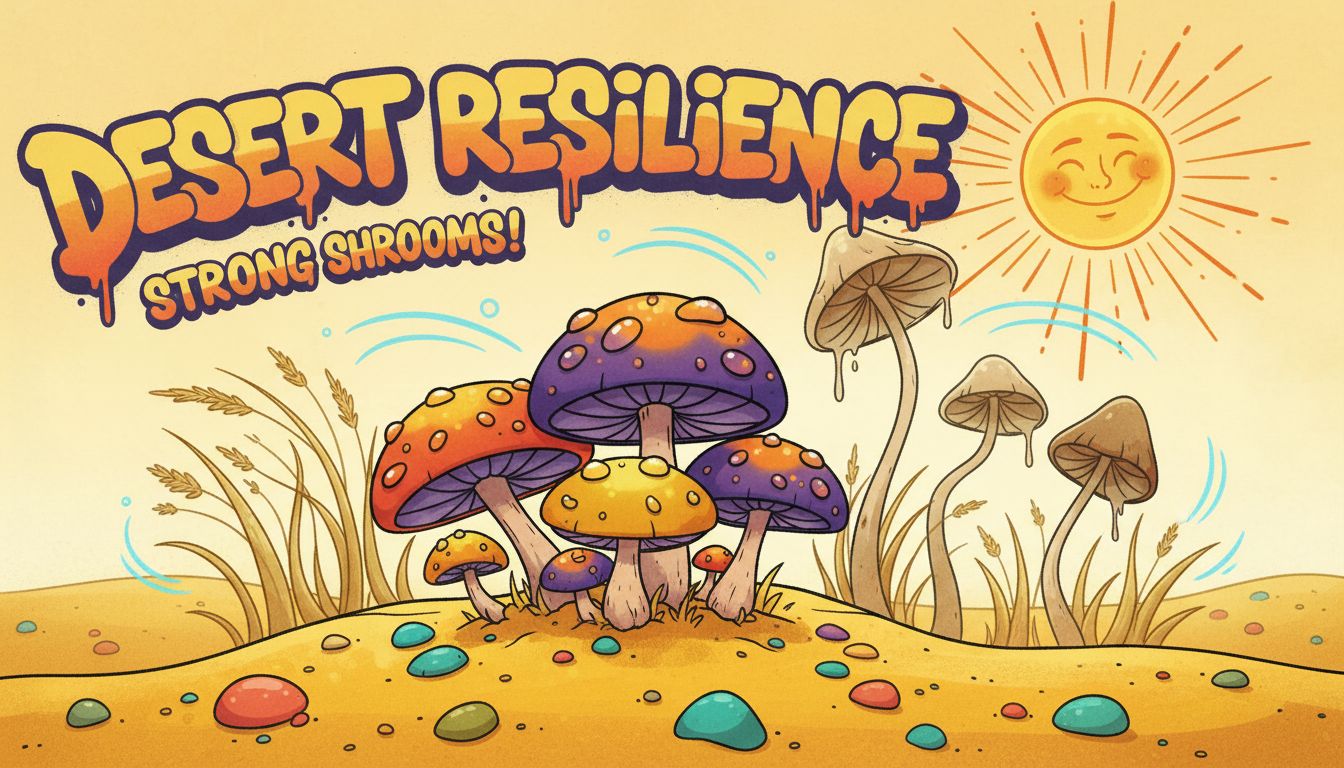
How Do Short-Stemmed Mushrooms Survive Better in Dry Environments?
Quick Answer
Short-stemmed mushrooms with larger caps lose less water and survive longer in dry conditions. This increases their chances of maturing and reproducing more effectively than taller, thinner mushrooms.
Mushrooms, like many organisms, adapt to their environments to survive and reproduce. In dry, suburban habitats, certain physical traits can significantly enhance their survival. For instance, mushrooms with shorter stems and larger caps tend to lose water more slowly than their taller counterparts. This is crucial in arid conditions, as water retention is vital for survival. Because they can withstand dry spells longer, these mushrooms are more likely to mature fully and produce spores, which are essential for reproduction.
The concept of differential survival and reproduction explains how specific traits can give certain organisms an advantage in their environment. In this case, short-stemmed mushrooms have a better chance of thriving because they can endure longer periods without water. As a result, they are also less likely to be uprooted by external factors like wind or animals, further increasing their chances of survival.
Over many generations, these advantageous traits become more common in the population through a process called natural selection. If short-stemmed, large-cap mushrooms consistently survive better and reproduce more than tall, thin-stemmed varieties, their genes will spread through the population. Consequently, future generations of mushrooms in this environment are more likely to exhibit these beneficial traits.
This process highlights a fundamental principle of evolution: over time, species adapt to their environments, leading to a shift in trait frequency. For example, in an ongoing dry environment, the increased prevalence of short-stemmed mushrooms illustrates how natural selection shapes the characteristics of organisms. Understanding these concepts not only provides insights into the survival of mushrooms but also encapsulates broader evolutionary principles applicable to many species.
In real-world scenarios, this adaptation can be observed in various plants and animals. For example, cacti have evolved to survive in harsh desert conditions by developing thick, waxy skins to retain moisture. Similarly, understanding how different organisms adapt can help in conservation efforts, as we can identify which traits may be beneficial for survival in changing climates.
In summary, short-stemmed mushrooms thrive in dry environments due to their ability to retain water and resist uprooting, leading to increased survival and reproduction rates. Over generations, these traits become more common, demonstrating the powerful influence of natural selection in evolution.
Was this answer helpful?