
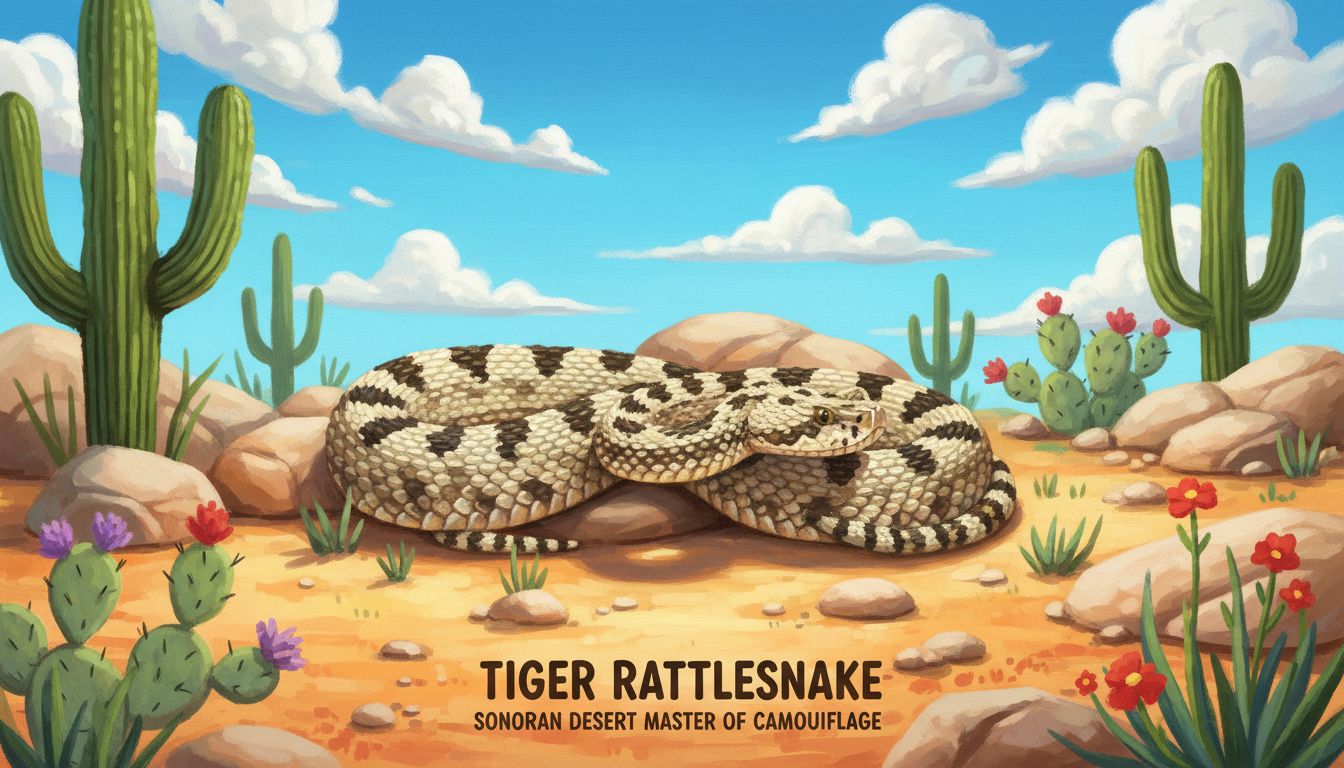
What is the Tiger Rattlesnake and Its Role in the Sonoran Desert?
Quick Answer
The Tiger Rattlesnake (Crotalus tigris) is a native species to the Phoenix area, found in the Sonoran Desert. Known for its striking color patterns that aid in camouflage, this snake plays a vital role in its ecosystem.
The Tiger Rattlesnake, scientifically known as Crotalus tigris, is a strikingly beautiful species native to the Phoenix area, particularly found in the rocky terrains of the Sonoran Desert. This snake is not only fascinating in terms of its appearance but also plays a significant role in the desert ecosystem.
**Appearance and Camouflage**
The most notable feature of the Tiger Rattlesnake is its unique coloration. The scales of this snake are primarily light-colored with darker stripes resembling a tiger’s pattern, which can vary in shades from sandy to grayish tones. These color patterns serve a vital purpose: they provide excellent camouflage against the rocky ground of its natural habitat. As a result, the snake can effectively evade predators and ambush prey, contributing to its survival.
**Habitat and Environment**
You can typically find the Tiger Rattlesnake in wild, natural environments, primarily on mountain trails where they can blend seamlessly into their surroundings. The Sonoran Desert, characterized by its rugged mountains and sparse vegetation, offers the perfect backdrop for these reptiles. The area’s natural features not only support the snake's camouflage but also provide essential hunting grounds for small mammals and other prey.
**Ecological Significance**
The Tiger Rattlesnake plays an important role in the local ecosystem. As a predator, it helps regulate the populations of rodents and other small animals, maintaining a balance in the food web. Additionally, the snake itself falls prey to larger predators, contributing to the biodiversity of the area.
**Variation and Adaptation**
One of the interesting aspects of the Tiger Rattlesnake is its color variation. While most individuals exhibit the typical light and dark patterns, some may display unusual colors such as blue-gray or orange-brown. This genetic variation can be beneficial for adaptation to different environmental conditions, allowing some snakes to thrive in varying terrains and habitats.
**Conclusion**
In summary, the Tiger Rattlesnake is not just a fascinating creature to observe in the wild, but it also serves as an essential component of the Sonoran Desert ecosystem. Its distinct coloration, habitat preferences, and ecological role highlight the importance of preserving natural environments where these snakes and other native species can flourish. Understanding the Tiger Rattlesnake helps us appreciate the complexity of desert life and the delicate balance that sustains it.
Was this answer helpful?