
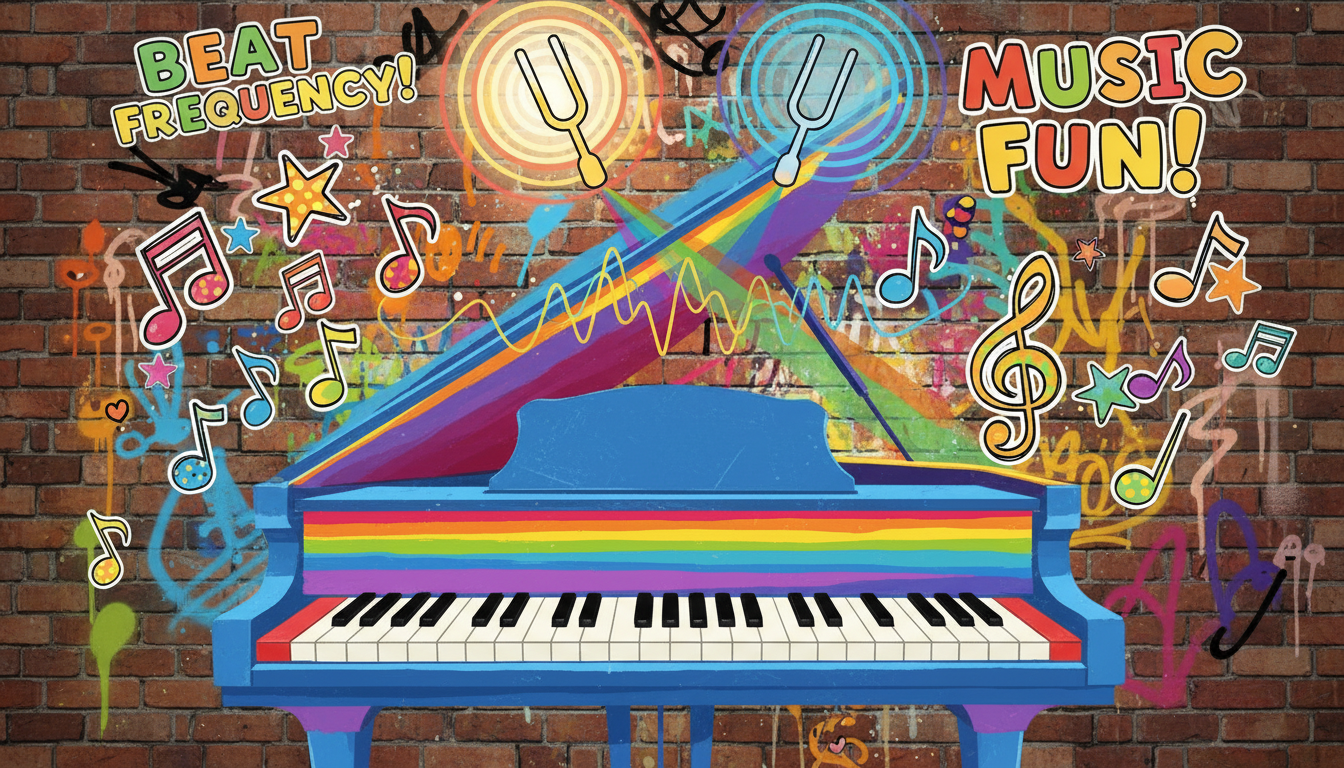
Understanding Beat Frequency: How to Tune a Piano Correctly
Quick Answer
Beat frequency occurs when two sounds of slightly different frequencies interfere with each other, creating a pulsing effect. A piano tuner adjusts the tension of a piano wire to match the frequency of a tuning fork, eliminating the beat frequency for perfect tuning.
When a piano tuner uses a tuning fork to tune a piano wire, they often encounter a phenomenon known as **beat frequency**. This concept arises when two sound waves of similar, but not identical, frequencies interact with each other. Let’s delve deeper into what beat frequency is, how it works, and why it’s crucial for piano tuning.
### What is Beat Frequency?
When two sound waves interfere with each other, they create a unique auditory experience. If the frequencies of these waves are very close, the resulting sound alternates between loud and soft, creating a **pulsing effect** that we hear as a 'wah-wah' sound. This pulsing is known as the **beat frequency**, which is calculated as the absolute difference between the two frequencies involved.
For instance, if the tuning fork vibrates at 440 Hz (the standard pitch for the note A) and the piano wire is vibrating at 438 Hz, the beat frequency would be 2 Hz. This means that you would hear two pulses per second as the sounds interfere with each other.
### Why is Beat Frequency Important in Tuning?
The goal of a piano tuner is to have the piano string resonate at the same frequency as the tuning fork. When both are in perfect tune, the frequencies match, and there are no beats—resulting in a clear sound without the pulsing effect. Conversely, if the piano string is out of tune, the difference in frequencies leads to a noticeable beat frequency, which can be quite distracting for musicians.
### Adjusting the Tension of the Piano Wire
To eliminate the beat frequency, the tuner can adjust the tension of the piano wire. Tightening the wire raises its pitch, while loosening it lowers the pitch. Thus, the tuner listens carefully to the beat frequency and makes adjustments until the beats slow down and eventually disappear, signaling that the two frequencies have aligned.
### Real-World Application
Understanding beat frequency isn’t just beneficial for piano tuning; it’s a fundamental concept in various fields of physics, engineering, and music. For instance, musicians often use similar principles when tuning other instruments or even when performing in ensembles, where harmonizing different frequencies can create beautiful music.
In conclusion, beat frequency is a crucial concept for anyone involved in music, particularly in tuning instruments. By adjusting the tension of a piano wire to match the frequency of a tuning fork, a piano tuner eliminates the beat frequency, ensuring that the piano sounds harmonious and pleasing to the ear.
This understanding not only enhances musical performance but also deepens the appreciation of the science behind sound.
Was this answer helpful?