
Understanding Capillary Action and Global Warming: Key Concepts Explained
Quick Answer
Capillary action is the movement of liquid in narrow spaces due to adhesion and cohesion, essential in processes like water transport in plants. Global warming refers to the rise in Earth's temperature caused by greenhouse gases, affecting climate patterns worldwide.
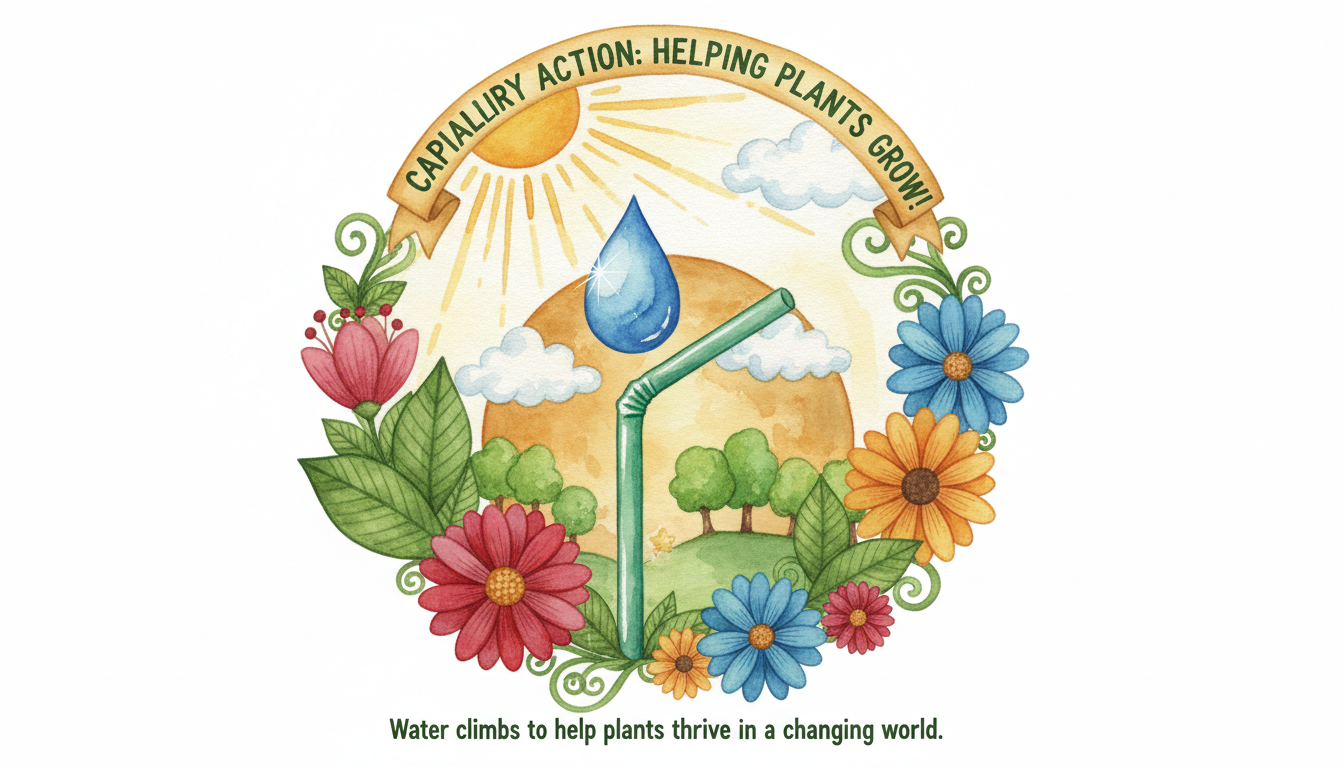
Capillary action is a fascinating phenomenon that plays a crucial role in various natural processes. It occurs when a liquid moves through narrow spaces without the assistance of external forces. This movement is driven by two main forces: adhesion and cohesion. Adhesion is the attraction between different substances, such as water molecules and the walls of a thin tube, while cohesion is the attraction between similar molecules, like water molecules themselves. A practical example of capillary action can be seen in plants, where water travels up from the roots through tiny tubes called xylem to reach the leaves. This process is vital for plant survival as it ensures they receive the necessary water for photosynthesis and growth.
Understanding the principles of capillary action can help students grasp more complex scientific concepts, particularly in biology and chemistry. For instance, when you dip a paper towel into a glass of water, you can observe how the water rises along the fibers of the towel. This simple experiment demonstrates both adhesion (water sticking to the towel) and cohesion (the water molecules sticking to each other), making it a perfect classroom demonstration.
On the other hand, global warming is a pressing environmental issue characterized by the increase in Earth's average surface temperature. This rise in temperature is primarily attributed to the accumulation of greenhouse gases, such as carbon dioxide (CO2), which trap heat from the sun in the atmosphere. To visualize this, imagine wrapping yourself in multiple blankets; just as the blankets trap heat, greenhouse gases create a similar effect on our planet.
The consequences of global warming are far-reaching and can lead to severe weather changes, rising sea levels, and disruptions in ecosystems. Understanding this concept is essential for students as it relates to current global challenges and encourages them to think critically about environmental stewardship. To further explore this topic, students can investigate the impact of human activities, such as fossil fuel consumption and deforestation, on greenhouse gas emissions.
Both capillary action and global warming illustrate fundamental scientific principles that have significant real-world applications. Students engaged in these topics can enhance their comprehension of environmental science, biology, and chemistry, paving the way for future studies and informed citizenship.
Was this answer helpful?