
Understanding the Electromagnetic Spectrum and Radiation Types
Quick Answer
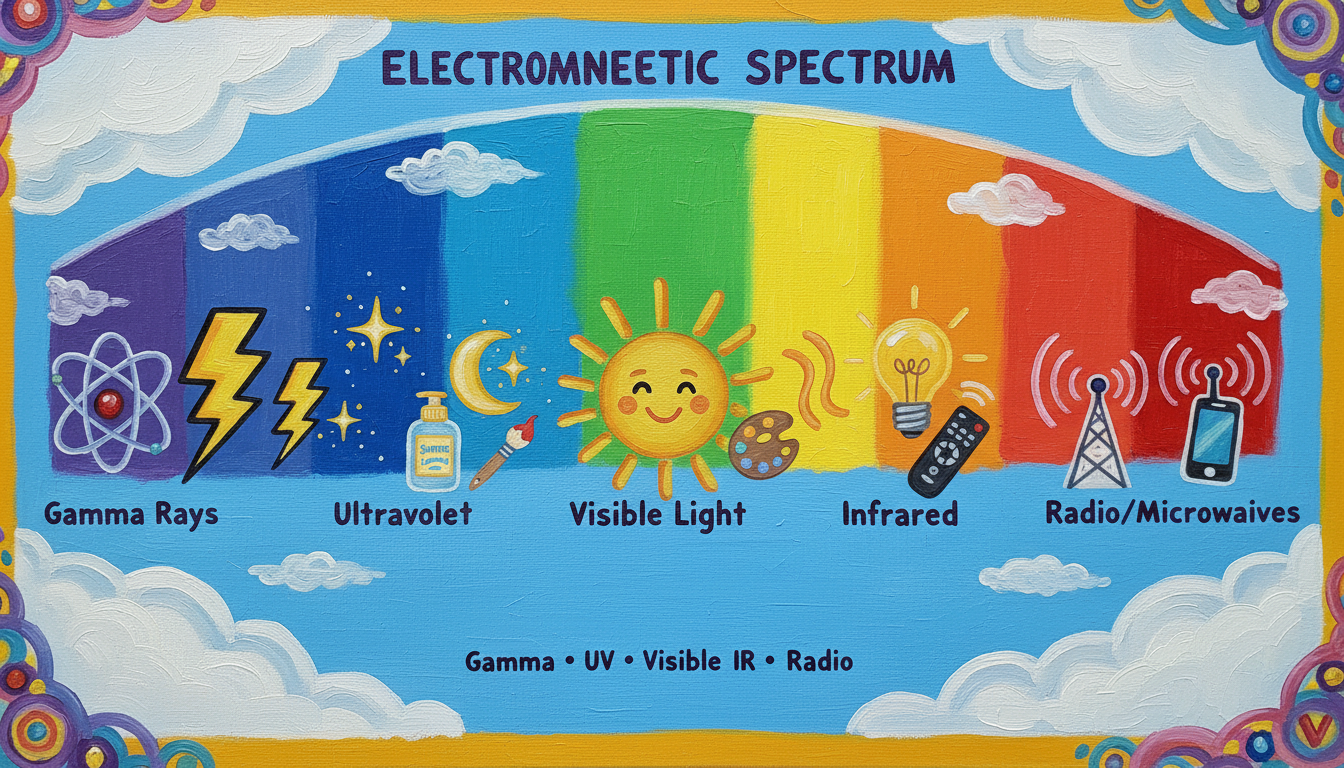
The electromagnetic spectrum includes all types of electromagnetic radiation, ranging from low-energy radio waves to high-energy gamma rays. Understanding this spectrum is essential for grasping concepts in nuclear chemistry and radiation protection.
The electromagnetic spectrum is a fascinating and essential concept in science that encompasses all forms of electromagnetic radiation. This spectrum ranges from low-energy waves, such as radio waves and microwaves, to high-energy waves, including X-rays and gamma rays. Each type of radiation has unique properties and applications, making it crucial to understand how they interact with matter and the environment.
At the low-energy end of the spectrum, we find radio waves, which have long wavelengths and are used in many everyday technologies, such as broadcasting and communication. Moving up the spectrum, microwaves are utilized in cooking and radar technology. These forms of radiation carry less energy and have longer wavelengths, meaning they cannot ionize atoms or remove electrons.
In the middle of the spectrum lies visible light, the range of electromagnetic radiation that humans can see. It is situated between infrared radiation, which we feel as heat, and ultraviolet radiation, which can cause sunburn. Understanding visible light is essential for various fields, including photography, astronomy, and even biology, as it plays a vital role in photosynthesis.
At the high-energy end of the spectrum, we encounter ionizing radiation, which includes ultraviolet light, X-rays, and gamma rays. Ionizing radiation has enough energy to remove electrons from atoms, which can lead to chemical changes in the materials it interacts with. This property makes it particularly important in fields like nuclear chemistry and medical applications, such as diagnostic imaging.
Radioactivity is another important concept related to electromagnetic radiation. It refers to the spontaneous emission of particles or energy from unstable atomic nuclei. For instance, elements like uranium and radon are known for their radioactive properties. As these elements decay, they often transform into lead (Pb), which is significant for radiation shielding. Lead is commonly used in protective gear for those working with or around radioactive materials, highlighting its critical role in safety protocols.
To protect against harmful radiation, there are three major methods of radiation protection: time, distance, and shielding. Reducing the amount of time spent near a radiation source, increasing the distance from the source, and using protective materials (like lead) are effective strategies to minimize exposure.
In summary, a solid grasp of the electromagnetic spectrum, types of radiation, and the principles of radiation protection is essential for students pursuing studies in science. These concepts not only help to understand the physical world but also have practical applications in technology, medicine, and environmental safety.
Was this answer helpful?