
Understanding Electron Configuration: Key Principles Explained
Quick Answer
Understanding electron configuration involves key principles: the Aufbau principle, Pauli exclusion principle, and Hund’s rule, which dictate how electrons are arranged in an atom. These principles help explain the behavior and properties of elements in the periodic table.
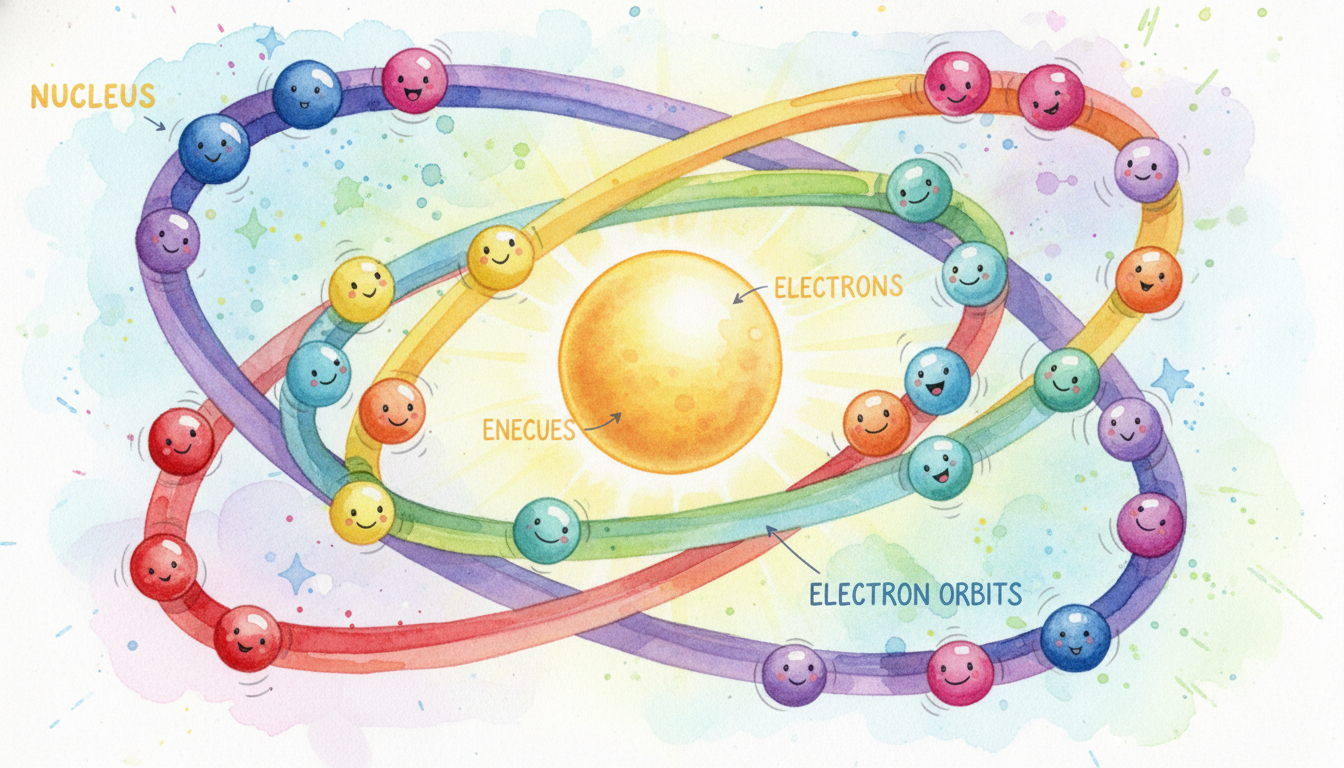
Electron configuration is a crucial concept in chemistry that describes the arrangement of electrons in an atom. This arrangement is governed by several fundamental principles: the Aufbau principle, Pauli exclusion principle, and Hund’s rule.
The **Aufbau principle** states that electrons occupy the lowest available energy levels before filling higher ones. Think of it like filling seats in a theater—people will fill the front rows before moving to the back. This principle explains why the 1s orbital (the lowest energy level) is filled before the 2s orbital, and so forth.
Next, we have the **Pauli exclusion principle**, which tells us that no two electrons in an atom can have the same set of four quantum numbers. This means that an orbital can hold a maximum of two electrons, and they must have opposite spins. Imagine having a pair of shoes: you can't have two left shoes in the same box—one must be a right shoe.
Lastly, **Hund’s rule** states that electrons will fill degenerate (or equal energy) orbitals singly before pairing up. For example, if you have three empty seats in a row (representing three degenerate orbitals), people will sit in each seat first before any of them decide to share the same seat. This maximizes the number of unpaired electrons, which is important for understanding the chemical properties of elements.
### Visualizing Electron Orbitals
Electron orbitals come in different shapes, which are important for understanding how they interact with other atoms. For instance:
- **s-orbitals** are spherical in shape and can hold up to two electrons.
- **p-orbitals** are dumbbell-shaped and arranged along three axes (x, y, z), with a total capacity of six electrons.
- **d-orbitals** are more complex, often described as clover-shaped, and can hold up to ten electrons.
### Real-World Applications
Understanding how electrons are configured helps explain various chemical behaviors. For example, the way electrons are arranged in an atom influences its reactivity, bonding with other atoms, and the formation of molecules. Elements in the same group of the periodic table often have similar properties due to their similar electron configurations.
By mastering these principles, students can better understand not just the structure of atoms but also the foundation of chemical reactions and the behavior of materials in the world around them. This knowledge is essential for pursuing further studies in chemistry, physics, and related fields.
Was this answer helpful?