
Understanding Physical Traits in Evolution: A Student's Guide
Quick Answer
Physical traits, such as coloration and structure, can influence survival and reproduction within populations. Traits that are beneficial in specific environments may be favored through natural selection, leading to evolutionary changes over time.
Understanding physical traits and their role in evolution is crucial for grasping how species adapt and survive in changing environments. Let’s break down the concepts of observed traits, selective pressures, and the evolutionary advantages they confer.
### Observed Trait
When observing a species, such as the Desert Shaggy Mane mushroom, several physical characteristics can be noted:
- **Coloration:** The mushroom displays a mostly white hue with distinct scales on its cap. This coloration can offer camouflage against its desert surroundings, helping it blend in with the environment and avoid predation.
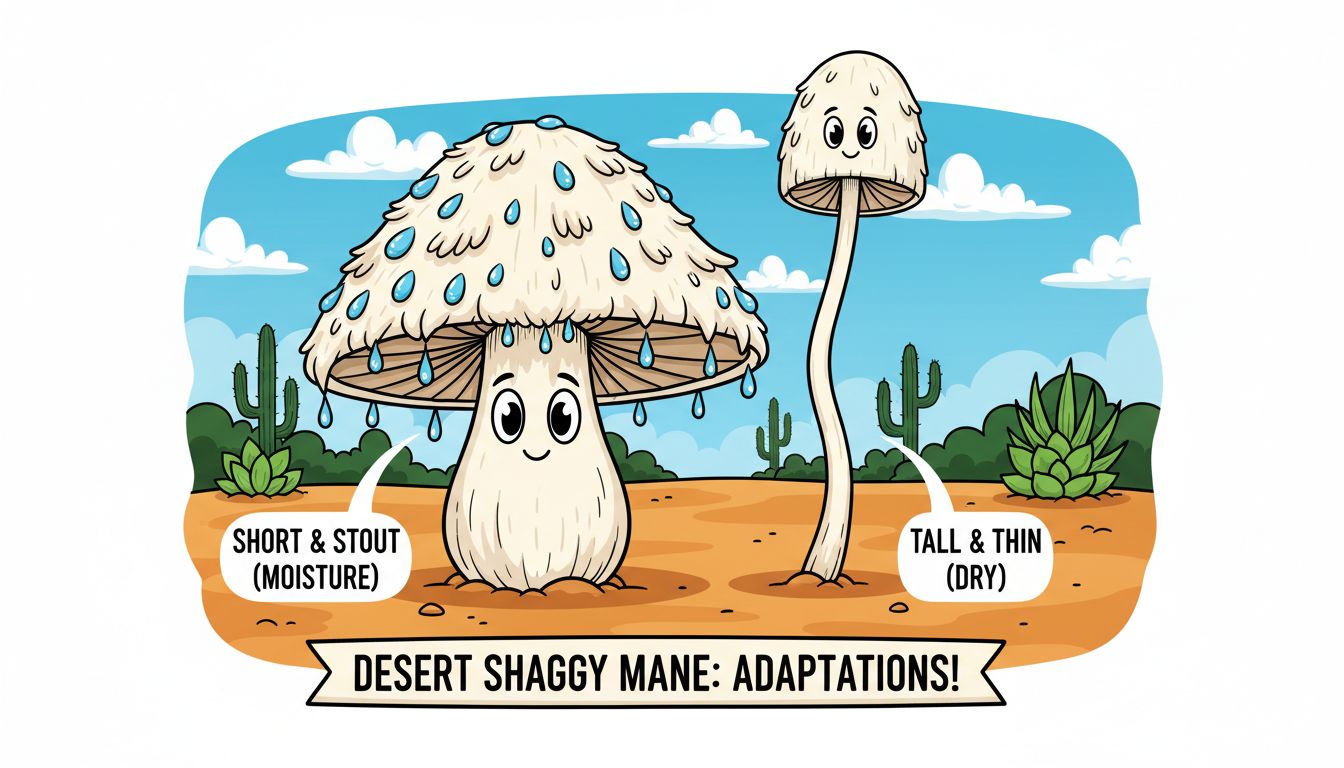
- **Shape and Structure:** The mushroom features a short, woody stem approximately 1 foot tall, significantly shorter than its relatives which can grow up to 11 feet. Its cap is large and closed, around 4 feet in diameter, providing a sturdy structure that supports its reproductive functions.
- **Overall Structure:** The compact design of this mushroom, with a thick stem and broad cap, suggests adaptations to conserve water and withstand harsh desert conditions.
### Selective Pressure
In the desert environment, several selective pressures could influence the development of these traits. Limited water availability and extreme temperatures mean that only the mushrooms best adapted to these conditions will thrive. The short stem may help reduce water loss and withstand strong winds, while a larger cap could facilitate spore dispersal when conditions are favorable.
### Evolutionary Advantages
Traits that enhance survival and reproduction are likely to be passed on to subsequent generations. Here’s how the key steps of evolution by natural selection connect:
1. **Variation in Traits:** Within a population of Desert Shaggy Mane mushrooms, there will be variations in traits such as height, cap size, and coloration. Some mushrooms may have shorter stems or larger caps, while others may vary in color.
2. **Heritability of Traits:** If shorter stem height and larger cap size are genetically influenced, these traits can be inherited by offspring. This means that the next generation of mushrooms can carry these advantageous traits forward.
3. **Differential Survival and Reproduction:** In a harsh desert environment, mushrooms with shorter stems may retain moisture better and endure extreme conditions more effectively. As a result, they are more likely to survive, reproduce, and pass on their beneficial traits to the next generation. Over time, these traits become more common in the population, leading to evolutionary changes.
In summary, the interplay between observed traits, environmental pressures, and evolutionary advantages illustrates the dynamic process of natural selection. By understanding these concepts, students can better appreciate how species adapt to their environments and the complex mechanisms driving evolution.
Was this answer helpful?