
What is the Water Cycle? A Complete Guide for Students
Quick Answer
The water cycle is the continuous movement of water on Earth, involving processes like evaporation, condensation, precipitation, and collection. It ensures that water circulates between the atmosphere, land, and bodies of water, supporting all life.
The water cycle, also known as the hydrological cycle, is an essential process that describes how water moves around our planet. Understanding this cycle helps us appreciate how vital water is for all living things and how it impacts our environment.
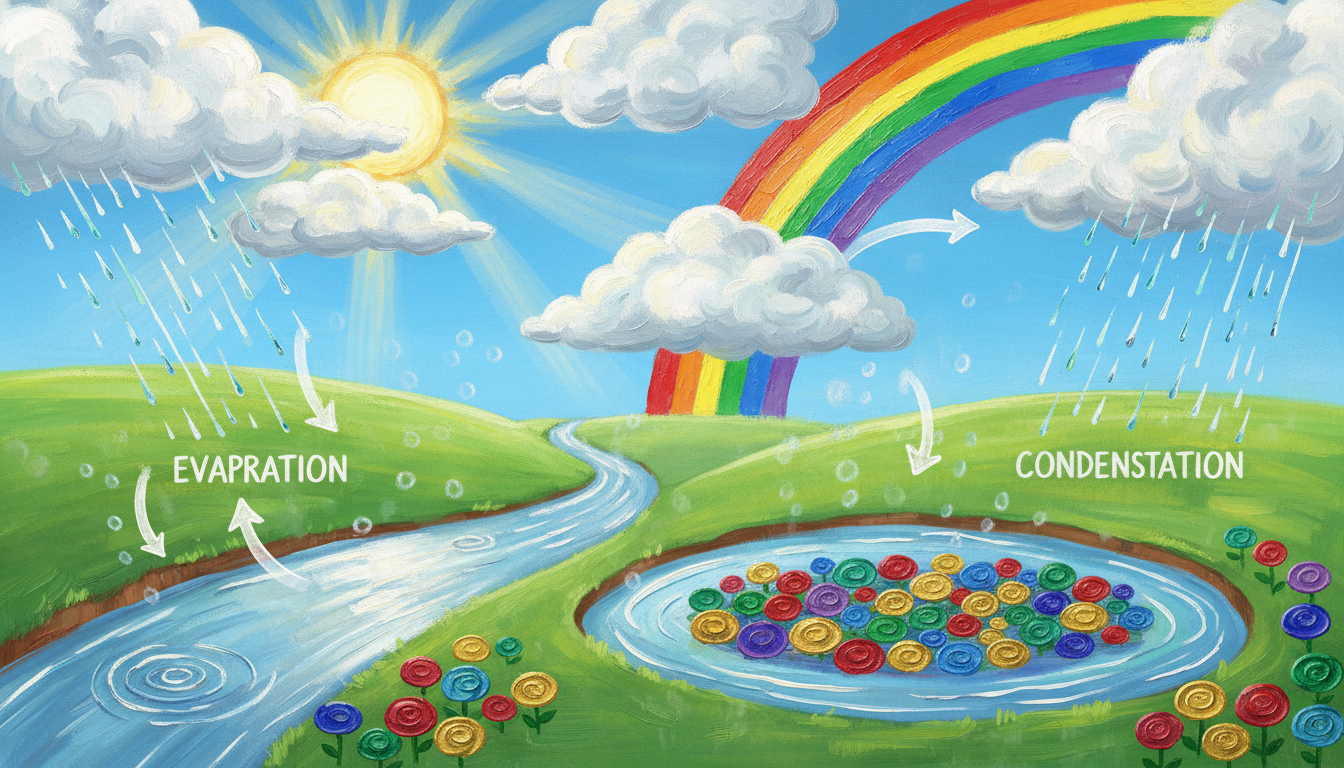
The cycle starts with **evaporation**, where the sun heats water from rivers, lakes, and oceans. This heat turns the water into vapor, which rises into the atmosphere. As the air cools, this vapor undergoes **condensation**, transforming back into tiny water droplets that cluster together to form clouds.
When clouds accumulate enough water, they become heavy and release it back to the Earth as **precipitation**. This can occur in various forms, such as rain, snow, sleet, or hail, depending on temperature conditions. After precipitation, water returns to the surface, where it can flow over land as runoff, seep into the ground, or collect in bodies of water like lakes and rivers. This stage is known as **collection**.
The water then eventually flows back into oceans and lakes, completing the cycle. This cycle is not just about moving water; it plays a crucial role in regulating climate and supporting ecosystems. For example, plants depend on this cycle for their growth, as they absorb water through their roots, which is crucial for photosynthesis.
Real-world applications of understanding the water cycle are significant. For instance, knowing how precipitation affects local weather patterns can help farmers decide when to plant crops. Additionally, understanding the water cycle can aid in conservation efforts, as we learn the importance of preserving our water sources.
Visual aids, such as diagrams showing each stage of the water cycle, can enhance understanding. Imagine a cycle where water evaporates into the air, forms clouds, falls back as rain, and then flows back to the ocean. By grasping these concepts, students can better appreciate the role of water in our lives and the environment. Remember, the water cycle is ongoing and essential for sustaining life on Earth!
Was this answer helpful?