
How Does the Rain Cycle Work? A Simple Guide for Students
Quick Answer
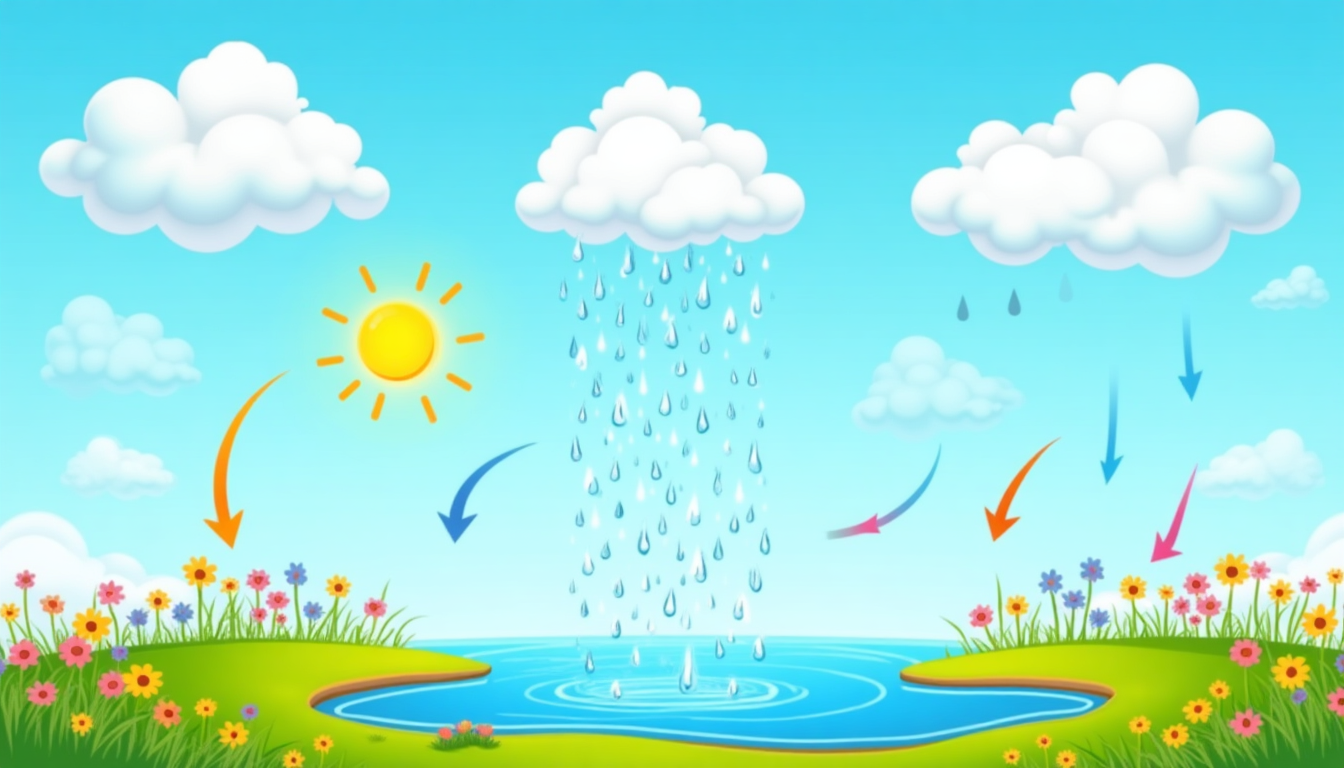
The rain cycle, also known as the water cycle, is the continuous movement of water on, above, and below the Earth's surface. It involves processes like evaporation, condensation, and precipitation, which ensure water circulates throughout the environment.
The rain cycle, also called the water cycle, is a fundamental process that helps maintain life on Earth. It is a continuous loop that describes how water moves from the ground to the atmosphere and back again in various forms. Understanding this cycle is crucial because it impacts weather patterns, ecosystems, and even our daily lives.
The journey begins with **evaporation**. The sun plays a vital role in this process by heating up bodies of water such as oceans, lakes, and rivers. When the temperature rises, the water transforms into water vapor, which is a gas. This process occurs not only on a large scale but also from smaller sources like puddles and soil. Imagine standing by a warm lake on a summer day; the warmth you feel is helping the water evaporate into the air!
Once the water vapor rises, it cools down as it reaches higher altitudes in the atmosphere. This cooling process leads to **condensation**. The water vapor particles gather together to form tiny droplets, which eventually combine to create clouds. Think of it like a group of friends gathering together; they start small but can grow into a larger group!
As more water vapor condenses, the clouds become heavy and dark, indicating they are full of water. When the droplets become too heavy for the clouds to hold, they fall back to the Earth as **precipitation**. This can occur in various forms, including rain, snow, sleet, or hail, depending on the temperature and weather conditions. For instance, during a warm summer day, we often experience rain, while in winter, the same process might produce snow.
After precipitation, the water collects back in rivers, lakes, and oceans, and this is where the cycle begins all over again. It's a beautiful natural process that not only provides us with the water we need to survive but also supports all ecosystems. Plants, animals, and humans all rely on this cycle for fresh water.
In real-world applications, understanding the rain cycle can help us in many ways. For example, farmers depend on predictable rain patterns for their crops, while city planners need to account for rainfall to manage water drainage systems. Moreover, awareness of how climate change can impact this cycle is crucial; shifts in temperature and weather patterns can lead to droughts or floods, affecting communities globally.
In summary, the rain cycle is a vital and fascinating process that contributes to our planet's health and our daily lives. By recognizing the stages of evaporation, condensation, and precipitation, we can appreciate the importance of water and the natural systems that sustain life on Earth.
Was this answer helpful?