
How to Classify Words in Spanish: A Student's Guide
Quick Answer
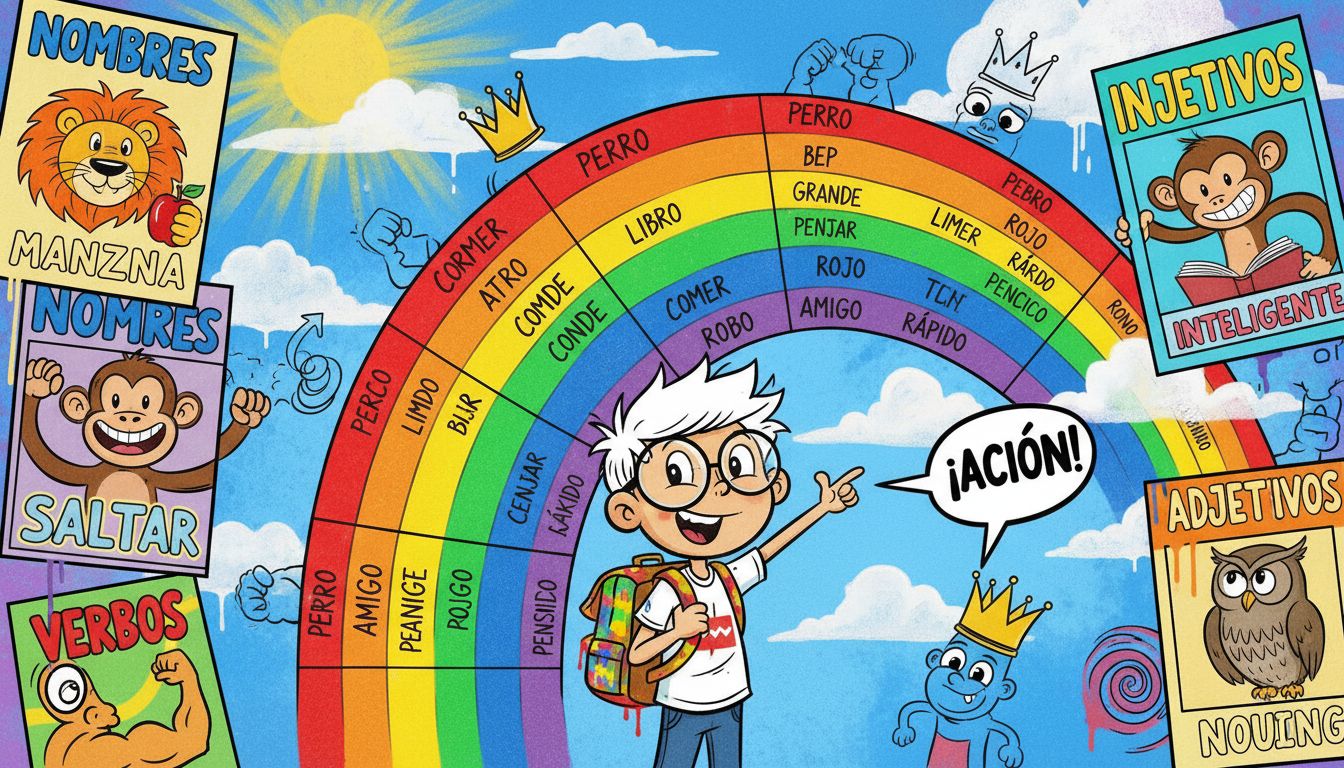
To classify words in Spanish, sort them into three categories: 'sustantivos' (nouns), 'adjetivos' (adjectives), and 'verbos' (verbs). For example, 'carro' is a noun, 'grande' is an adjective, and 'pensar' is a verb.
Classifying words is an essential skill in learning Spanish, as it helps you understand the roles different words play in sentences. In Spanish, words can be categorized into three main types: 'sustantivos' (nouns), 'adjetivos' (adjectives), and 'verbos' (verbs). Let's break down each category with examples and explanations to make this process easier for you.
### Nouns ('Sustantivos')
Nouns are words that refer to people, places, things, or ideas. In Spanish, nouns can be singular or plural, and they have gender (masculine or feminine). For instance, 'carro' (car) and 'libro' (book) are both nouns. When you classify nouns, think about whether they can be counted or measured. Can you have one 'carro' or multiple 'carros'? The answer is yes, which confirms they are nouns.
### Adjectives ('Adjetivos')
Adjectives describe nouns and provide more information about them. They can describe qualities, quantities, or characteristics. For example, 'grande' (big) and 'fuerte' (strong) are adjectives that describe nouns. When classifying adjectives, ask yourself: What does this noun look like or how does it behave? If you can provide an answer, you've likely found an adjective.
### Verbs ('Verbos')
Verbs are action words; they describe what someone or something does. For example, 'pensar' (to think) and 'correr' (to run) are verbs. When identifying verbs, look for words that express actions or states of being. These words are crucial for forming sentences as they tell us what is happening.
### Practical Application
Understanding how to classify words in Spanish is not just an academic exercise; it has real-world applications. For instance, when writing sentences or stories, knowing how to use nouns, adjectives, and verbs will improve your fluency and creativity. Consider this sentence: 'El carro grande corre rápido.' Here, 'carro' is a noun, 'grande' is an adjective that describes the noun, and 'corre' is the verb that tells us what the noun is doing.
### Additional Tasks
Your worksheet may also include tasks like finding invalid words in sentences or circling base words. These exercises help reinforce your understanding of word structure and sentence construction. When looking for 'morfemas derivativos' (derivational morphemes), you will identify parts of words that change their meaning, giving you deeper insights into how the Spanish language works.
If you ever feel stuck, don’t hesitate to reach out for more examples or explanations! Practicing these classifications will enhance your Spanish skills and make you a more confident speaker and writer.
Was this answer helpful?