
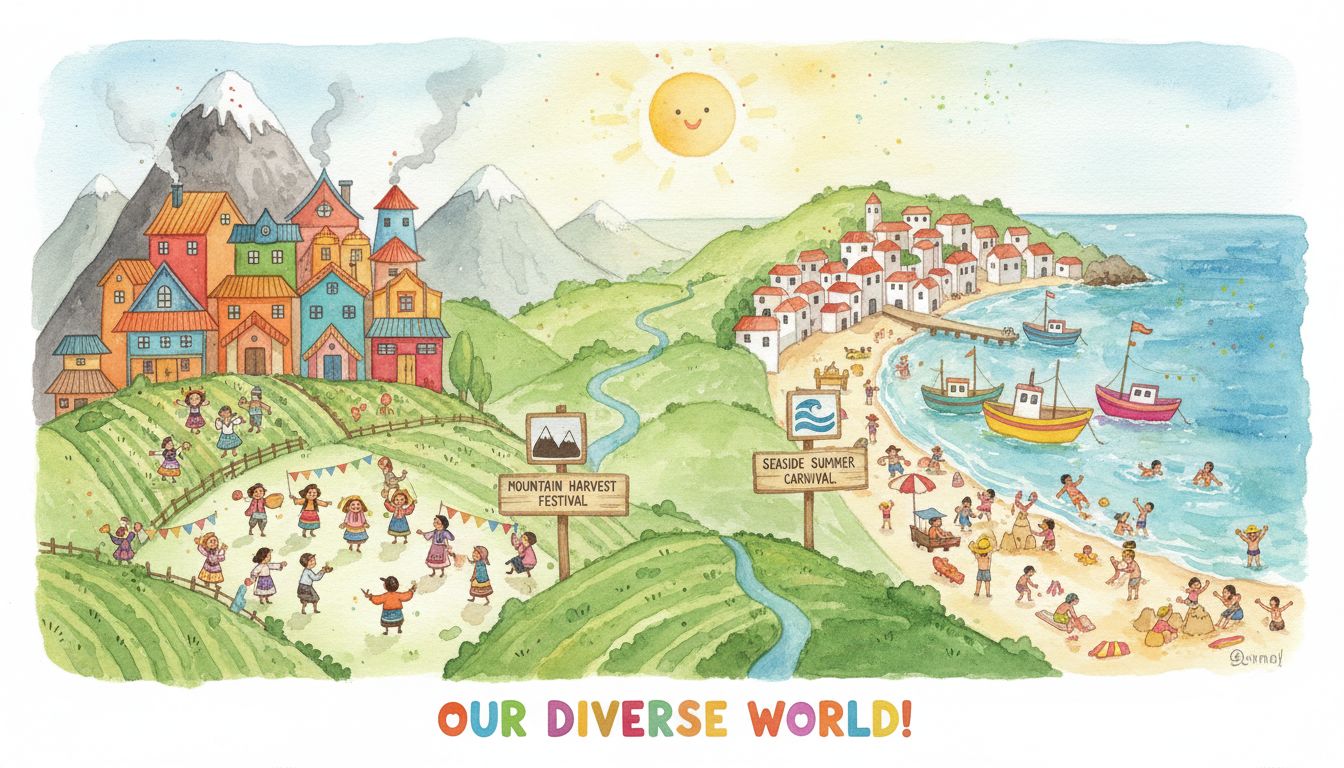
How Does Geography Impact Culture? Understanding the Connection
Quick Answer
Geography significantly influences culture by shaping traditions, religions, and daily practices. For instance, climate and location can dictate clothing styles, food preferences, and even belief systems.
Geography plays a crucial role in shaping the culture of a region. When we talk about geography, we refer to various factors such as climate, landforms, natural resources, and location. Each of these elements can significantly influence how communities develop their traditions, beliefs, and daily routines.
For instance, consider how climate affects clothing styles. In colder regions, people often wear warm, layered clothing to protect themselves from the harsh weather. This necessity can lead to the development of unique fashion traditions that are both practical and culturally significant. On the other hand, in hot and dry desert areas, inhabitants tend to wear loose, light-colored clothing that helps keep them cool while also reflecting their cultural values around modesty and practicality.
Additionally, geography can influence food habits. Communities living near oceans or rivers might develop diets rich in seafood, whereas those in mountainous regions might rely more on livestock and grains. This access to different types of food resources can also lead to distinct culinary traditions that are integral to their cultural identity.
Moreover, geography affects where people build their homes and how they design their communities. In areas with abundant rainfall, you might find homes that are designed to collect and conserve water. In contrast, desert dwellers may construct homes with thick walls that provide insulation against the heat.
Religion and belief systems are also shaped by geographic factors. Cultures in coastal areas may have gods or spiritual beliefs tied to the sea, emphasizing the importance of water and marine life. Similarly, communities living close to fertile lands may develop agricultural rituals that celebrate harvests and the earth’s bounty.
Understanding the connection between geography and culture is essential because it helps us appreciate the diversity of human experience. It shows us how different environments shape lifestyles and worldviews, leading to unique cultural expressions. This knowledge is important not only for academic studies but also for fostering respect and understanding among different cultures in our increasingly interconnected world.
By examining the interactions between geography and culture, we can gain insights into global issues such as migration, urbanization, and climate change, all of which are influenced by specific geographic conditions. Recognizing these patterns can help us address challenges and find solutions that respect cultural diversity while promoting sustainability.
Was this answer helpful?