The Sphere
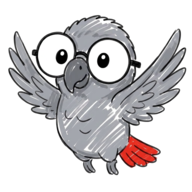
Polly watches an engineer inspect the Limiting Factor's titanium pressure sphere, the cabin where the pilot sits during a full-depth dive. She learns why the sphere is spherical, why the viewports are acrylic and not glass, and just how few people in the world have built a vessel rated to the deepest ocean.

Read at your pace. The full app adds translation and saved vocabulary.
Keep it on your phone →Morning. Polly woke under a tarp she had not climbed beneath the night before, someone had moved it during the dark and she had not noticed. The bridge smelled of coffee. The diesel was already running.

Out on deck, the submersible sat under bright work lights. A man in his fifties with grey hair tied back was crouched beside it, peering through a small inspection panel near the hatch. He had a torch in his mouth, two screwdrivers in his pocket, and the deliberate slowness of someone who had taken this same machine apart a hundred times.

Polly hopped closer along the railing. The man glanced up. He did not seem surprised by her. "Visitor's deck is over there," he said, nodding to a stack of crates. He went back to his work.

The thing he was inspecting was the titanium pressure sphere, the heart of the submersible, where the pilot sits. Polly knew, from listening to the crew the night before, that the sphere was one and a half metres across on the inside and made of titanium nine centimetres thick. The whole vessel weighed eleven and a half tonnes.

"What is the sphere shape for?" Polly asked. Speaking parrots are not as rare on research ships as one might think, especially in the Pacific.

The engineer did not look up. "Pressure is equal from every direction down there. Eleven hundred atmospheres, roughly. A sphere distributes that load evenly across its whole surface. A cube would crumple."

Polly tilted her red head. Eleven hundred atmospheres meant a force on each square centimetre roughly equivalent to a tonne of weight. The walls of the sphere were holding back, for every postage-stamp of metal, the equivalent of a small car.

The viewports interested her too. Three of them, each thicker than her body, made of cast acrylic. Acrylic, the engineer explained, because it deforms slightly under pressure and reseals itself. Glass would crack.

He let her watch as he checked the seals on each one. They were tested at full depth before every dive, eleven thousand metres, simulated in a tank on shore, before the sphere was ever loaded onto a ship. A weak seal at sea level was an invisible weak seal at the bottom.

"How long can the pilot stay down?" Polly asked.

"Life support for ninety-six hours. Dive cycle is about ten."

Polly looked at the man's calloused hands and the way they moved over the metal. There were probably twenty people in the world who had built one of these. She had landed on a ship with two of them.

The man closed the inspection panel. "It is one of two operational craft in the world rated to full ocean depth," he said, almost to himself. He patted the sphere as he walked away. Polly stayed a while, looking at the seam where the two titanium hemispheres met.
Listen and follow
Hear the whole story.
Press play, then let your eyes move with the language.
You just heard Polly
Want to hear what YOU sound like?
Read a line of the story out loud. Your recording stays on your device and is never uploaded.
Not bad, right? If you were in the PollyStop app, Polly would listen to exactly that and score you right now.
Coaching, saved words, spaced repetition, and a fresh story every day.
Get PollyStop freeYou just tried the loop
Now take the story with you.
PollyStop brings listening, saved vocabulary, speaking practice, and a fresh graded story together on your phone.
Learning on Android? Join the waitlistRead this story in another language.
Same story, different language. Compare the shape and rhythm without losing the plot.
Keep reading
More English stories.
The Sea Grows Quiet
Read free
The Sea Grows Quiet
Read free
The Sea Grows Quiet
Read free
The Giant
Read free
The Giant
Read free
The Giant
Read freeKeep learning in PollyStop
Listen, save words, practise