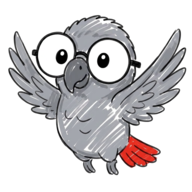
The Birds That Live Here
Polly meets the small animals that live in the Atacama and thinks about how hard it is to survive in a desert.

Read at your pace. The full app adds translation and saved vocabulary.
Keep it on your phone →On the fifth morning, Polly went to look for animals.

The Atacama is not empty. But everything that lives here lives at the edge of what is possible.

The first thing Polly found was a small black beetle on a rock. This is the fog beetle. It climbs up rocks during the rare morning fog. It tilts forward. Drops of water collect on its back. They run into its mouth. It does not drink any other water its whole life.

Further on, a small gecko. It hunts at night. It sleeps under rocks during the day. It can absorb water from the air through its skin. It can go six months without drinking.

A small mouse lives in burrows. It eats seeds. It gets its water from condensation and from the food it digests.

No flies. No grass. No flowers in this part.

The fog beetle has been doing this for 50 million years.

A black vulture passed overhead.

Polly walked back to the residencia. A truck had brought groceries from Antofagasta. Oranges. Apples. Large containers of bottled water.

None of these things grow here. Even the shower water is trucked in.

Polly thought about the fog beetle. And about the bottled water. And about how humans had decided to build an observatory in a place this hostile, just to look at light from far-away planets.
You just heard Polly
Want to hear what YOU sound like?
Read a line of the story out loud. Your recording stays on your device and is never uploaded.
Not bad, right? If you were in the PollyStop app, Polly would listen to exactly that and score you right now.
Coaching, saved words, spaced repetition, and a fresh story every day.
Get PollyStop freeYou just tried the loop
Now take the story with you.
PollyStop brings listening, saved vocabulary, speaking practice, and a fresh graded story together on your phone.
Learning on Android? Join the waitlistRead this story in another language.
Same story, different language. Compare the shape and rhythm without losing the plot.
Keep reading
More English stories.
The Sea Grows Quiet
Read free
The Sea Grows Quiet
Read free
The Sea Grows Quiet
Read free
The Giant
Read free
The Giant
Read free
The Giant
Read freeKeep learning in PollyStop
Listen, save words, practise