
What Are Passive and Active Voices in English Grammar?
Quick Answer
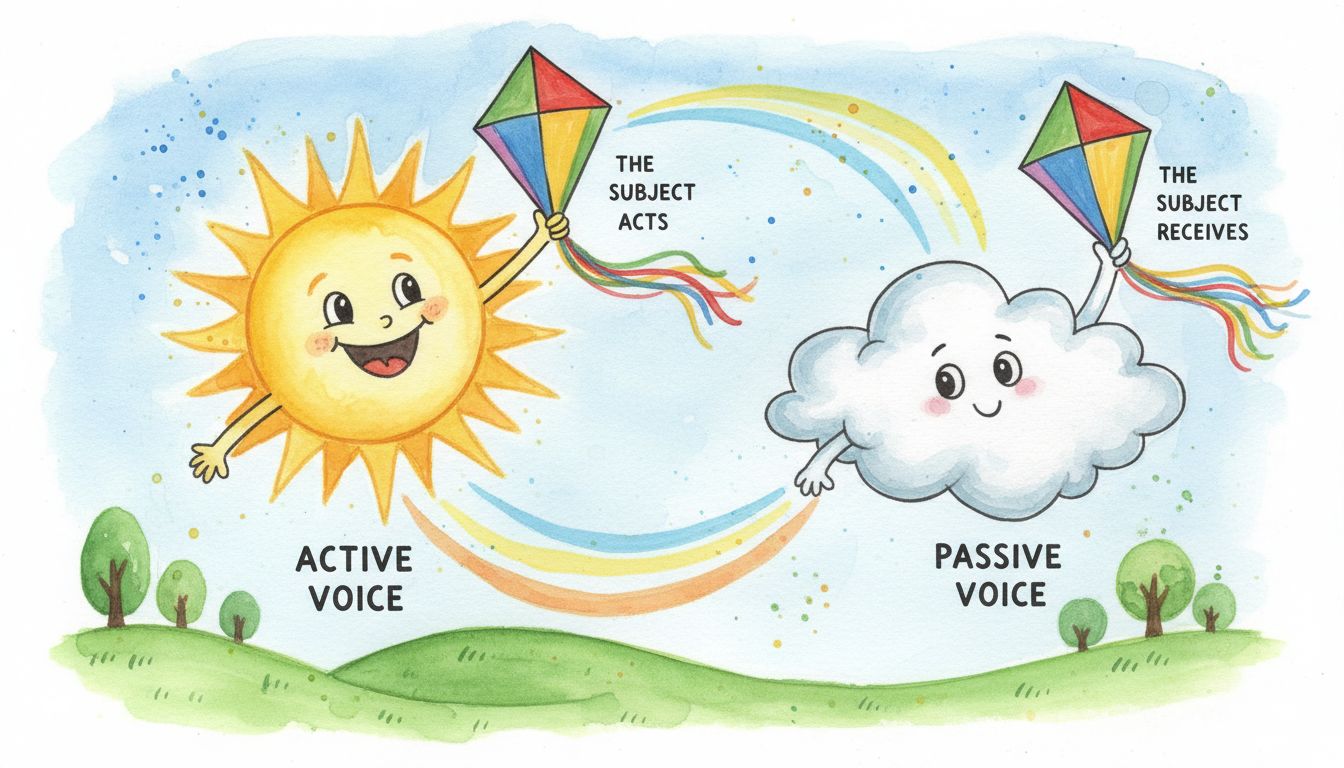
Active voice emphasizes the subject performing the action, while passive voice focuses on the subject receiving the action. Understanding both can enhance your writing clarity.
In English grammar, understanding the distinction between active and passive voice is crucial for effective communication. Let's delve deeper into what each voice means and how to identify them.
### Active Voice
In sentences written in the active voice, the subject of the sentence performs the action expressed by the verb. This structure is straightforward and often makes sentences clearer and more dynamic. The general pattern can be summarized as:
**Subject → Verb → Object**
For example:
- *The dog chased the cat.*
In this case, *the dog* is the subject that performs the action (chasing), and *the cat* is the object receiving that action. This structure allows readers to quickly grasp who is doing what.
To identify an active voice sentence, you can ask yourself: **“Who did the verb?”** If the answer is the subject at the start of the sentence, you’re dealing with an active voice.
### Passive Voice
Conversely, the passive voice shifts the focus from the doer of the action (the subject) to the receiver of the action. In passive constructions, the subject is acted upon rather than doing the action. The general structure can be expressed as:
**Object → Form of ‘be’ + Past Participle → (by + Doer)**
For instance:
- *The cat was chased by the dog.*
Here, *the cat* is the subject but is not performing the action; it is the one receiving the action of being chased. The phrase *by the dog* identifies who performed the action, but this information is often less critical in passive sentences.
To determine if a sentence is in the passive voice, try rephrasing it to see if it can be expressed in an active form. If the sentence can be flipped to make the original subject the doer of the action, it’s passive.
### Why Does This Matter?
Understanding the difference between active and passive voice is essential for effective writing. Active voice tends to be more engaging and direct. It is often preferred in academic and professional writing because it clarifies who is responsible for the action. In contrast, the passive voice can be useful in situations where the doer is unknown or less important than the action itself, such as in scientific writing or when emphasizing the action over the subject.
### Real-World Applications
When writing essays, reports, or creative pieces, varying your sentence structures can enhance your writing style. For instance, using active voice generally makes your writing stronger and more lively. However, when you want to focus on the outcome of an action rather than the actor, the passive voice can be a powerful tool.
In summary, mastering both active and passive voice will help you become a more versatile and effective writer. Experiment with both forms to see how they can best serve your communication goals!
Was this answer helpful?