
How to Identify the Rule in a Number Sequence
Quick Answer
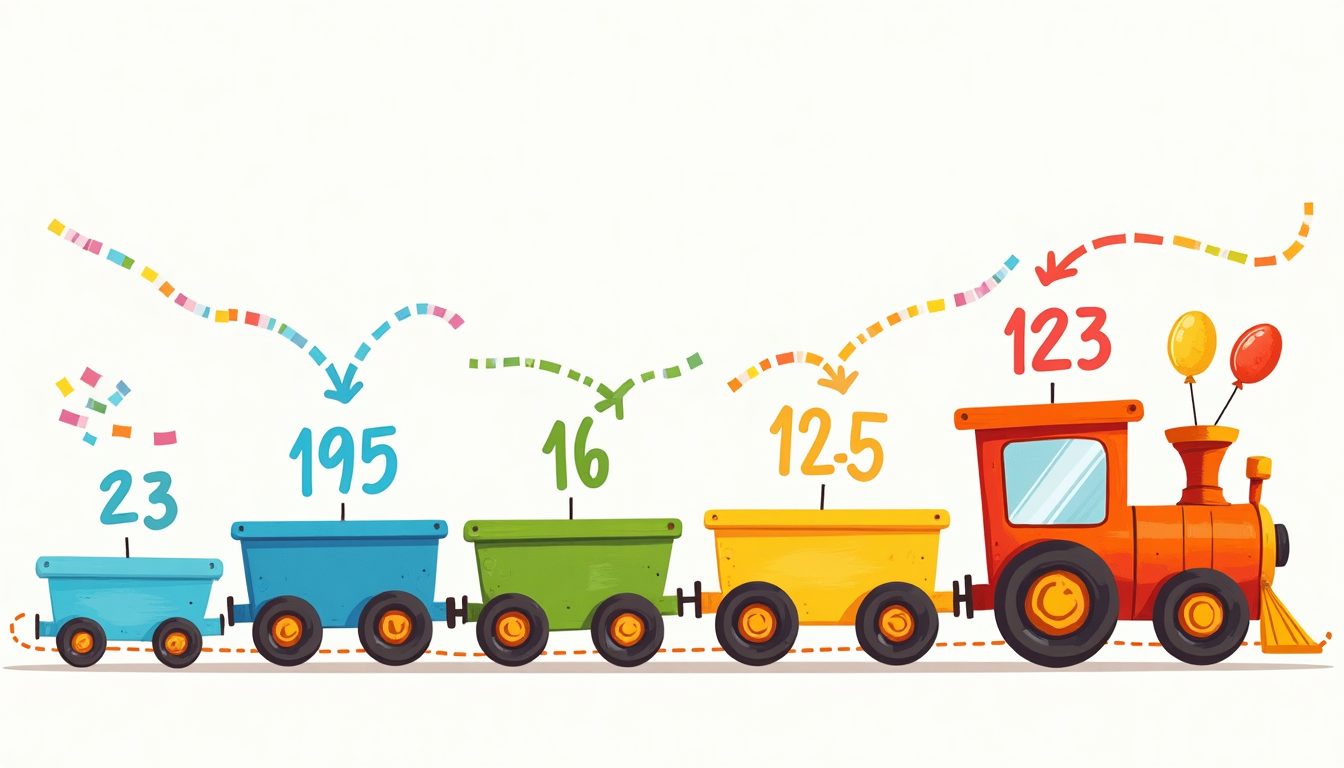
To determine the rule for generating terms in a number sequence, identify the common difference between consecutive terms. For example, in the sequence 23, 19.5, 16, 12.5, the common difference is -3.5, meaning you subtract 3.5 from each term to find the next.
Understanding how to identify the rule in a number sequence is an essential skill in math. Sequences can follow various patterns, and recognizing these patterns helps in predicting future terms. Let’s take a closer look at how to break down a specific sequence: 23, 19.5, 16, 12.5.
### Step 1: Identify the Changes
The first step in analyzing a sequence is to look at how each term changes from one to the next. In our example:
- To find the difference between the first term (23) and the second term (19.5), we subtract: 19.5 - 23 = -3.5.
- The difference between the second term (19.5) and the third term (16) is: 16 - 19.5 = -3.5.
- Finally, from the third term (16) to the fourth term (12.5): 12.5 - 16 = -3.5.
### Step 2: Determine the Common Difference
From our calculations, we see that the difference between each pair of consecutive terms is consistently -3.5. This value is known as the *common difference* of the sequence. In this case, we can conclude that every term is derived by subtracting 3.5 from the previous term.
### Step 3: Understanding the Language
It’s important to note how we express this mathematical operation. The statement 'add -3.5' is mathematically accurate but can be confusing. When we say 'add -3.5', it’s the same as saying 'subtract 3.5'. Thus, we can express the rule for finding the next term as:
- **Add -3.5 to the previous term.**
- **Subtract 3.5 from the previous term.**
Both statements lead to the same result, but in educational settings, it is often clearer to state that you should 'subtract 3.5' to find the next term.
### Real-World Applications
Understanding sequences and their rules is not just a classroom exercise; it has real-world applications in finance, computer programming, and data analysis. For instance, if you’re tracking your savings and noticing a consistent decrease in your balance due to expenses, recognizing that you are losing a fixed amount each month can help you manage your budget effectively.
### Conclusion
In summary, when working with number sequences, identify the common difference first. In this example, the common difference of -3.5 tells us how to move from one term to the next. Whether you express this operation in terms of addition or subtraction, what matters most is understanding the consistent pattern that governs the sequence.
By practicing with different sequences, you’ll build confidence in recognizing patterns and applying this knowledge in various mathematical and real-world contexts.
Was this answer helpful?