
How to Identify Beetles by Region and Size: A Student's Guide
Quick Answer
To identify beetles by region and size, examine the images and labels on your worksheet. Use the clues provided to match each beetle to its correct habitat and answer related questions.
Identifying beetles based on their region and size is an engaging way to learn about biodiversity and ecology. When you encounter a workbook page featuring various beetles, it's essential to take a systematic approach to answer the questions effectively.
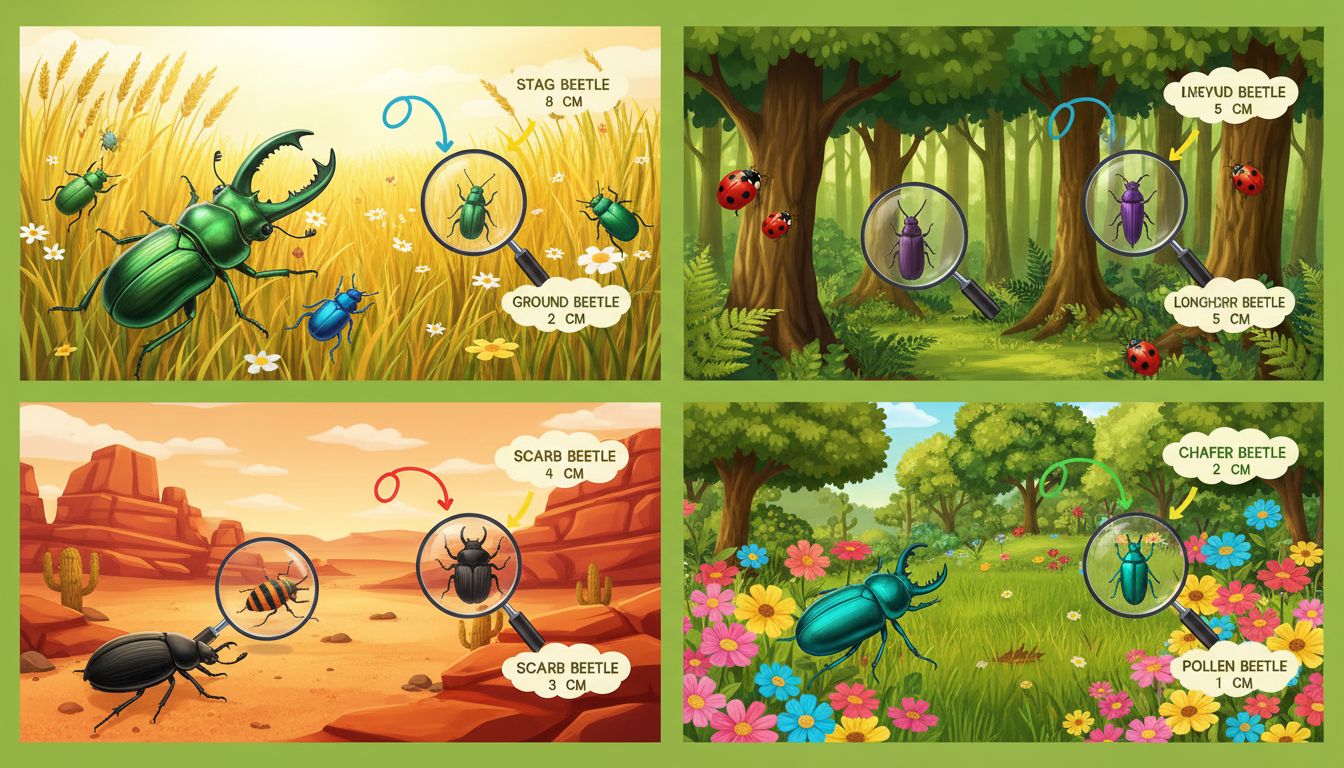
First, examine each beetle's image carefully. Each beetle is typically labeled with its region of origin and its size. These labels are crucial for understanding where each beetle is found and how they compare to one another. For instance, you might see a beetle labeled from Peru that is significantly larger than a beetle from Italy.
Next, pay attention to the colored activity boxes that correspond to different countries or regions. These boxes serve as visual aids that help you match each beetle to its habitat. When you see a beetle identified as being from North Africa, look for it among the options provided in the activity boxes. This color-coding makes it easier to track which beetles belong to which regions.
As you work through the questions at the bottom of the page, read each one thoroughly. Some questions may ask you to identify the largest beetle, while others may require you to match specific beetles to their regions. For example, if a question states, "Which beetle is the largest?" you would refer back to the size information next to each beetle's image to determine the answer.
Real-world applications of this knowledge extend beyond the classroom. Understanding where different beetle species live can enhance your appreciation for biodiversity and the environmental factors that contribute to their habitats. Beetles play vital roles in ecosystems, such as pollination and decomposition, and learning about them can foster a deeper connection with nature.
If you have a specific question from your worksheet, such as "Which beetle is found in Turkey?" or "What is the size of the largest beetle from North Africa?" feel free to share it, and I can help you work through it step by step. Learning about beetles is not just about memorization; it’s about engaging with the material and developing critical thinking skills that will serve you in various scientific studies!
In summary, take your time to analyze the images, read the labels, and answer the questions based on the information provided. This methodical approach will help you successfully navigate your beetle identification exercise.
Was this answer helpful?