
What is the SI Unit for Mass? Understanding Kilograms and Grams
Quick Answer
The SI unit for mass is the kilogram, abbreviated as 'kg'. It is widely used in science and everyday life, with 1 kilogram equating to 1000 grams.
In the realm of science and measurements, the International System of Units, or SI, provides a standardized way to quantify various physical properties. Among these, mass is a fundamental property that is measured using the SI unit known as the kilogram, abbreviated as 'kg'. This unit is universally accepted and utilized in nearly every country around the globe.
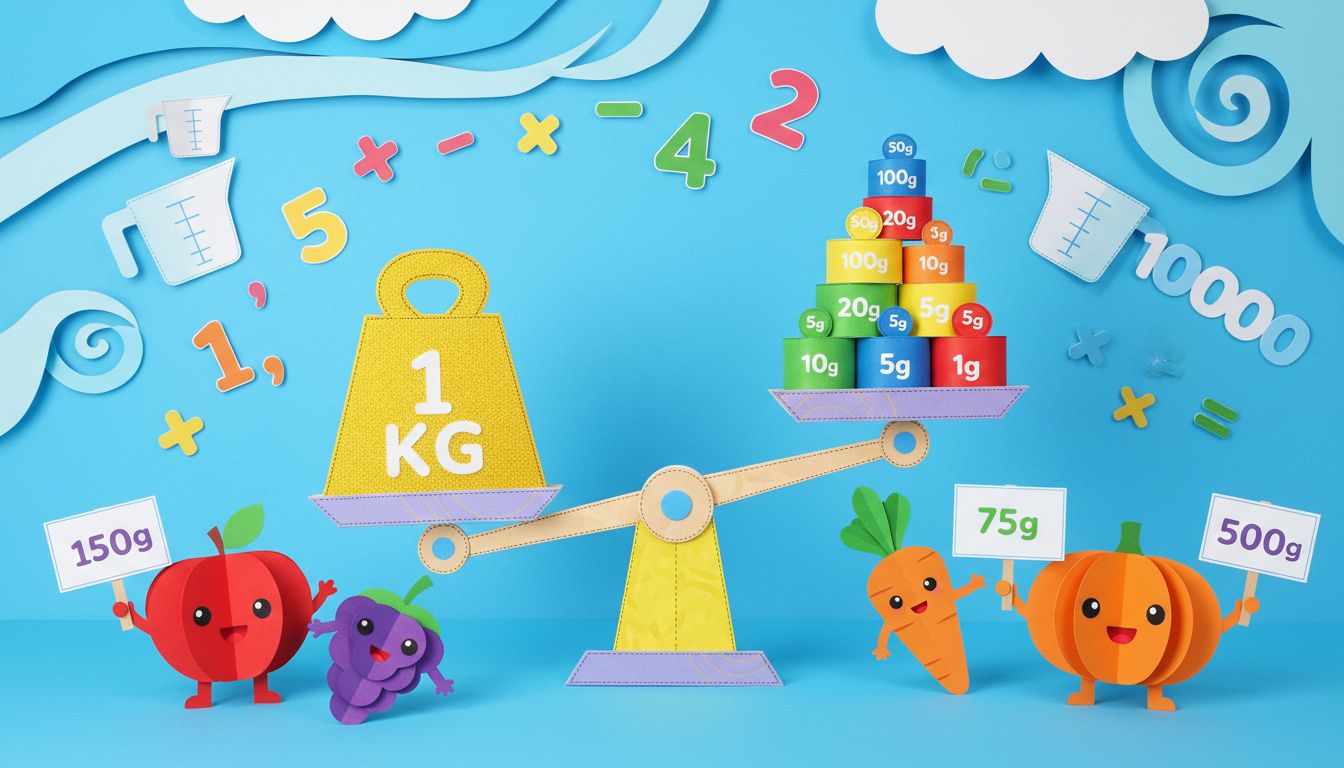
To illustrate how mass is measured, consider a scenario where you are at a grocery store weighing fruits. If you pick up a bag of apples and the scale indicates that it weighs 2 kg, this means that the total mass of the apples is 2 kilograms. The kilogram serves as a reference point for measuring larger masses, while smaller amounts can be expressed in grams (g). It’s important to know that 1 kilogram is equivalent to 1000 grams, making it easier to convert between the two units.
The significance of the kilogram extends beyond just grocery shopping; it plays a vital role in various scientific fields. For example, in physics, understanding mass is crucial for calculations involving force, energy, and acceleration. According to Newton's second law of motion, force is equal to mass multiplied by acceleration (F = ma). Thus, knowing the mass of an object allows scientists to predict how it will move when a force is applied.
Moreover, the kilogram is not just a theoretical concept; it has practical applications in our daily lives. From weighing ingredients in cooking to measuring luggage at airports, the kilogram is a unit that we encounter frequently. Additionally, mass measurement is crucial in various industries, such as pharmaceuticals, where the precise dosage of a drug can be critical to patient safety.
Historically, the kilogram was defined by a physical object—a cylinder made of platinum and iridium, known as the International Prototype of the Kilogram (IPK). However, in 2019, a new definition was adopted based on fundamental constants of nature, specifically using the Planck constant. This change ensures that the definition of the kilogram remains stable and precise, regardless of changes in physical objects over time.
In summary, the SI unit for mass is the kilogram (kg), and it is essential for scientific calculations and everyday measurements alike. Understanding how to use and convert between kilograms and grams is a fundamental skill in both academic settings and daily life.
Was this answer helpful?