Seeing a Galaxy
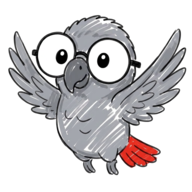
Polly watches an observation of NGC 1068, an active galactic nucleus 47 million light years away, and thinks about how seeing far in space means seeing far back in time.

Read at your pace. The full app adds translation and saved vocabulary.
Keep it on your phone →On the sixth night, Camila was observing a distant galaxy. Its catalogue name was NGC 1068. To most people who had heard of it, it was just a smudge in the constellation Cetus. To astronomers, it was one of the brightest and closest active galactic nuclei in the sky.

An active galactic nucleus is a region at the centre of a galaxy where a supermassive black hole is actively feeding on gas. The gas spirals in, heats up to millions of degrees, and emits radiation across the electromagnetic spectrum before it crosses the event horizon. NGC 1068's central black hole is about ten million times the mass of the Sun. It is forty-seven million light years from Earth.

Tonight's observation was using an instrument on UT2 called CRIRES, a spectrograph that could split incoming light into very fine wavelength bins in the infrared. The point of tonight was to measure how fast gas was rotating around the black hole. The faster the rotation, the more massive the black hole.

"Look," Camila said. She pulled up a different screen. It was a false-colour image, in red-orange and blue, of a small bright blob with two larger fainter lobes coming out of it. "This is NGC 1068 from last week. The blob is the galaxy's nucleus. The lobes are jets of plasma being thrown out by the black hole. They are travelling at perhaps a tenth of the speed of light. The plasma is hotter than anything in the solar system."

Polly tilted her glasses.

"And we are looking at it from forty-seven million years ago," Camila said. "The light we are recording right now left this galaxy when life on Earth was still in the late Eocene epoch. There were no humans. There were no chimpanzees. The largest mammals were a kind of early rhinoceros. The continents were almost in their current positions, but not quite. Antarctica still had forests."

The telescope made a small hum. The image refreshed.

"Sometimes I think," Camila said, very quietly, "that astronomy is mostly about getting comfortable with the fact that you are very small and very late, and then finding that comforting."

Polly thought about that for a long moment. She tilted her red head.

"I think," she said, slowly, "that I do not mind being small. I mind, sometimes, being late."

Camila smiled. "You are not so late. You are here when the galaxy was actively feeding. We are receiving the light right now. The light has been travelling for forty-seven million years to get to us. In some sense the galaxy is happening tonight."

Polly thought about that, too.

The observation continued for two hours. Outside the dome, the Milky Way arched across the sky. The Magellanic Clouds, two small companion galaxies of the Milky Way, were visible to the south. They are only visible from the southern hemisphere, which is why so much astronomy of the past century has been done from the southern hemisphere. The Magellanic Clouds are between one hundred sixty thousand and two hundred thousand light years away. They are practically next door, by galactic standards.

Polly watched them. The light she was watching had left those small galaxies a hundred and sixty thousand years ago. A hundred and sixty thousand years ago, Homo sapiens had recently appeared in East Africa. The light hitting her eyes had been older than her species. The galaxy in Camila's screen was older still. Polly's understanding of "old" had been steadily expanding for two weeks now. Tonight it expanded further.

The telescope hummed. The dome rotated. The light came in.
You just heard Polly
Want to hear what YOU sound like?
Read a line of the story out loud. Your recording stays on your device and is never uploaded.
Not bad, right? If you were in the PollyStop app, Polly would listen to exactly that and score you right now.
Coaching, saved words, spaced repetition, and a fresh story every day.
Get PollyStop freeYou just tried the loop
Now take the story with you.
PollyStop brings listening, saved vocabulary, speaking practice, and a fresh graded story together on your phone.
Learning on Android? Join the waitlistKeep reading
More English stories.
The Sea Grows Quiet
Read free
The Sea Grows Quiet
Read free
The Sea Grows Quiet
Read free
The Giant
Read free
The Giant
Read free
The Giant
Read freeKeep learning in PollyStop
Listen, save words, practise