
How Does the Federalist vs. Anti-Federalist Debate Exist Today?
Quick Answer
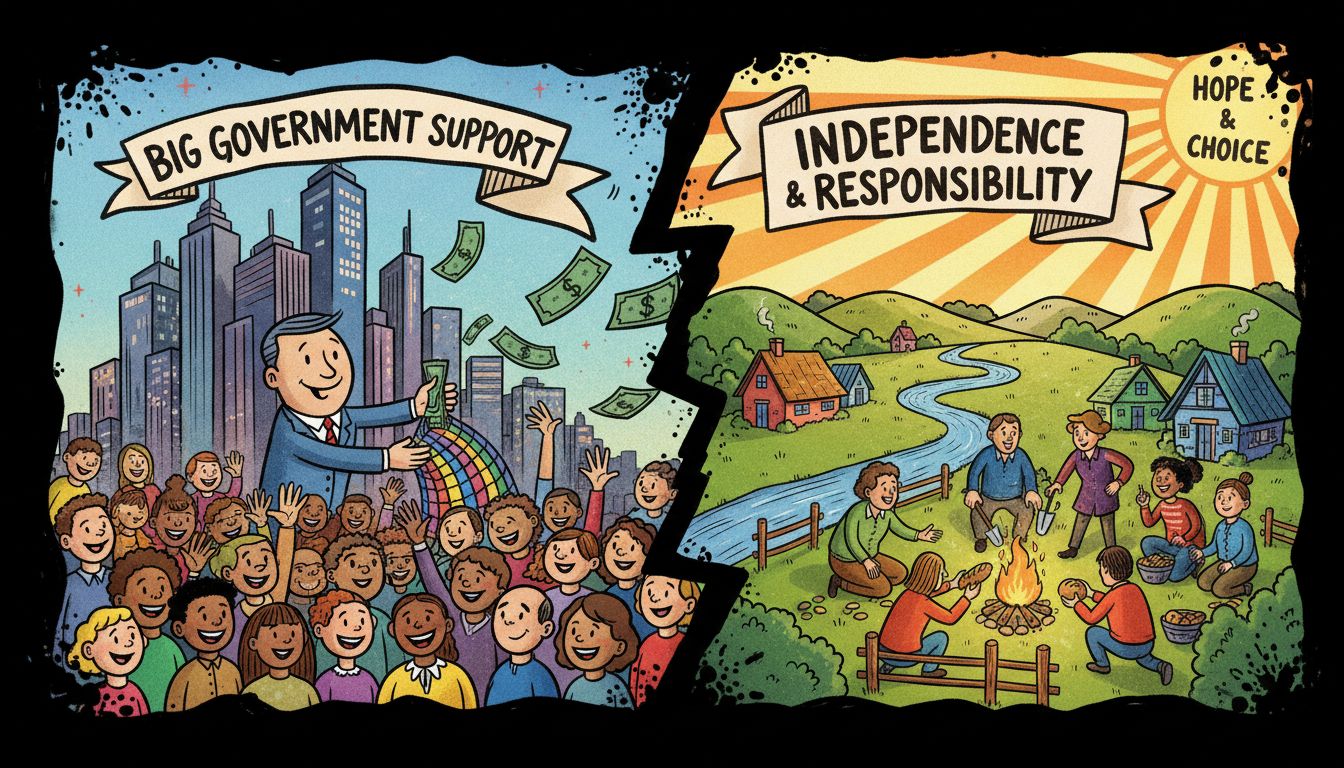
The debate between Federalists, who favor a strong central government, and Anti-Federalists, who prefer limited government, continues today. Recent crises have led to increased support for Federalist ideas, as people often turn to government for economic stability during tough times.
The Federalist vs. Anti-Federalist debate, which dates back to the founding of the United States, centers on the size and role of government. Federalists advocate for a strong central government that can effectively manage national issues, while Anti-Federalists argue for smaller, more localized governance that better represents individual states and communities. This division is still relevant today, as public opinion often shifts depending on current events and economic conditions.
In recent years, particularly during financial crises, there has been a noticeable increase in support for Federalist ideas. For example, during the 2008 financial crisis, many people who traditionally favored limited government began to call for more government intervention to stabilize the economy. This shift illustrates a critical aspect of the ongoing debate: in times of uncertainty, people often look to the government for solutions and support, even if they previously advocated for less government involvement.
Historically, sectors like finance have pushed for minimal government regulation, believing that free markets can self-correct. However, when unforeseen circumstances arise, such as market crashes or natural disasters, these same sectors frequently seek government assistance to mitigate losses and restore stability. This reliance on government intervention highlights a fundamental tension in the debate: while individuals may prefer small government in theory, practical needs can lead to greater support for Federalist policies.
On the flip side, Anti-Federalists prioritize local governance, arguing that one-size-fits-all solutions from a central government may not address the unique needs of different communities. They advocate for policies that empower states and local governments to make decisions that resonate with their citizens. This perspective is particularly relevant in discussions about education, healthcare, and environmental regulations, where local conditions may significantly impact the effectiveness of policies.
In conclusion, the Federalist vs. Anti-Federalist debate remains a vital part of American political discourse, with its implications felt in various aspects of governance today. Understanding this dynamic helps individuals engage with current events and consider how government policies can shape their lives and communities. The conversation about the right balance between big and small government will likely continue as society navigates new challenges and opportunities in the future.
Was this answer helpful?