
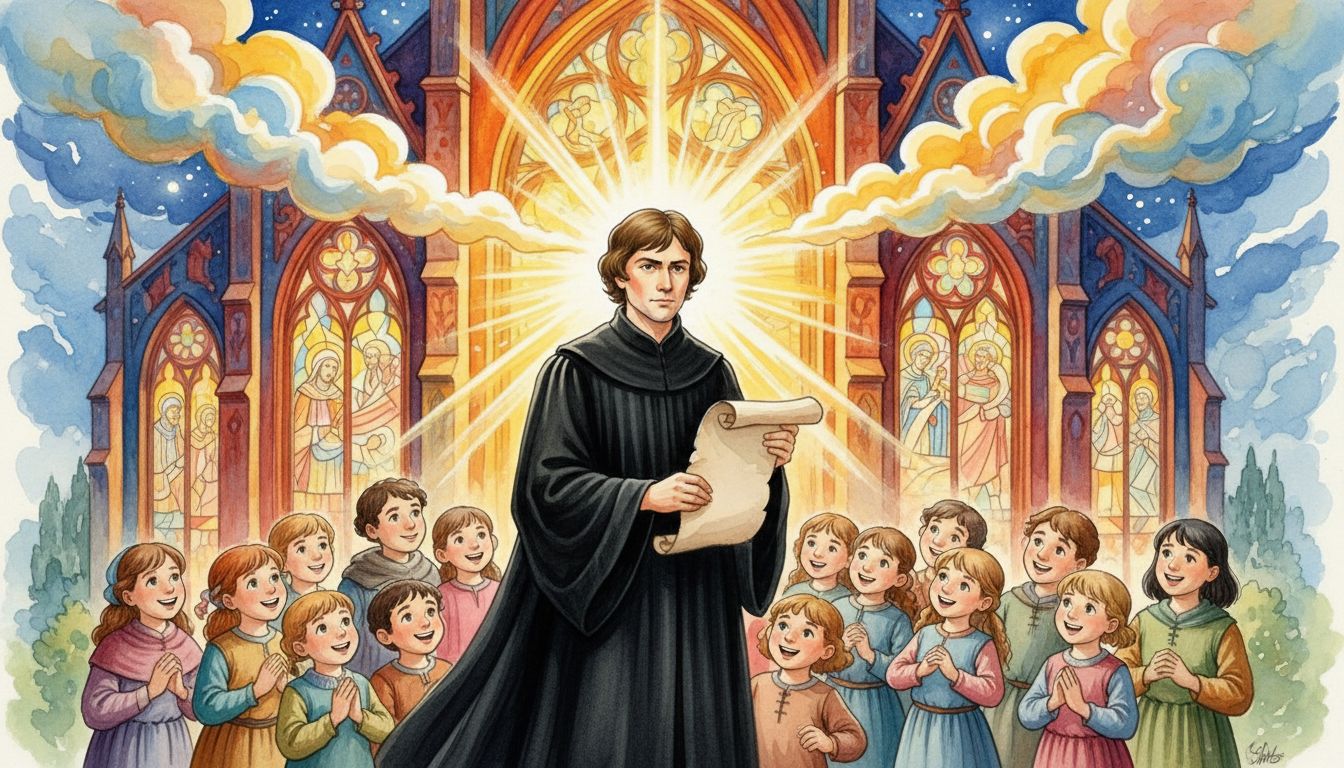
Who Started the Protestant Reformation in the 1500s?
Quick Answer
Martin Luther initiated the Protestant Reformation in the 1500s by publishing his 95 Theses, which criticized the Catholic Church's practices. His actions led to significant divisions within Christianity, resulting in new denominations.
The Protestant Reformation was a pivotal moment in history that reshaped Christianity in the 1500s. At the heart of this movement was Martin Luther, a German monk, who famously challenged the Catholic Church’s practices in 1517. His publication of the **95 Theses** criticized the sale of indulgences, a practice where the church allowed people to pay for forgiveness of sins. Luther argued that this undermined the true message of Christianity, which emphasizes salvation through faith alone.
Luther's bold actions sparked widespread debate and discontent among believers, leading to the emergence of various new Christian denominations. The Reformation not only resulted in the establishment of Lutheranism but also paved the way for other branches such as Calvinism and Anglicanism. These new groups represented significant divisions within Christianity, contrasting sharply with the Catholic Church's teachings and control.
To understand the impact of Luther’s actions, let’s consider the historical context. Before the Reformation, the Catholic Church held considerable power over spiritual and political life across Europe. However, Luther’s call for reform resonated with many who sought a more personal connection to faith, free from the church's hierarchical constraints. This desire for change wasn't limited to Luther alone; it was a collective yearning among various thinkers and reformers of the time.
In addition to Luther, other figures played important roles during the Reformation. For instance, John Calvin further developed Protestant theology, emphasizing the sovereignty of God and predestination. Meanwhile, the Anglican Church arose in England, driven by both theological and political factors, as King Henry VIII sought to annul his marriage without papal approval.
The consequences of the Reformation were profound. It not only led to the fragmentation of Christianity but also fostered an environment where individual interpretation of the Bible became more widespread. People began to read and interpret the scriptures for themselves, which encouraged literacy and education among the laity.
Today, the legacy of the Protestant Reformation is evident in the diverse landscape of Christian denominations around the world. It serves as a reminder of the importance of questioning authority and seeking personal belief systems. Understanding this historical moment is crucial for anyone interested in the development of modern Christianity and its various expressions.
In summary, Martin Luther’s role in the Protestant Reformation highlights how one individual's actions can initiate significant societal changes. His challenge to the Catholic Church not only reshaped Christianity but also influenced Western civilization's views on faith, authority, and individual rights.
Was this answer helpful?