
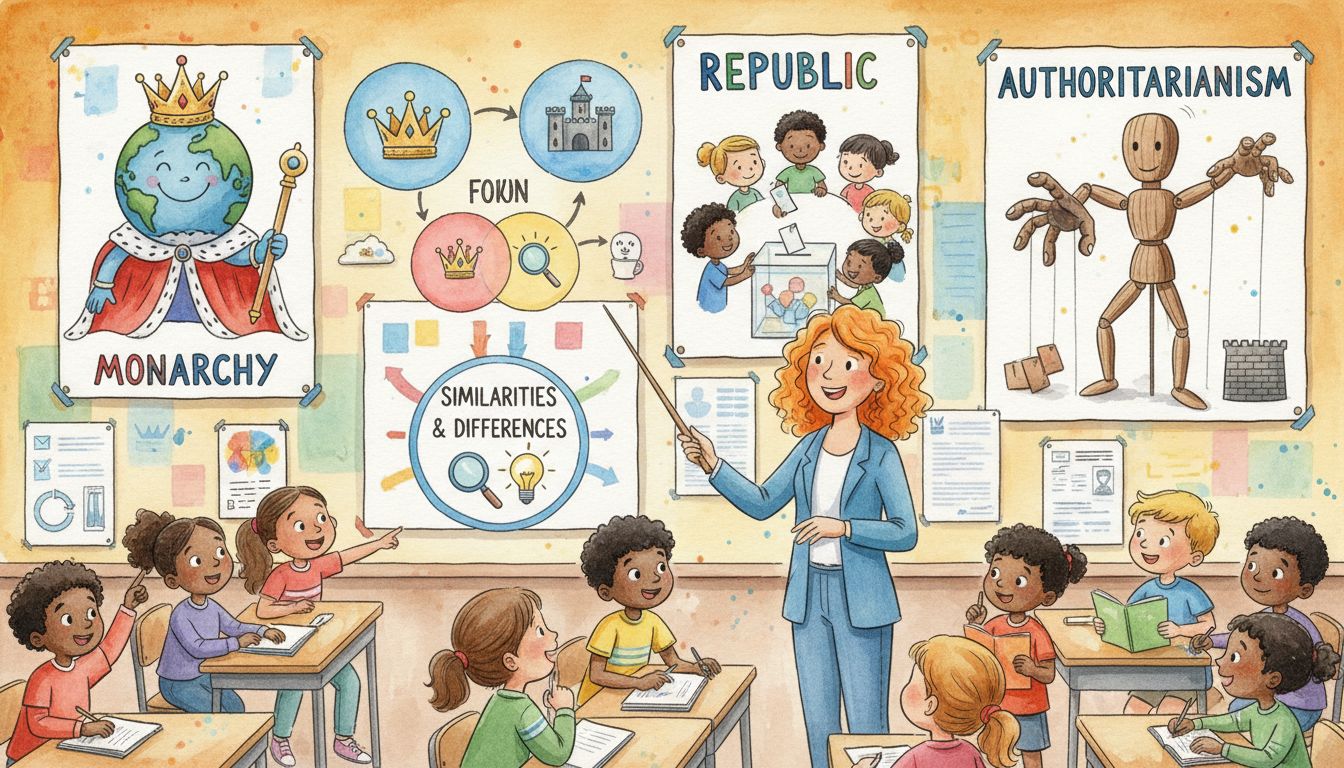
Understanding Republics: How They Compare to Democracies
Quick Answer
A republic is a political system where citizens elect representatives to govern on their behalf, with protected rights. Unlike pure democracies, republics have limits on majority rule to protect individual rights.
A republic is defined as a political system in which power rests with the citizens who elect representatives to make decisions and govern on their behalf. This system usually operates under a constitution that safeguards certain rights and values that cannot be overridden by majority rule.
### Key Characteristics of a Republic
In a republic, elected officials are accountable to the citizens and must govern according to existing constitutional law that limits the government's power over citizens. This contrasts with a direct democracy, where decisions are made directly by majority vote without the constraint of a constitution. In a republic, certain fundamental rights are protected, ensuring that even if a majority agrees on a particular issue, they cannot infringe upon the rights of the minority.
### Similarities and Differences with Democracy
- **Similarities**: Both systems allow citizens to vote and have a say in governance. In both republics and democracies, the principle of majority rule is important in decision-making.
- **Differences**: The key distinction lies in the protection of rights. In a democracy, the majority can pass laws that may infringe on the rights of individuals or minority groups. In contrast, a republic has built-in safeguards, often outlined in a constitution, that protect individual rights from being overridden by the majority.
- **Part of Democracy?**: Yes, a republic can be considered a form of democracy, specifically a representative democracy, where the rights of individuals are prioritized even amidst majority rule.
### Historical and Contemporary Examples
Republics have existed throughout history and continue to play a significant role in modern governance. The United States is perhaps the most well-known example of a republic, established in the late 18th century. Other examples include France and India, each with their unique constitutional frameworks that shape their republican governments.
In summary, understanding the nuances between a republic and a democracy is crucial for grasping the complexities of modern governance structures. By recognizing how republics safeguard individual rights while allowing for representative governance, citizens can better appreciate the systems that shape their societies.
Was this answer helpful?