
How to Resolve Personal Conflict: A Student's Guide
Quick Answer
Resolving personal conflict involves understanding your feelings, communicating openly, and advocating for yourself. By reflecting on your experiences, you can learn valuable strategies for future conflicts.
Conflict is an inevitable part of life, especially during the formative years of high school. Many students face internal and external conflicts that challenge their understanding of themselves and their place within their academic environment. One particularly enlightening conflict might involve a student's struggle with their learning style and the mismatch with traditional educational systems.
When faced with conflict, it’s essential to first identify the source of your disagreement. In many cases, students might feel that their learning needs are not being met, leading to frustration, confusion, or even self-doubt. For instance, a student might feel that despite their hard work, their academic performance does not reflect their efforts. Here, the conflict exists between the student’s self-assessment and the perceptions of teachers or peers.
To address this conflict, the student could take several constructive steps. Firstly, reflecting on personal experiences is crucial. This might involve keeping a journal to express feelings and document academic experiences. Secondly, seeking support from trusted individuals, like family or friends, can provide different perspectives and emotional support.
For example, a student might discuss their feelings with their parents, who can help them navigate the school system. This support might lead to advocating for additional testing or resources to better understand their learning style. It can also be helpful to research strategies or stories from successful figures who have faced similar challenges, thereby gaining inspiration and practical advice.
Once the student has gathered information and support, the next step is to communicate openly with educators. This can be intimidating, but it’s an essential part of advocacy. By sharing personal insights and specific challenges with teachers, students can help educators understand their unique needs. This dialogue can lead to tailored learning strategies that align more closely with how the student learns best.
After receiving a diagnosis or support, students often experience a mix of emotions, from relief to renewed motivation. It’s important to acknowledge these feelings and understand that they are part of the growth process. Implementing new learning strategies and seeing improvements can further reinforce self-trust and confidence.
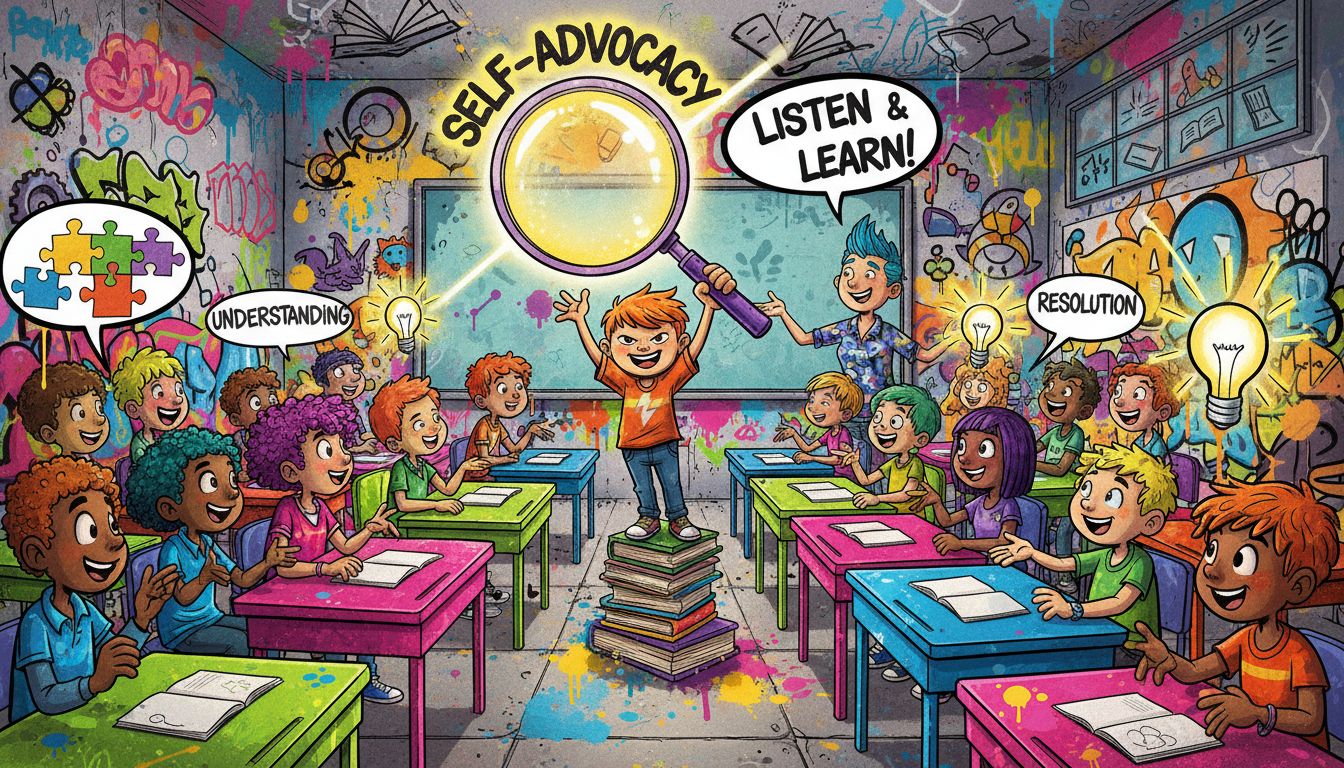
Ultimately, the key takeaway from resolving personal conflicts is the importance of self-advocacy and understanding one's own needs. Students learn that their voices matter and that seeking help is a strength, not a weakness. This experience can shape how they approach future conflicts, equipping them with problem-solving skills that extend beyond academics into everyday life.
In summary, resolving personal conflict is about reflection, communication, and advocacy. By understanding and addressing conflicts thoughtfully, students can emerge stronger and more self-aware, paving the way for success in their academic and personal journeys.
Was this answer helpful?