
How Does the Omniscient Narrator Shape Understanding in Lord of the Flies?
Quick Answer
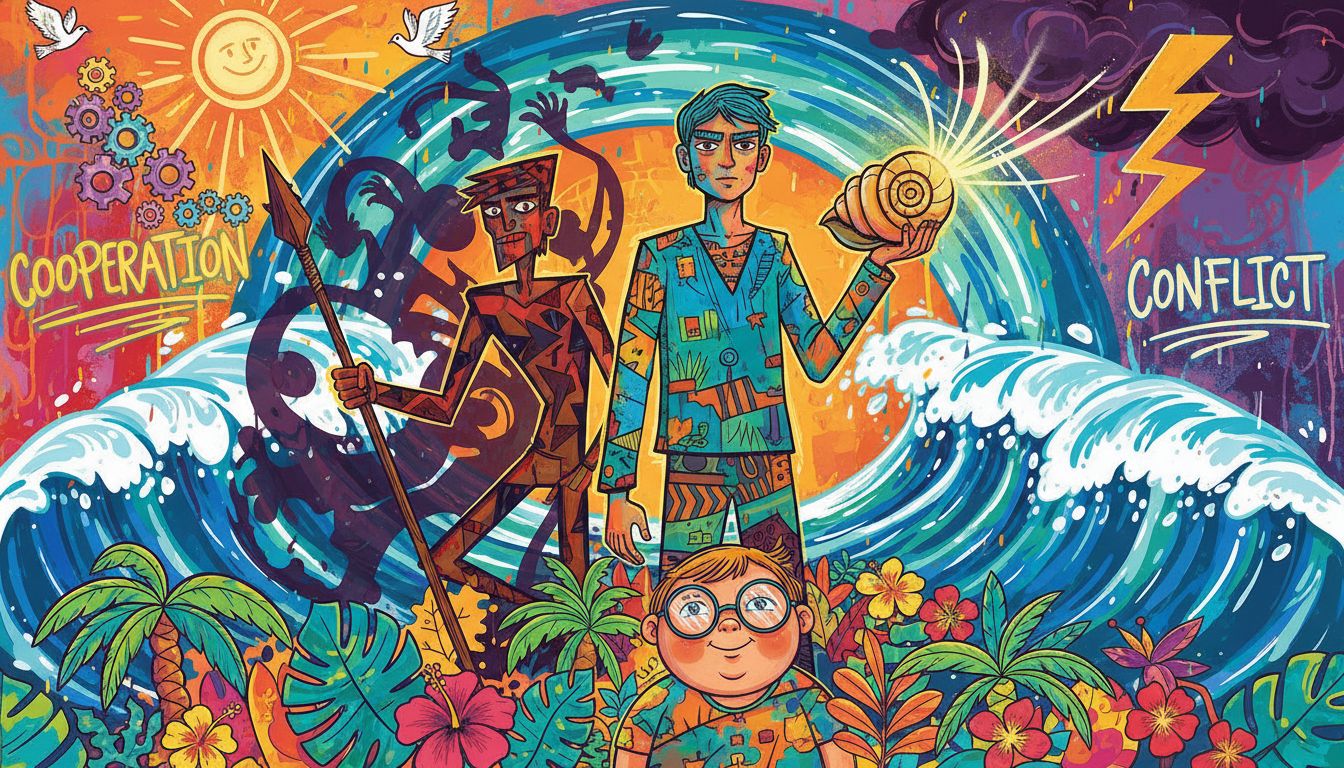
In William Golding's Lord of the Flies, the omniscient narrator provides insight into each character's thoughts and motivations, highlighting the tension between civilization and savagery. This narrative choice deepens the reader's understanding of the boys' descent into chaos and reflects broader themes about society in the postwar world.
William Golding's 1954 novel, Lord of the Flies, employs an omniscient narrator who provides a comprehensive view of the boys stranded on an uninhabited island. This narrative choice is crucial as it allows readers to delve into the inner workings of each character's mind. By understanding the boys' thoughts and emotions, readers gain a clearer perspective on their motivations, struggles, and the overarching themes of the novel.
The omniscient narrator paints a vivid picture of the characters. For instance, Ralph strives to maintain order and civility, yet he grapples with insecurity and the challenge of leadership. Jack, on the other hand, embodies aggression and a thirst for power, which leads to chaos among the group. Piggy, often marginalized due to his physical appearance, represents intellect and rationality, yet his voice is frequently ignored. This multifaceted portrayal illustrates how easily the fragile structure of society can crumble when individuals prioritize personal desires over collective well-being.
Through this 'drone's-eye view,' Golding effectively highlights the transition from civilization to savagery. The omniscient narrator reveals how the boys' initial attempts to establish rules and order quickly devolve into conflict and violence. This transformation serves as a microcosm of the larger societal issues faced in the postwar world, especially in the context of World War II. Golding subtly critiques the notion that civilization is an inherent quality of humanity; rather, it suggests that savagery lies just beneath the surface, waiting for the right conditions to emerge.
Additionally, the narrative perspective invites readers to reflect on contemporary issues. Just as the boys struggle with leadership and moral dilemmas, modern societies grapple with division and conflict. The novel serves as a cautionary tale about the thin line between order and chaos, encouraging readers to consider their roles in fostering unity and understanding in today's world.
In conclusion, Golding's use of an omniscient narrator in Lord of the Flies not only enhances character development but also enriches the reader's understanding of the themes of civilization versus savagery and the fragility of social order. This narrative technique effectively conveys a powerful message about the human condition and the potential for chaos in the wake of societal breakdowns, making the novel relevant to both its time and today's readers.
Was this answer helpful?