
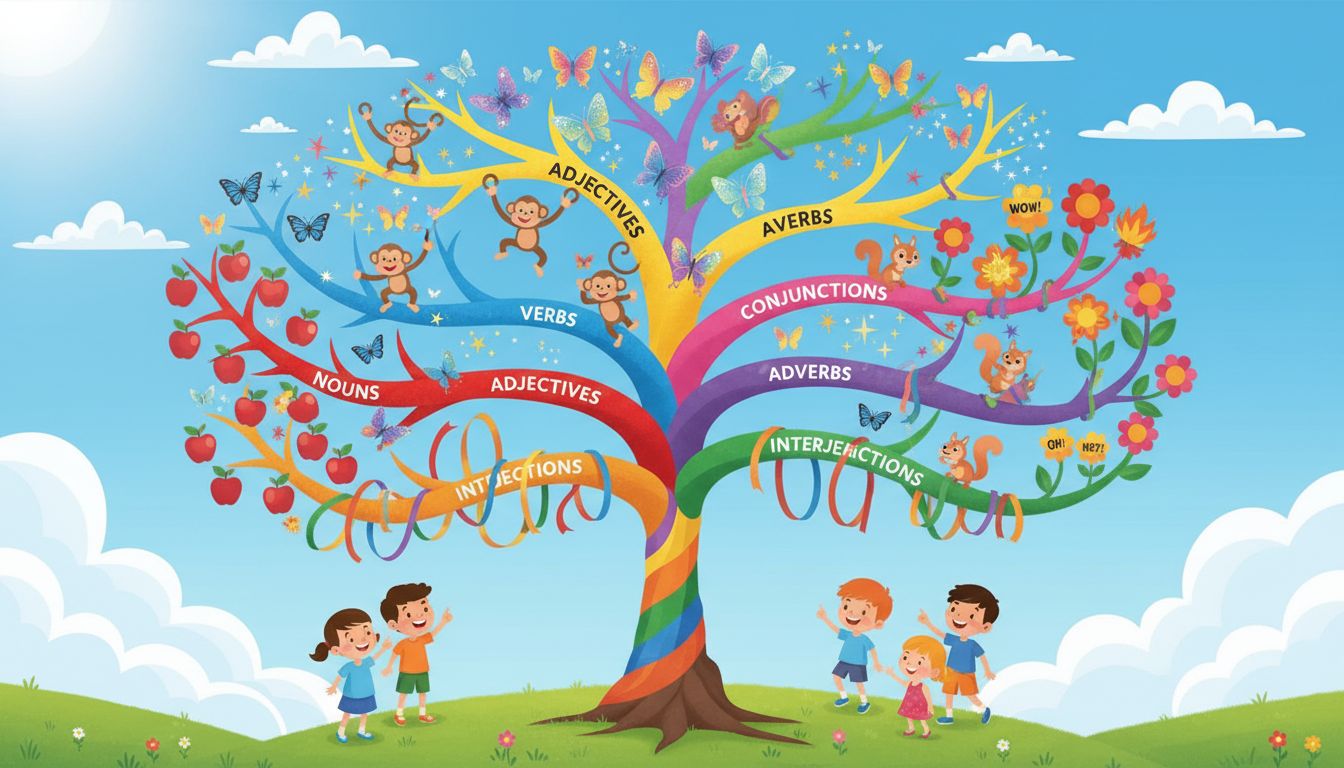
What Are the Different Parts of Speech and Their Functions?
Quick Answer
Parts of speech include interjections, prepositions, conjunctions, and pronouns, each serving a unique role in sentences. Interjections express emotions, prepositions show relationships, conjunctions connect ideas, and pronouns replace nouns.
Understanding parts of speech is fundamental in mastering language and improving communication skills. Each part of speech has a distinct function, and knowing these can enhance your writing and speaking abilities.
### Interjections
Interjections are words or phrases that express strong feelings or sudden emotions. They can stand alone or be integrated into sentences. Examples include "Wow!", "Oh no!", and "Hooray!" These words might not have grammatical connections to the rest of the sentence but convey the speaker's emotions effectively. For instance, in the sentence, "Wow! That was amazing!", the word "Wow!" expresses surprise and excitement.
### Prepositions
Prepositions are essential for indicating relationships between different elements in a sentence. They often describe positions, directions, or time. Common prepositions include "in", "on", "at", "before", and "after". For example, in the sentence "The cat is under the table", the preposition "under" shows the relationship between the cat and the table, helping readers visualize the scene. Understanding prepositions helps in constructing clearer and more precise sentences.
### Conjunctions
Conjunctions are the connectors of language. They join words, phrases, or clauses. There are coordinating conjunctions (like "and", "but", and "or") and subordinating conjunctions (like "because", "although", and "since"). For example, in the sentence "I wanted to go for a walk, but it started to rain", the conjunction "but" connects two contrasting ideas. By using conjunctions effectively, you can create more complex and informative sentences.
### Pronouns
Pronouns replace nouns to avoid repetition and make sentences easier to read. Common pronouns include "he", "she", "it", "they", and "we". For example, instead of saying "Maria loves Maria's dog", you can use a pronoun: "Maria loves her dog". This simplification helps maintain clarity and fluidity in writing.
### Conclusion
Each part of speech plays a vital role in sentence structure and communication. By learning how to use interjections, prepositions, conjunctions, and pronouns effectively, you can improve your writing skills and express your thoughts more clearly. Practice by identifying these parts of speech in your reading and writing, and soon you'll find it easier to communicate your ideas effectively in any context!
Was this answer helpful?